
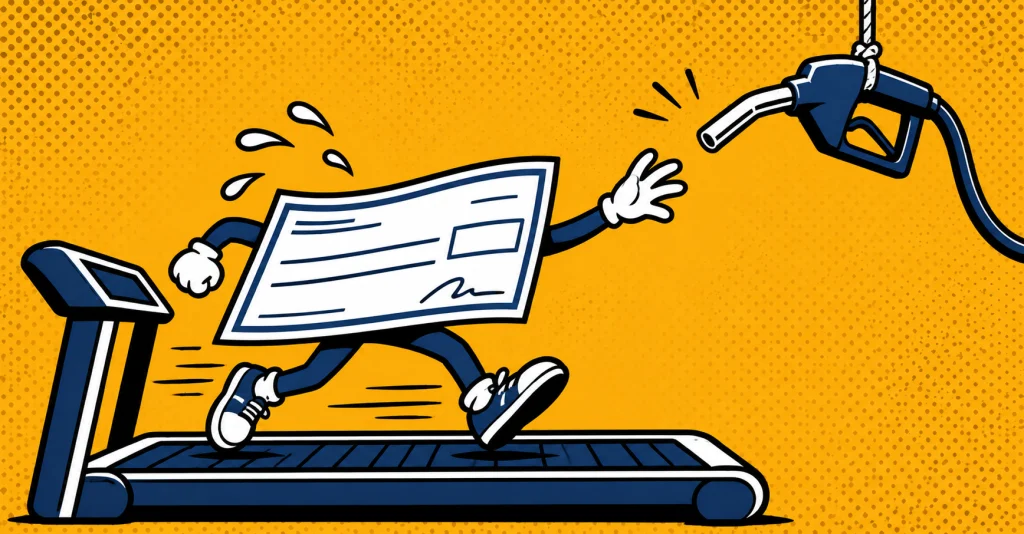
October’s hiring beat the pace of recent months and unemployment fell to 4.1%. But wages are rising more slowly than prices, so a strong job market and a squeezed workforce are happening at the same time.
U.S. employers added 165,000 jobs in October, and the unemployment rate fell to 4.1% from 4.2%, according to the Labor Department’s report Friday, NPR’s Scott Horsley reported. The government also revised August and September up by a combined 84,000 jobs. Health care, manufacturing and business services led the gains, and warehouse and transportation companies added 25,000 jobs. Restaurants and construction firms cut jobs. By the usual measures, this is a healthy labor market. The trouble is that a paycheck no longer goes as far.
Wages Are Rising, Prices Are Rising Faster
Average wages in October were up 3.1% from a year earlier, a slightly faster increase than in September. Inflation hit 3.7% in September. The gap between those two numbers is the whole story for most households. When prices rise faster than pay, workers lose buying power every month even if they keep their jobs, which is why low unemployment and real financial strain can exist together. Energy is driving the squeeze. Prices have outpaced wages for much of the year, since the war with Iran pushed energy costs sharply higher. Energy costs show up in everything that has to be moved, heated or cooled, so a gas price shock spreads through the whole budget. “Workers are losing ground right now,” Indeed economist Cory Stahle told NPR. He added that the longer it lasts, the more workers will feel it.
Why a Tight Job Market Isn’t Helping Workers
Low unemployment usually gives workers bargaining power, because employers have to compete for them by raising pay. That isn’t happening fast enough. Wages adjust slowly, often once a year, while gas and grocery prices change weekly. Workers are effectively making an interest-free loan to their employers until pay catches up. The industries cutting jobs, restaurants and construction, are the ones most exposed to higher costs and tighter consumer budgets, and many of their workers earn less. The gains in health care and manufacturing don’t replace those jobs one for one, and they often require different skills or a move. The jobs report doesn’t show who is falling behind most. The workers with the least savings feel a 0.6-point gap between wages and inflation first.
The Fed’s Next Move Raises the Stakes
Because unemployment is still low, the Federal Reserve can concentrate on inflation. It held its benchmark rate steady last week, and investors expect a rate hike when policymakers meet in December. A hike would raise borrowing costs on mortgages, car loans and credit cards for the same households already losing ground on wages. That shifts more cost from borrowers to lenders. The Fed’s tool works by cooling demand, which can ease prices, but it does nothing about an energy shock that started overseas.
Cost of living was a big factor in the midterms that cost Republicans both chambers of Congress, so the pressure now moves to Washington. Expect the incoming Democratic majority to make energy prices and wage growth its first economic fight in January. Expect a December rate hike to hit construction hardest, since that sector is already cutting jobs and depends on borrowing. Unless energy prices fall, workers will probably keep losing ground into early 2027, while the monthly jobs report keeps looking healthy.