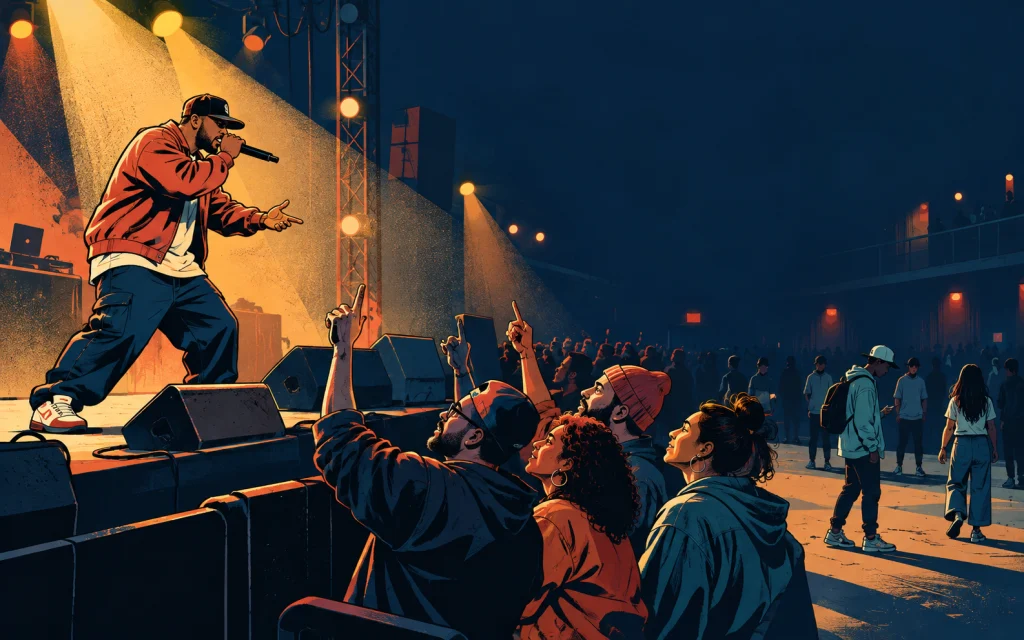
Offset and Quavo helped define an era when hip-hop was becoming the dominant force in American popular music. As members of Migos, they supplied the soundtrack for college parties, nightclubs, social-media trends and a generation of listeners who came of age during the streaming revolution. Now both are 34 and approaching their 35th birthdays, and their recent solo projects have raised questions about the commercial future of established male rappers. Offset’s October 2025 mixtape Haunted by Fame reportedly generated fewer than 8,000 album-equivalent units in its opening week, while Quavo’s October 2026 release QRÖMELIFE was projected to move approximately 13,000 units. Quavo’s figure remains a preliminary estimate, and Offset subsequently explained that his project was intended to fulfill a recording contract rather than function as a major commercial release. Those qualifications are important, but they do not eliminate the broader question: What happens when the artists who helped build hip-hop’s streaming empire grow older alongside their original fans?
The Generation That Made Migos Famous Has Grown Up
When Migos released Versace in 2013, the group’s breakthrough arrived at a moment when hip-hop, social media and streaming were beginning to reshape one another. Many of the young adults who embraced the group’s sound are now entering their 30s and 40s. College has given way to careers, financial responsibilities, relationships, parenthood and the demands of adulthood. That does not necessarily mean they have abandoned hip-hop. It may mean their relationship with music has become less centered on discovering every new release and more focused on familiar songs, personal memories and listening experiences that fit their current lives. A fan who can still recite every word of Bad and Boujee may not feel the same urgency to spend a week streaming a new Offset or Quavo album. That difference between enduring cultural attachment and active consumption is relevant to how the industry measures success.
The year Migos released Versace was also the year researchers published a large study examining how people’s relationships with music evolve through adulthood. The 2013 research, involving more than 250,000 participants across two studies, found that younger people generally listened to music more frequently and in more settings than middle-aged adults, although music remained important across age groups. The historical coincidence is interesting, but more recent evidence is needed to assess today’s market. A 2026 systematic review published in Psychology of Music examined 15 studies selected from more than 2,000 research articles and found indications that musical preferences and listening habits change with age. Researchers cautioned that existing evidence is limited, methodologically inconsistent and sometimes contradictory. Their findings support investigating how audiences mature, not declaring that aging alone explains declining album sales.
As We Mature, Does Our Music Mature With Us?
One finding from the 2026 review concerns the emotional durability of music encountered during adolescence and early adulthood. Listeners of different ages often maintained strong preferences for songs associated with those formative years. Music becomes attached to identity, relationships, milestones and memories, making certain recordings meaningful long after their release. Someone who discovered Migos during college may continue returning to Culture because it reminds them of a particular period of life, even while their interest in newer solo recordings becomes less consistent. The same listener may develop a broader musical appetite, moving between contemporary rap, older R&B, jazz, soul, Afrobeats or other genres without rejecting hip-hop. Musical maturity is not a universal progression toward one sound. It is often an expansion of preferences, accompanied by changes in what people want music to provide.
That presents an artistic challenge for performers whose commercial identities were established through the sounds and subject matter of their youth. Offset and Quavo became famous for records built around confidence, wealth, nightlife, fashion and aspirational excess. Those themes still have audiences, but the listeners who embraced them a decade ago may now have different priorities. Some want familiar energy and escapism. Others may be interested in storytelling, reflection or music that speaks to adulthood. The question is not whether every rapper approaching 40 should abandon club records or begin making introspective albums. It is whether artists can expand their creative identities alongside their audiences without losing what made them successful.
Jay-Z Is Selling Something Different: A Shared History
Jay-Z offers a counterpoint to the argument that aging rappers inevitably lose commercial relevance. At 56, the Brooklyn artist reportedly sold out three consecutive Yankee Stadium concerts in July 2026, celebrating the 30th anniversary of Reasonable Doubt and the 25th anniversary of The Blueprint. The second performance reportedly drew 45,832 ticket buyers, establishing a concert ticket-sales record for the stadium at the time. Demand for the anniversary performances was substantial despite Jay-Z having released his last solo studio album, 4:44, in 2017. The shows brought together an established catalog, high-profile guests and an opportunity for longtime listeners to experience music associated with important periods of their lives. Yankee Stadium’s announcement explained the anniversary concept.
Jay-Z’s success illustrates the commercial difference between asking listeners to embrace new music and inviting them to celebrate music they already consider part of their history. A fan who discovered Reasonable Doubt at 20 may now be approaching 50, with greater purchasing power but less interest in following every new release. Attending an anniversary concert offers an opportunity to reconnect with an earlier version of oneself in a shared setting. Nostalgia can become a powerful business model, particularly for artists with catalogs that have remained culturally relevant for decades. It also complicates the assumption that disappointing album numbers mean an audience has disappeared. Listeners may still spend money, but on different products and experiences. Jay-Z’s career and catalog are exceptional, however, and his stadium success cannot be treated as a formula every veteran rapper can reproduce.
Hip-Hop Is Still Dominant, But Its Share of the Market Is Shrinking
The broader music industry is not suffering from a shortage of listeners. According to Luminate’s 2026 Midyear Report, Americans generated 732.7 billion on-demand audio streams during the first six months of 2026, an increase of 4.8% from the previous year. R&B and hip-hop remained the country’s largest streaming category, accounting for approximately 180.3 billion streams. Yet the genre’s share of Billboard 200 album-equivalent consumption reportedly fell from 41% in 2023 to 30% during the first half of 2026. Latin, country and dance music are capturing greater portions of the listening market, creating more competition for artists who once operated within the country’s dominant popular music genre. Hip-hop remains commercially powerful, but its extraordinary dominance during the streaming boom has begun to level off.
Listeners also have access to enormous catalogs of older recordings that compete directly with new releases. Luminate’s 2026 findings identified continuing interest in catalog music, particularly in genres such as rock. That does not establish identical behavior among hip-hop listeners, but it demonstrates how streaming has changed the commercial environment. A new Offset album does not compete only against Quavo, Kendrick Lamar or the latest emerging rapper. It competes against every Migos hit ever released, along with decades of other music available through the same subscription. The music industry can continue generating billions of streams while individual artists struggle to capture enough concentrated attention to deliver strong opening-week numbers.
The Biggest Stars Are Still Selling. What Happens to Everyone Else?
It would be inaccurate to suggest male rappers have stopped selling albums altogether. Kendrick Lamar’s GNX debuted with 319,000 album-equivalent units in November 2024, while Tyler, the Creator’s Don’t Tap the Glass opened with approximately 197,000 units in July 2025 despite having only four days of eligible first-week tracking. Tyler’s performance included approximately 128,000 traditional album sales, illustrating the purchasing power of an engaged audience willing to buy music directly. Those results demonstrate that demand remains substantial for artists who can turn a release into an event. But they also highlight how differently the market responds to established performers. Fame, longevity and previous chart success do not automatically produce a major debut.
That raises questions about rappers who are neither emerging newcomers nor the industry’s most bankable superstars. Many established performers built careers when frequent releases, collaborations and streaming playlists offered pathways to sustained visibility. Today, that visibility competes with short-form entertainment, fragmented audiences, international genres and crowded release calendars. Artists have more ways to earn revenue beyond recordings, including touring, merchandise, endorsements and licensing. Those activities may sustain a career even when album sales weaken, but they require a different understanding of success. Jay-Z’s stadium concerts and Tyler’s direct-to-fan sales illustrate approaches to monetizing audience commitment. Offset and Quavo’s recent performances invite scrutiny of whether the traditional album-centered strategy still works consistently for artists whose largest hits belong to an earlier era.
Hip-Hop’s Future May Depend on Understanding Its Aging Audience
The generation that helped make hip-hop America’s dominant streaming genre has not vanished. Its members have grown older, developed different responsibilities and accumulated more years of musical memories. Some remain devoted to discovering new rappers. Others return primarily to songs that defined their adolescence and early adulthood. Many do both. The available research does not prove that aging audiences caused Offset’s or Quavo’s disappointing album performances, and the commercial circumstances surrounding those releases make simplistic comparisons unreliable. But shifting market share, enduring catalog demand and changing listening habits provide a credible basis for asking whether the industry understands the audience it helped cultivate.
Jay-Z’s anniversary concerts suggest that hip-hop’s older listeners can still represent a commercial opportunity when artists offer experiences that reflect the meaning of music in their lives. Offset and Quavo represent a generation approaching the point where maintaining cultural relevance may require more than repeating the strategies behind their earliest successes. Hip-hop’s next chapter will not be determined solely by which artists capture teenagers’ attention or generate the biggest first-week streaming numbers. It will also depend on whether performers sustain meaningful relationships with audiences whose lives have changed since they first became fans. The problem may not be that male rappers are getting too old to sell music. It may be that the people who made them famous are growing older, too, and the industry is still learning what those fans want to hear, experience and pay for.