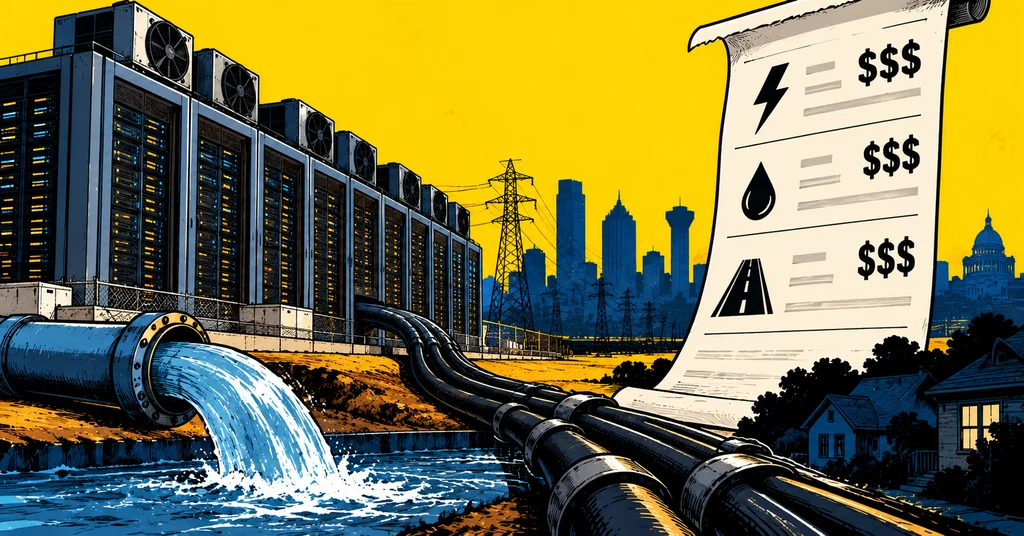
A new University of Houston survey finds widespread concern about electricity, water and the infrastructure needed to support large data centers.
Texas voters are increasingly concerned that the state’s expanding data-center industry will raise electricity costs, strain water supplies and increase the risk of power outages. A University of Houston Hobby School survey released October 27 found that more than 80% of likely voters expressed concern about those consequences. Nearly 79% support limiting the number of data centers built in Texas, while 99% believe developers should pay for the electrical grid expansion their facilities require. The survey included 2,000 likely voters and was conducted October 10–14. The findings show that Texans are paying attention to the physical demands of an industry promoted for its investment potential and economic growth.
Data centers require enormous amounts of electricity to operate servers and cooling systems, and some facilities also consume substantial quantities of water. Utilities may need to construct new transmission lines, substations or generating capacity to serve them. Those projects cost money, and the rules governing utility investment determine whether developers or other electricity customers ultimately pay. Supporters of data-center development point to construction employment, tax revenue and the opportunity to attract major companies. But the Hobby School survey found that 76% of respondents believe a new data center would increase local electricity prices, while 61% expect nearby home values to decline. These are voter expectations rather than measured outcomes, but they reveal substantial skepticism about who benefits from the expansion.
The financial concern is particularly relevant in Texas, where electricity costs already affect household budgets and businesses depend on reliable power. A new industrial customer can create revenue for utilities, but large additions to demand may also require infrastructure that serves relatively few facilities. If those expenses are distributed across the broader customer base, households and small businesses could help finance projects built primarily for large corporations. Water presents a similar challenge in communities managing population growth and competing demands from residents, agriculture and industry. The central policy decision is whether companies seeking access to public infrastructure should bear the incremental costs they create or share them with existing customers.
Texas can attract investment while requiring developers to account for the resources their projects consume. That will depend on enforceable agreements, transparent utility planning and clear rules for allocating infrastructure costs. The survey suggests voters are less interested in promises of economic growth than in protection from higher monthly bills and reduced service reliability. If state and local officials approve new data centers without ensuring that developers finance the additional infrastructure they require, the industry’s expansion could become another expense carried by households already struggling with the cost of living.