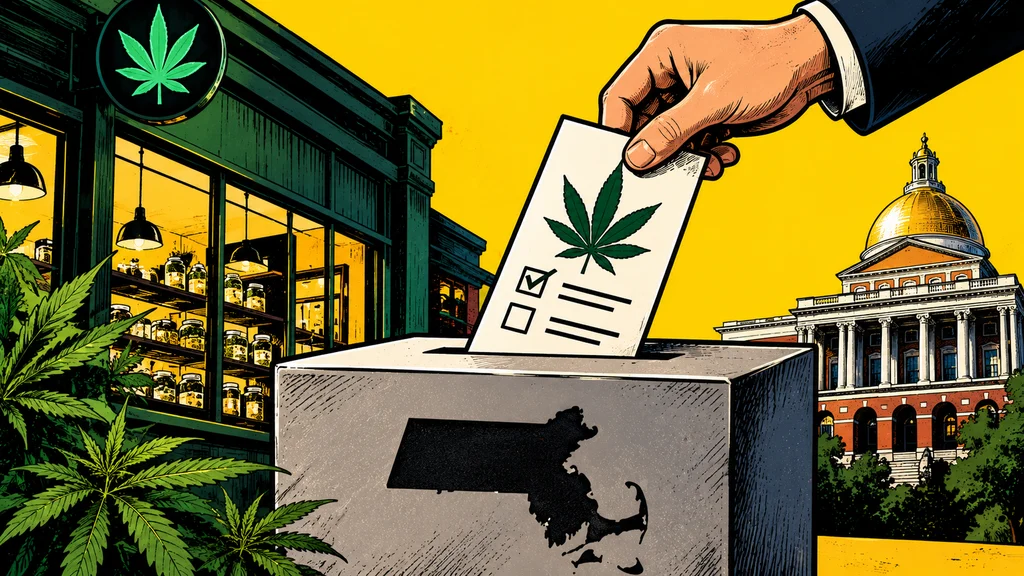
Question 8 would end the state’s licensed recreational marijuana market while preserving medical access and limited adult possession. The decision could affect businesses, workers and public revenue.
Ten years after Massachusetts voters approved recreational marijuana legalization, the state is considering whether to dismantle the commercial market it created. Question 8, appearing on the November 3 ballot, would prohibit licensed recreational marijuana sales while allowing medical marijuana businesses to continue operating. According to the Massachusetts Secretary of the Commonwealth’s official ballot guide, adults 21 and older would still be allowed to possess up to one ounce of marijuana, subject to restrictions on concentrates, and transfer limited amounts without payment. Existing recreational retailers could apply to become medical dispensaries, but the broader commercial system would end. If approved, the law would take effect on January 1, 2028.
Massachusetts has spent nearly a decade building a regulated industry around marijuana cultivation, processing and retail sales. That system supports licensed businesses, employees, testing requirements and tax collections. The state’s official ballot materials report approximately $280 million in state tax revenue and $50 million in local revenue from recreational marijuana sales in fiscal year 2025. Supporters of Question 8 argue that ending commercial sales would reduce the public-health risks associated with widespread retail availability while preserving limited personal possession and medical access. Opponents argue that eliminating licensed retailers could push consumers toward unregulated sellers and threaten businesses that invested under the existing law. The proposal therefore involves competing approaches to public health, enforcement and commercial regulation.
The financial consequences would extend beyond dispensary owners. Employees working in cultivation, distribution, testing and retail could face job losses if recreational businesses close or substantially reduce operations. Municipalities that collect marijuana-related taxes would need to replace lost revenue or reduce spending, while regulators would have to manage the transition to a medical-only marketplace. Consumers who currently purchase tested products from licensed stores would also face fewer legal purchasing options. Keeping possession legal while eliminating most commercial sales creates a practical contradiction: adults could legally hold marijuana in limited amounts while losing access to the retail system designed to supply it. How the state handles that gap would influence enforcement and the size of any unregulated market.
The vote will determine whether Massachusetts continues treating recreational marijuana as a regulated commercial product or returns to a more restrictive system. Both approaches carry costs that deserve examination, including public-health oversight, enforcement, employment and government revenue. The existing industry has developed businesses and jobs around rules voters approved in 2016, and reversing those rules would redistribute economic opportunity while changing how consumers obtain marijuana. If Question 8 passes, Massachusetts will have to manage the consequences of closing a legal market without eliminating the demand that helped create it.