
Part of The Access Shift — an ongoing series examining how access is being quietly reshaped across American life.
NEWS DESK | SOCIAL STORYTELLERS COLLECTIVE
The 2026 midterms are seven months away. The maps that will determine who can run — and who can win — are being redrawn right now, in ways that have no modern precedent.
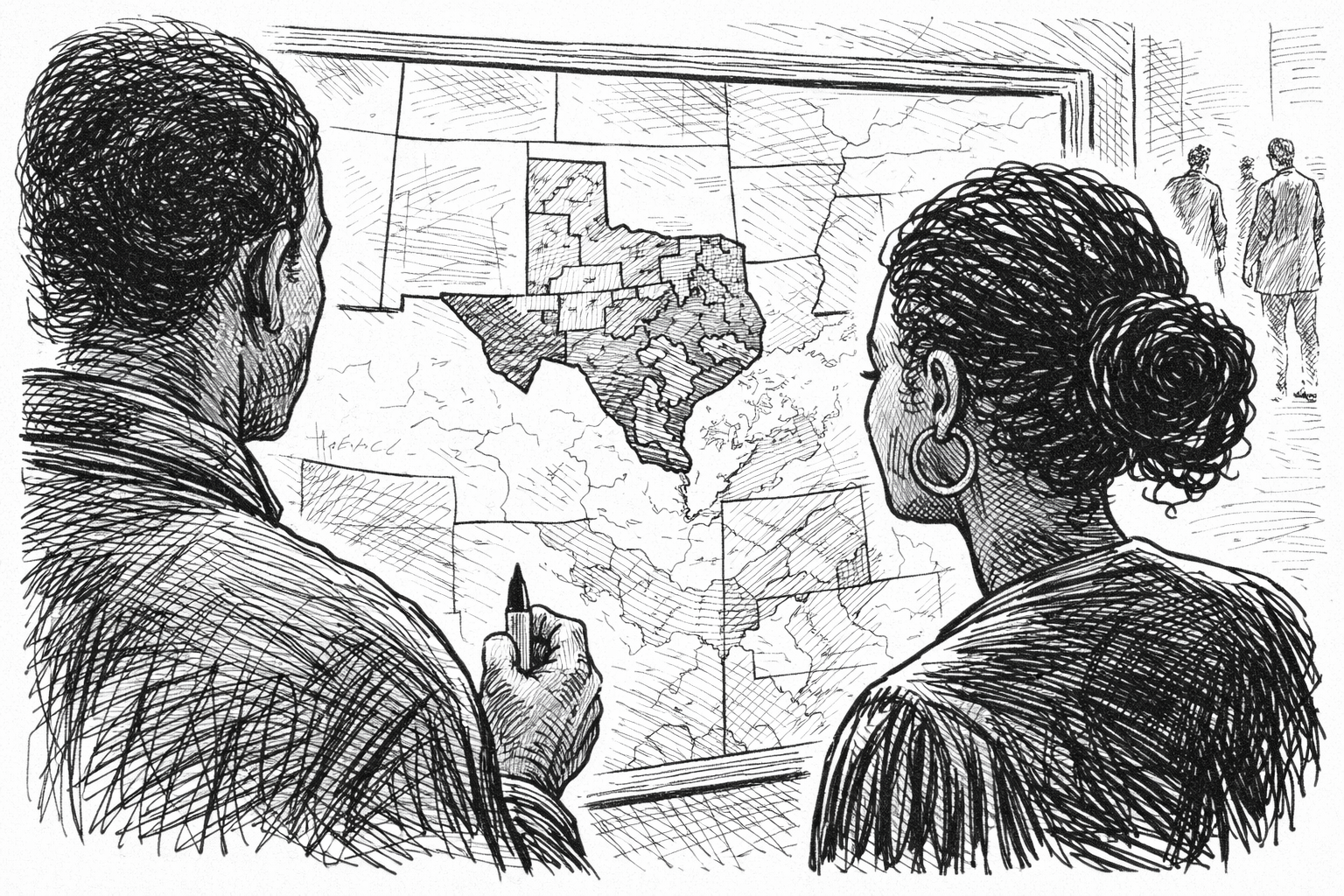
In August 2025, Texas began an unprecedented effort to redraw its congressional and state legislative maps five years before the 2030 Census would normally trigger the process. Activists sued immediately, arguing the new maps dilute the voting power of Black and Hispanic communities. The U.S. Supreme Court allowed the Republican-drawn maps to stand. In response, over a dozen states are now considering similar moves ahead of November 2026, potentially changing ballots and polling locations across the country.
The implications compound. Trump is reportedly preparing an executive order to restrict mail-in voting eligibility — a mechanism that disproportionately serves elderly, disabled, and low-income voters, all groups with higher concentrations of Black and Brown Americans. The combination of mid-cycle redistricting, potential mail-in voting restrictions, and new voter ID requirements moving through several state legislatures creates a layered set of obstacles that don’t appear to target anyone by race but produce racially specific outcomes.
This is the pattern SSC has documented in The Trust Gap and Why Stories Are Missing — structural changes that arrive quietly, through legal and administrative channels, in ways that are difficult to litigate in real time and almost impossible to reverse before an election cycle has already passed. The 2024 election demonstrated what happens when Black political investment is not matched by the structural conditions needed to translate that investment into outcomes. The 2026 midterms are the next test — and the architecture being built around them will determine who gets to vote, where, and with what standing.
What makes the stakes particularly high is the math. Thin Republican majorities in both the House and Senate could shift in November 2026 — and with them, the legislative capacity to reverse or accelerate every policy SSC has covered this year, from DEI rollbacks to Medicaid cuts to the DEI contractor executive order. The redistricting effort is not incidental to that calculation. It is central to it.
Why This Matters
Voting rights are not a separate issue from economic access, healthcare access, or civil rights. They are the mechanism through which all other access is protected or forfeited. When maps are redrawn mid-cycle, when mail-in access is restricted, and when polling locations shift, the communities with the least institutional recourse absorb the most disruption. The 2026 midterms will be shaped by decisions being made right now — in state legislatures, in executive orders, and in Supreme Court rulings that haven’t landed yet. The time to understand what those decisions mean is before they’re finalized, not after.
The Access Shift
The gradual redefinition of who systems are designed to serve.
Across sectors—from public infrastructure to healthcare to everyday spaces—access is no longer assumed. As costs rise and systems face increasing pressure, services once built for broad reach are becoming more selective, more conditional, and less universal. The Access Shift explores how these changes are unfolding in real time—and what they reveal about who is included, who is left out, and how the structure of everyday life is quietly being reshaped.