
Tamera Mowry-Housley deleted her Threads account within hours of joining it. Her debut post — a simple introduction, the kind of low-stakes entry point that works on every other platform she occupies — was immediately met with questions about January 6, warnings about how she would be treated, and pointed references to her husband, former Fox News correspondent Adam Housley. What began as a celebrity saying hello became, within the hour, a public referendum on her marriage. She left. The platform moved on. But what the sequence reveals about how Threads actually functions — and about who gets to enter digital public space on their own terms — is worth examining more carefully than the headline suggests.
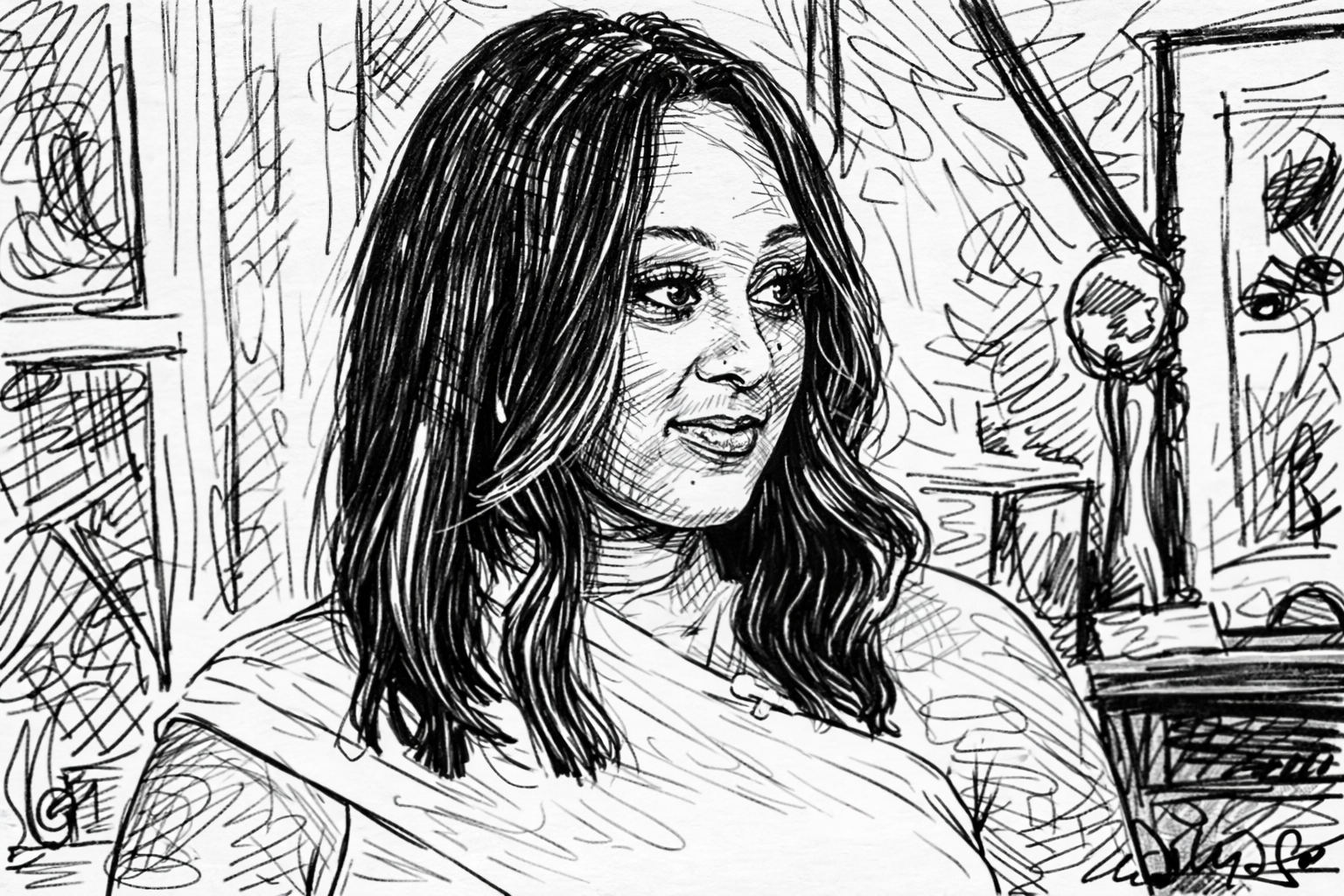
What unfolded was not random backlash. It was a predictable outcome of how Threads is being used and what it was designed to reward. Unlike Instagram, where celebrity identity is curated and largely protected by the broadcast architecture of the platform, Threads operates closer to a real-time public forum. Its text-based design encourages direct confrontation, rapid response, and conversational pile-ons. It collapses the distance between public figures and audiences in a way that removes the buffer celebrity once provided — and it does so without distinguishing between the kind of scrutiny that holds power accountable and the kind that simply redistributes ambient political frustration onto whoever is available. Mowry was available. Her husband’s political associations made her a target before she had finished her first sentence.
The racial dimension of what happened is the part most coverage has avoided naming directly. Mowry is a Black woman who has spent her career navigating the particular visibility that comes with being a recognizable face in predominantly white entertainment spaces. Her marriage to a white man with explicit Fox News affiliations and documented ties to the January 6 period placed her at the intersection of two forms of public scrutiny that Black women in public life navigate with regularity — accountability for their own choices and accountability for the choices of the people they are attached to. The response on Threads treated her identity as networked rather than individual, making her affiliations, relationships, and associations all fair ground for public evaluation. That treatment is not unique to Threads. But Threads made it instantaneous, visible, and impossible to moderate before it had already defined the interaction.
The platform’s design rewards this dynamic because it prioritizes immediacy over polish, conversation over broadcast, and response speed over considered engagement. Early user behavior has demonstrated consistently that Threads functions less like a brand extension tool and more like a live discourse arena — one that does not pause for introductions, does not offer the curation controls Instagram provides, and does not have the established community norms that older text-based platforms developed over time. Celebrities entering the space are not stepping into a controlled environment. They are stepping into an ongoing conversation that has been running without them and has no particular incentive to accommodate their preferred self-presentation. Mowry’s exit is less about one moment of backlash and more about a mismatch between expectation and infrastructure — a collision between how she expected to be received and how the platform is actually designed to operate.
What this moment clarifies is that platform design is not neutral, and the question of who it protects and who it exposes is not answered evenly. Instagram’s broadcast architecture protects the celebrity at the expense of the audience’s ability to respond meaningfully. Threads’ conversational architecture protects the audience’s ability to respond at the expense of the public figure’s ability to control their own entry. Neither design is inherently correct — but both have distributional consequences that land differently depending on who is entering the platform and what associations they carry into it. The platform did not turn on Tamera Mowry. It operated exactly as designed. What is worth asking is whether the design, operating as intended, produces outcomes that are equitable — or whether the discourse arena Threads has built is one that some people can afford to enter and others, depending on what they bring with them, cannot.