
Part of The Access Shift — an ongoing series examining how access is being quietly reshaped across American life.
NEWS DESK | SOCIAL STORYTELLERS COLLECTIVE
Within 48 hours last week, the word “reparations” was used in two entirely different contexts — and the collision between them exposed a tension that has been building for years.
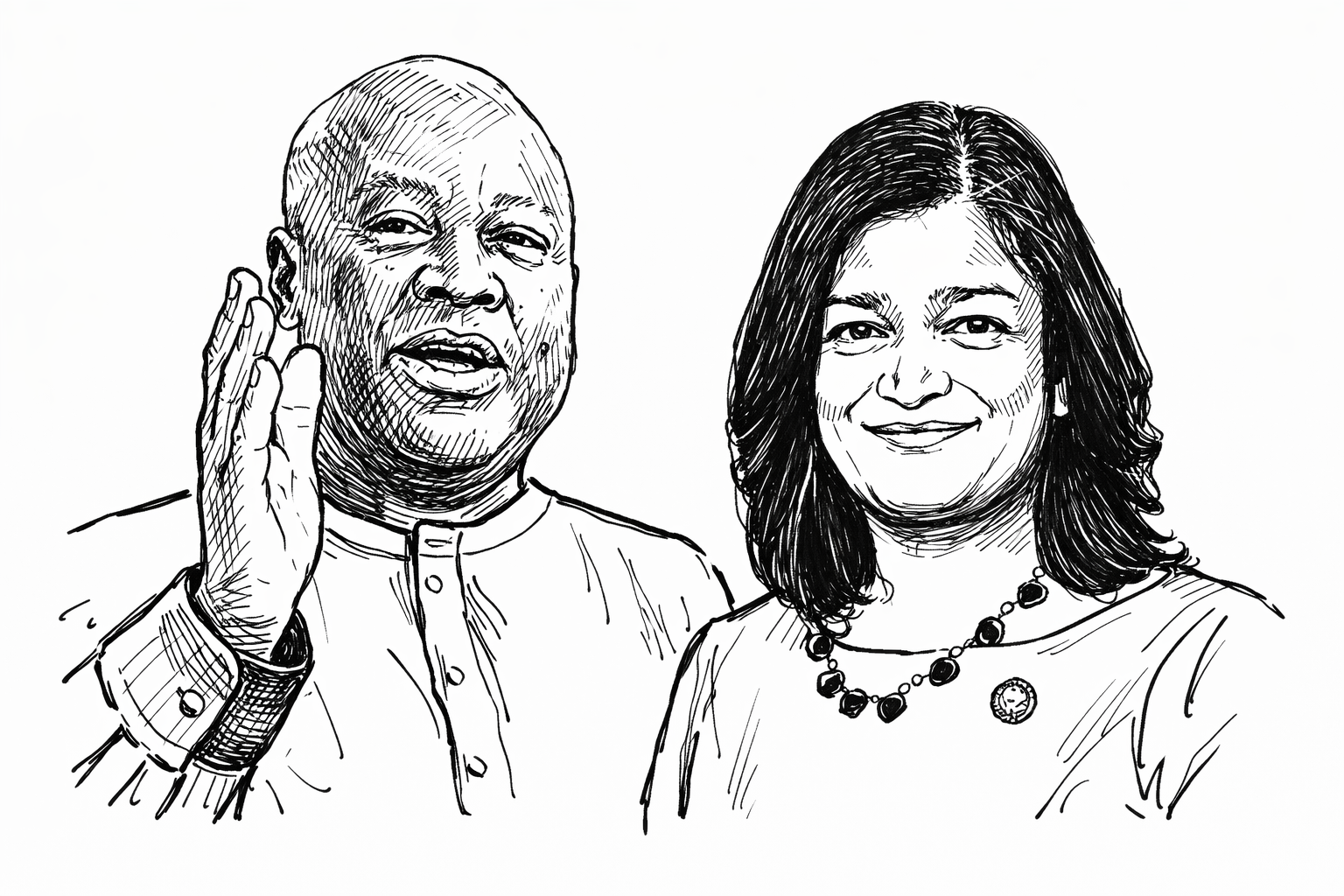
As SSC reported in The UN Just Named the Transatlantic Slave Trade the Gravest Crime Against Humanity. The U.S. Voted No., Ghana led a resolution through the UN General Assembly on March 25 formally declaring the transatlantic slave trade the gravest crime against humanity — with 123 countries in favor and the United States voting against. Two days later, on March 27, Rep. Pramila Jayapal called for “some form of reparation for the kids and the families that have been traumatized” by ICE enforcement actions under the Trump administration — applying the same word to a different history, a different community, and a different set of claims.
That 48-hour sequence is not a coincidence worth ignoring. It is the story.
The harm Jayapal is pointing to is documented. Family separations, detention conditions, and enforcement practices have produced real trauma. That is not the dispute. The dispute is what happens when that harm is named using a term that already carries a specific and unresolved historical lineage — one tied to centuries of forced labor, structural exclusion, and wealth denied to Black Americans that has never been repaired. Language doesn’t just describe harm. It organizes it. When a term expands to cover multiple, structurally distinct histories without naming that distinction, the original claim becomes harder to see — and harder to pursue.
For many Black Americans, reparations are not a metaphor for injustice. They are an unresolved debt with a specific origin. When that word is applied to other forms of harm without that lineage attached, it can read less like solidarity and more like substitution. Not because other communities don’t deserve redress — but because not all histories are interchangeable, and treating them as though they are doesn’t serve any of them.
Ghana’s global push adds a layer that domestic coverage has largely missed — and one that sits uneasily even within Black American communities. While the UN resolution anchors reparations firmly to the transatlantic slave trade, it also surfaces a quieter tension around the idea of a unified global Black claim. African intermediaries were part of the systems that facilitated the slave trade — a reality that does not erase the role of European colonial powers as the primary architects and beneficiaries of that system, but does complicate the framing of a single, undivided global reparations movement. For some foundational Black Americans, that history matters — not as a reason to abandon the claim, but as a reason to be precise about it. A global framing that skips over that internal complexity can feel like another form of flattening, one that prioritizes unity over specificity. And specificity is exactly what the reparations argument has always depended on.
Both pressures are arriving at once. Domestically, the term is being expanded in ways that risk diluting its historical meaning. Globally, it is being unified in ways that risk simplifying a more complicated past. In both cases the tension originates from the same place: the gap between shared identity and distinct history. As SSC has tracked across The Access Shift series and in The Black Recession Is Already Here, the communities most affected by structural exclusion are consistently the most vulnerable to having their specific claims absorbed into broader narratives that ultimately serve other purposes.
Why This Matters
Policy follows language. Who gets named in a reparations framework determines who is compensated, whose history is formally acknowledged, and whose claim remains deferred. Two events in 48 hours didn’t create this tension — they exposed how far along it already was. The meaning of reparations is being negotiated in real time, across congressional hearings, UN general assemblies, and social media reactions happening within the same news cycle. And the communities with the most at stake in that negotiation are rarely the ones controlling how it ends.
The Access Shift
The gradual redefinition of who systems are designed to serve.
Across sectors—from public infrastructure to healthcare to everyday spaces—access is no longer assumed. As costs rise and systems face increasing pressure, services once built for broad reach are becoming more selective, more conditional, and less universal. The Access Shift explores how these changes are unfolding in real time—and what they reveal about who is included, who is left out, and how the structure of everyday life is quietly being reshaped.