
A federal jury has concluded that Live Nation, along with its subsidiary Ticketmaster, illegally monopolized the live event ticketing market — using its scale and leverage to foreclose competition before it could take root. The decision follows a five-week trial in Manhattan where jurors heard testimony from executives, including CEO Michael Rapino, and from artists like Ben Lovett of Mumford & Sons. At the center of the case was a structure that extended well beyond ticket sales: one that bound together venues, promotion, and distribution into a single, vertically integrated system.
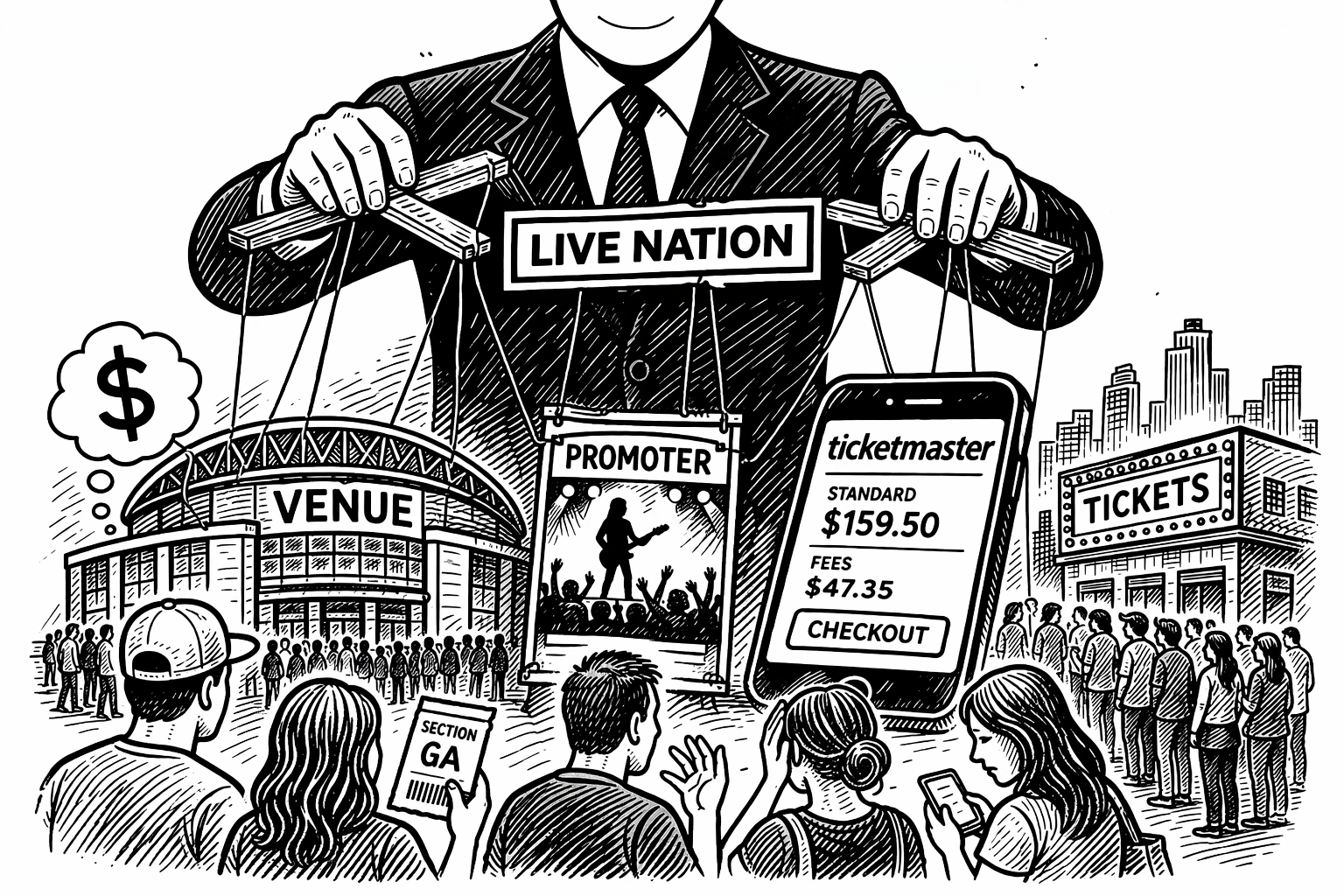
The jury found that this structure translated directly into consumer harm. Ticketmaster was determined to have overcharged customers by $1.72 per ticket — a figure that sounds almost incidental until it compounds across tens of millions of annual transactions. But the ruling’s significance is not primarily about that number. It is about control: control over which venues artists could access, which platforms fans were required to use, and which alternatives were permitted to exist inside the ecosystem at all.
That distinction matters because Live Nation is not simply a ticketing company. It operates across more than 50 countries and produces over 50,000 concerts and festivals each year, by its own accounting. When a company of that scale integrates promotion, venue ownership, and ticketing under one structure, competition does not merely become difficult — it becomes architecturally blocked. Rivals are not competing on product. They are competing against a system engineered to route around them.
What the verdict introduces now is a harder question: what accountability looks like when the system being held accountable is this large. A judge will determine damages, and Live Nation had already reached a separate agreement with the Department of Justice that stopped short of any admission of wrongdoing. That gap — between what a jury finds and what a settlement requires — raises a familiar tension. When a system is found to be unfair, does the outcome actually change it, or does it simply establish the cost of continuing to run it?
Because what this case ultimately surfaces is something audiences have understood for years. The frustration was never just about fees. It was about the absence of real choice. And when a single entity controls enough of the infrastructure, the market stops responding to demand. It starts producing it.