
Structural Reality is a series examining how systems produce unequal outcomes across work, income, and opportunity.
Gov. Ron DeSantis signed HB 697 today, allocating $31 million to restore Florida’s AIDS Drug Assistance Program through June 30 — reinstating coverage for more than 11,000 low-income residents who lost access to life-saving HIV medication on March 1. The cuts were triggered by what the Florida Department of Health described as a $120 million program deficit, driven by stagnant federal Ryan White funding colliding with rising healthcare costs. The fix passed the Legislature 108-0 in the House and 38-0 in the Senate — a rare moment of bipartisan urgency in a state where the program had just been quietly gutted by administrative rule change.
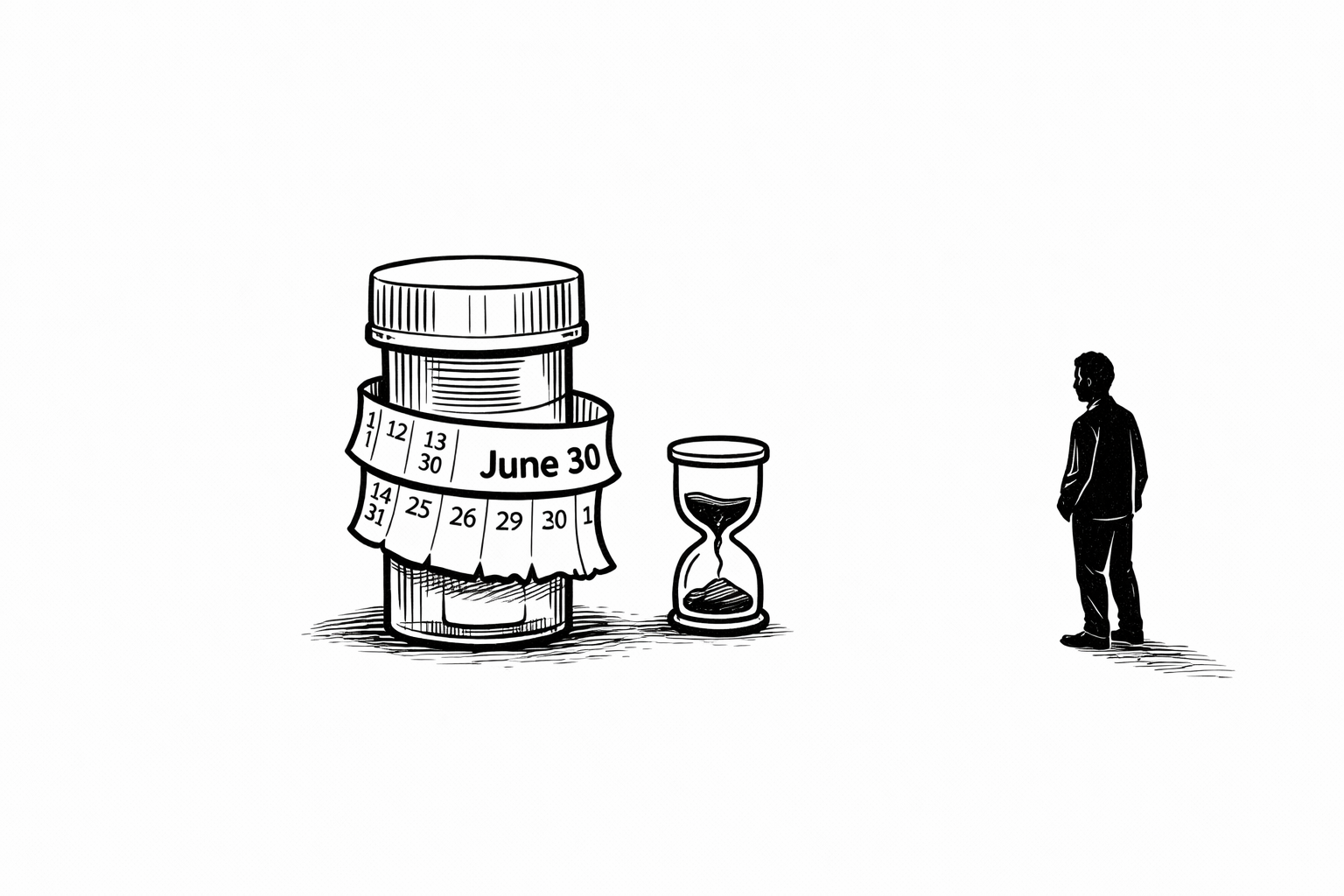
The relief is real. The window is narrow. The legislation restores eligibility through the end of the fiscal year only, leaving the program’s long-term solvency unresolved and dependent on budget negotiations that have already reached a stalemate. Critically, Biktarvy — one of the most widely prescribed HIV medications in the country — remains excluded from the formulary under the new rules. For patients who depend on it, access has been restored in name but not in full. A circuit court this morning also denied an emergency injunction sought by the AIDS Healthcare Foundation to block the exclusion, clearing the way for the state to proceed with direct distribution rather than premium assistance — a structural change that limits how patients can access their medication even when they qualify.
This is the pattern we’ve been tracking — in When Access Becomes Conditional, where eligibility tightening quietly redefines who a program actually serves, and in HIV Treatment Didn’t Collapse — But What’s Holding It Up Should Concern You, where the formal system’s retreat forces informal systems to absorb the cost. Florida just ran that playbook in real time — cutting first, scrambling second, and leaving the structural problem intact for the next budget cycle. Access has been restored. But only temporarily, in a system where continuity of care is no longer guaranteed.
Series: The Access Shift
The gradual redefinition of who systems are designed to serve.
Across sectors—from public infrastructure to healthcare to everyday spaces—access is no longer assumed. As costs rise and systems face increasing pressure, services once built for broad reach are becoming more selective, more conditional, and less universal. The Access Shift explores how these changes are unfolding in real time—and what they reveal about who is included, who is left out, and how the structure of everyday life is quietly being reshaped.Thanks for reading Social Storytellers Collective! Subscribe for free to receive new posts and support my work.