
GLOBAL HEALTH
How health systems reflect broader shifts in access, labor, and sustainability
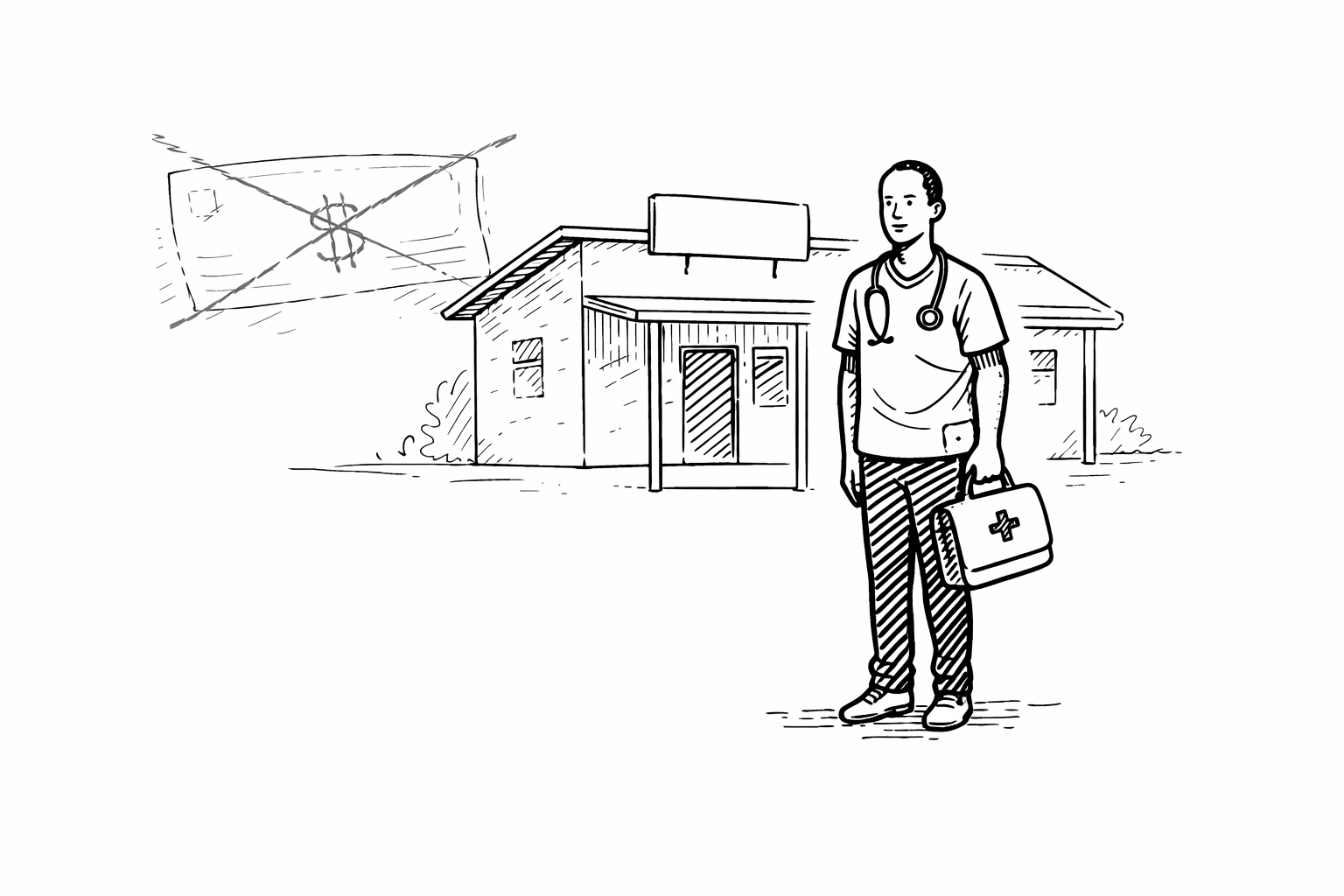
When U.S. foreign aid was paused in early 2025, projections warned of significant disruption to global HIV treatment. Programs were halted, salaries cut, and community health workers across multiple countries lost the financial support that sustained their roles. In Uganda, workers like Harerimana Ismail — who had spent years supporting children and teens living with HIV — saw their $50 monthly stipend disappear almost overnight.
But the work did not stop.
Despite losing his income, Ismail continued going door-to-door, ensuring patients stayed connected to treatment and care. He now survives on what he can grow and sell while maintaining the same responsibilities he held when the role was paid. His story is not isolated. Across affected regions, similar patterns have emerged: workers pressing on without formal compensation, absorbing costs the system once covered.
New data suggests these efforts have had a measurable impact. Early figures indicate that global HIV treatment levels have remained largely stable, with only a marginal decline despite the disruption. The collapse many anticipated has not materialized — at least not yet.
What has changed is how that stability is being maintained.
Continuity of care is no longer driven primarily by structured funding, but by informal labor — individuals absorbing the cost of sustaining systems that were once externally supported. The outcome looks stable on the surface, but the underlying model has shifted in ways that won’t show up in headline numbers.
Why This Matters
This moment reflects a broader shift in how public systems operate under pressure. What’s changing isn’t just funding, but the structure of responsibility itself. As formal support recedes, continuity is increasingly sustained by individuals rather than institutions. As seen in When Access Becomes Conditional, access does not always disappear—it becomes more selective, more conditional, and more dependent on factors outside the system’s original design. The result may appear stable in the short term, but it signals a deeper change in how care is delivered, and who ultimately carries the cost of keeping it in place.
Series: The Access Shift
The gradual redefinition of who systems are designed to serve.
Across sectors—from public infrastructure to healthcare to everyday spaces—access is no longer assumed. As costs rise and systems face increasing pressure, services once built for broad reach are becoming more selective, more conditional, and less universal. The Access Shift explores how these changes are unfolding in real time—and what they reveal about who is included, who is left out, and how the structure of everyday life is quietly being reshaped.