
Vornado Realty Trust CEO Steve Roth is facing backlash after comparing the phrase “tax the rich” to racial slurs during a recent earnings call while criticizing New York mayoral candidate Zohran Mamdani and his proposed pied-à-terre tax. Roth reportedly described the slogan as “just as hateful as some racial slurs” while arguing that wealthy individuals should be “praised and thanked” rather than politically targeted. The comments immediately triggered sharp online reactions, not only because of the comparison itself, but because of what the statement revealed about how parts of the ultra-wealthy increasingly see themselves within the current political environment.
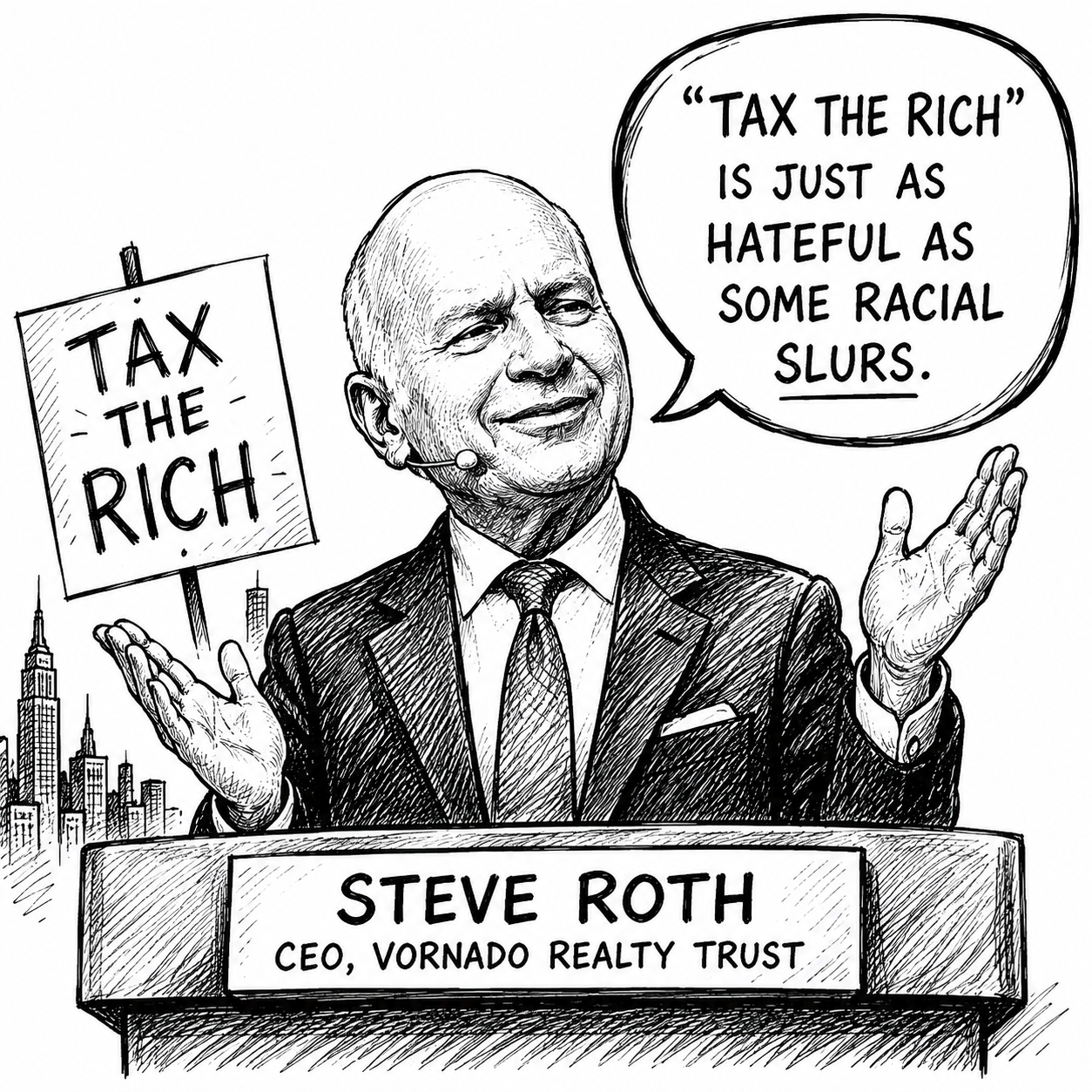
What makes the moment significant is that Roth’s comments arrive during a broader national debate around housing affordability, wealth concentration, and taxation in major cities like New York. Rising rents, shrinking pathways to homeownership, and post-pandemic inequality have intensified scrutiny toward luxury real estate markets and the accumulation of wealth tied to them. Against that backdrop, comparing calls for higher taxation on extreme wealth to racial discrimination struck many critics as an attempt to reposition economic criticism as a form of personal persecution.
The reaction online reflects a growing frustration with how wealth is increasingly defended not simply as success, but as moral contribution. Roth’s argument that wealthy individuals should be celebrated for their role in the economy mirrors a broader rhetorical shift happening among segments of corporate and financial leadership. In this framing, criticism of concentrated wealth becomes reframed as hostility toward the very people allegedly sustaining economic growth, investment, and job creation. The implication is clear: protecting wealth is being presented not just as an economic priority, but as a social necessity.
The controversy also exposes how unstable the language around class has become in the United States. As affordability pressures intensify and public distrust of institutions deepens, conversations around taxation are becoming emotionally and politically charged in ways that increasingly resemble identity conflicts rather than policy disputes. The result is a climate where debates over wealth redistribution, housing access, and economic fairness are no longer staying confined to legislative proposals. They are evolving into cultural flashpoints that reveal how differently Americans understand power, contribution, and entitlement inside the same economy.
At its core, the backlash surrounding Roth’s remarks reflects something larger than one controversial quote. It signals how defensive elite economic positioning has become during a period where public patience around inequality is eroding. The more unaffordable cities become, the harder it becomes to frame wealth concentration as neutral. And increasingly, the public response suggests that many people are no longer willing to accept the idea that protecting concentrated wealth should automatically take precedence over addressing the instability surrounding everyone else.