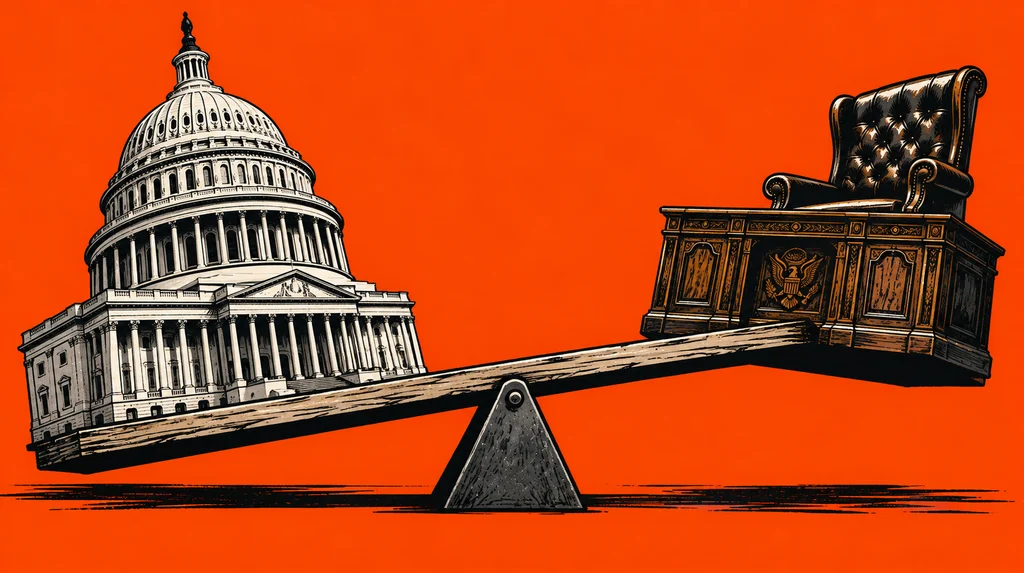
Voters will not choose a president on November 3. But they will decide how much power President Donald Trump has to carry out his agenda during the final two years of his term — and whether Congress becomes a partner, a brake or something in between.
The 2026 midterm elections arrive at an unusually consequential point in American politics.
Every voting seat in the U.S. House of Representatives is on the ballot, along with 35 Senate seats. Republicans currently hold a 53-47 advantage in the Senate, while control of the House is much narrower. That means the results could produce anything from continued Republican control of Washington to a divided government in which Democrats control one or both chambers of Congress.
That matters because Congress does considerably more than pass laws.
The House controls which legislation reaches the floor, originates revenue legislation and has broad investigative and subpoena powers. The Senate determines the fate of legislation as well as presidential nominees, including federal judges and senior administration officials. Both chambers decide how federal money is spent.
President Donald Trump will remain in office regardless of the midterm result. What voters are deciding is what kind of Congress he will have to work with for the remainder of his presidency.
A Republican Congress could give the administration additional opportunities to expand policies enacted or initiated during Trump’s second term. Democratic control of either chamber could make new legislation substantially more difficult and open the administration to far more aggressive congressional oversight.
Here are some of the biggest policy consequences.
The Economy, Taxes and the Cost of Living
The economy is emerging as one of the defining issues of the election, but the debate is broader than inflation alone. Trump’s economic program has combined tax reductions, spending changes and aggressive tariffs designed to reshape American trade and manufacturing. Democrats have increasingly focused their campaign on affordability and have promised, if they win the House, to challenge parts of that agenda, including the administration’s tariffs. Recent polling has also found substantial voter dissatisfaction with the cost of living.
- Republican control would make major reversals of Trump’s tax agenda unlikely. The GOP would instead have an opportunity to defend existing tax policy and potentially pursue additional tax, regulatory and spending legislation.
- A Democratic House could use spending and tax legislation as leverage. Democrats could pass legislation seeking to alter portions of the administration’s economic program, although Trump could veto bills and a divided Senate could stop them before they reached his desk.
- Tariffs could become one of the clearest economic dividing lines. Trump argues tariffs can protect American industry and strengthen domestic production. Democrats have increasingly blamed them for increasing costs, while reports from manufacturing communities show some businesses struggling with more expensive imported components.
Health Care and Medicaid
Health policy could be one of the most direct consequences of who controls Congress. The 2025 budget reconciliation law made significant changes to Medicaid, including new work or “community engagement” requirements, while other changes have tightened eligibility for some immigrants. The Congressional Budget Office has projected that millions fewer Americans will have health insurance over the coming years as the changes take effect. House Democratic leaders say reversing Medicaid reductions and restoring Affordable Care Act assistance would be among their priorities if they regain control.
- Republican majorities would make the current Medicaid changes far more likely to remain in place. Congress could also pursue additional eligibility, spending or work-requirement changes.
- Democratic control could lead to attempts to restore health funding. A Democratic House has already identified Medicaid and Affordable Care Act assistance as potential early legislative priorities, although enactment would still depend on the Senate and president.
- The consequences will increasingly be felt at the state and household level. Medicaid rules affect state budgets, hospitals, rural health systems and individual eligibility, meaning congressional decisions made in Washington can eventually determine who remains covered.
Immigration and Border Enforcement
Immigration policy has been driven heavily by executive authority during Trump’s second term, but Congress still determines the money, statutory authority and oversight surrounding enforcement. That makes the midterms relevant even where a president can act without new legislation. A Congress aligned with Trump could provide additional resources and legal authority for enforcement. An opposition-controlled chamber could scrutinize enforcement operations, challenge funding requests and investigate how federal agencies are carrying out administration policy.
- Republican control could reinforce Trump’s enforcement strategy. Congress could appropriate additional money for detention, deportation operations, border infrastructure and immigration enforcement personnel.
- Democratic control would not automatically end deportations or executive immigration policies. The president retains substantial authority over immigration enforcement, but Congress can restrict funding, conduct hearings and challenge administration practices.
- Benefits for legal immigrants are also part of the debate. Recent changes have reduced Medicaid eligibility for some categories of lawfully present immigrants, demonstrating that immigration policy now extends beyond border enforcement into health and social programs.
Abortion and Reproductive Rights
Since the Supreme Court overturned Roe v. Wade, abortion policy has increasingly been determined by states. But that does not make Congress irrelevant. Federal lawmakers can still consider national abortion restrictions, protections for abortion access, contraception policy and rules affecting medication abortion. The election therefore helps determine whether federal reproductive policy moves toward greater restriction, greater protection or continued legislative stalemate.
- A Republican Congress could consider additional abortion restrictions or limits on federal support for abortion-related services. Whether those proposals could become law would depend on their specifics and support within the Republican caucus.
- A Democratic Congress could attempt to establish federal protections for abortion access. Those efforts would still face the president’s veto and, depending on Senate rules and numbers, significant procedural barriers.
- State elections remain equally important. Governors, legislatures, judges and ballot measures continue to determine abortion access across much of the country, meaning voters may be deciding federal and state reproductive policy simultaneously.
Energy, Climate and Environmental Regulation
Trump has spent his second term reversing Biden-era climate policy, expanding support for fossil-fuel development and reducing environmental regulation. Much of that can be accomplished administratively, but Congress determines federal tax incentives, agency budgets and many of the laws underlying environmental policy. The midterms therefore will not simply determine whether climate policy moves forward or backward; they will determine how durable either direction becomes. Reuters has documented the administration’s broader reversal of prior climate policy and promotion of fossil-fuel development.
- Republican control could reinforce the administration’s energy agenda. Congress could support expanded fossil-fuel production, revise clean-energy incentives and limit the resources available for environmental regulation.
- A Democratic chamber could make new energy legislation much harder to pass. Democrats could also use appropriations and oversight hearings to challenge regulatory rollbacks.
- The practical argument is increasingly about household costs as well as climate. Electricity rates, gasoline prices, utility infrastructure and the rapid growth of power-hungry industries such as data centers are making energy policy an affordability issue as well as an environmental one.
Education and the Federal Government’s Role
Education is predominantly administered by states and local school systems, but Washington influences schools through federal funding, civil-rights enforcement, student aid and regulations affecting colleges and universities. The Trump administration has sought to reduce the federal government’s role in education and has challenged programs connected to diversity initiatives and other administration priorities. Control of Congress will influence how far those efforts can go — particularly when federal funding is involved.
- A Republican Congress could give the administration greater latitude to restructure federal education programs. That could include funding changes and reductions in the federal government’s administrative footprint.
- Democrats could use control of a chamber to protect programs through appropriations. They could also investigate how the administration is withholding, redirecting or conditioning congressionally approved education funding.
- There is a broader separation-of-powers issue underneath the education debate. The administration has attempted to withhold money Congress previously approved for several programs, including education-related initiatives, producing a dispute over whether presidents can effectively cancel spending decisions made by lawmakers.
Foreign Policy and War
Presidents have enormous authority over foreign policy, but Congress controls military appropriations and has constitutional powers involving war, treaties and national defense. Those responsibilities have become particularly significant amid the ongoing conflict involving Iran, which has also contributed to domestic concerns over energy prices and the cost of living.
- A Republican Congress would generally provide Trump with a more supportive legislative partner on foreign policy. That matters for defense spending, weapons programs and funding for ongoing military operations.
- A Democratic-controlled chamber could demand greater scrutiny of military action. Hearings, appropriations restrictions and war-powers legislation could all become tools for challenging administration decisions.
- Foreign policy is now connected directly to domestic economics. Energy prices and supply disruptions mean decisions made overseas can quickly become household affordability issues at home.
Presidential Power and Congressional Oversight
This may ultimately be the most consequential issue on the ballot because it cuts across every other policy area. Presidents have accumulated substantial executive authority under both parties, but Congress possesses investigative powers that become particularly important when the opposition controls a chamber. House Democratic leaders are already signaling that investigations of the Trump administration would increase significantly if they regain the majority.
- If Republicans retain both chambers, congressional investigations of the administration are likely to remain comparatively limited. Committees would largely be controlled by lawmakers from the president’s own party.
- If Democrats win the House, committee control changes immediately. Democratic chairs could issue subpoenas, hold hearings, demand documents and investigate administration officials and policies.
- The Senate carries an additional consequence: nominations. Senate control determines whether Trump’s judicial and executive-branch nominees receive hearings and confirmation votes, potentially shaping the federal government long after the 2026 election is over.
Elections and Voting Rules
The administration’s push for greater federal involvement in election administration and new voting requirements has created another institutional fight heading into November. At the same time, Republican-controlled states have enacted dozens of voting-law changes, including tighter identification requirements and new restrictions affecting mail ballots in some places. Courts have also been asked to decide how far the federal government can go in obtaining and using state voter information.
- Congress could revisit national voting rules. That could include voter identification, citizenship documentation, mail voting and federal election standards.
- Control of congressional committees determines who investigates election administration. Republicans and Democrats have sharply different views about voter fraud, access and the appropriate federal role.
- Many of the rules voters encounter in 2026 still come from the states. The federal midterms are occurring alongside an increasingly consequential state-level battle over who can vote, how ballots are cast and how elections are administered.
What a Change in Congress Would — and Would Not — Mean
There is an important limit to all of this.
A Democratic victory in the House would not mean Trump’s policies disappear on January 3. A Republican victory would not give the president unlimited authority either.
American government is deliberately divided.
The president can veto legislation. The Senate can block House bills. Courts can invalidate actions taken by Congress or the executive branch. Senate procedural rules can make legislation difficult even for the majority party. State governments control significant areas of public policy independently of Washington.
But congressional control still changes the equation substantially.
If Republicans retain the House and Senate, Trump would enter the second half of his term with a Congress generally positioned to protect his legislative achievements, fund his priorities and pursue additional elements of his agenda.
If Democrats win one chamber, divided government returns. Major legislation becomes harder. Spending negotiations become more contentious. Oversight expands. Subpoenas and investigations become more likely.
And if Democrats were to capture both chambers, they would gain considerably more power over legislation and spending — but Trump would still possess the veto, meaning they could constrain much of his agenda more easily than they could replace it with their own.
That is the central choice embedded in the 2026 midterms.
The ballot does not ask voters to choose the next president.
It asks them to decide how powerful the current one should be for the next two years.