
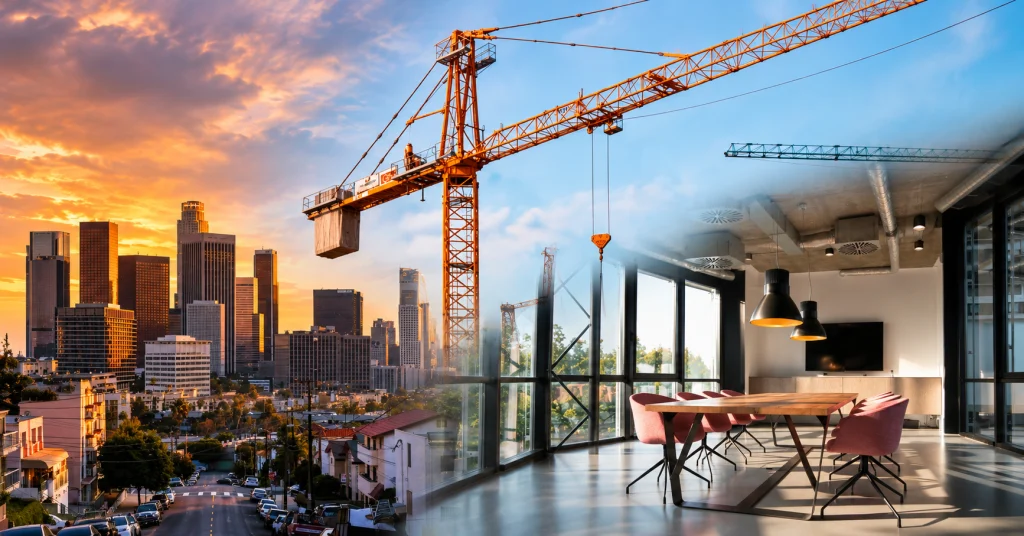
Leasing, apartment occupancy and billions in construction point to a downtown recovery. None of those numbers measure whether the people already living and working there are better off.
Downtown Los Angeles gained a net 85,000 square feet of leased office space in the third quarter, and apartment occupancy there has climbed above 90%, higher than before the pandemic, Los Angeles Times reporter Roger Vincentreported November 14. Institutions are investing again too: a $2.6 billion Convention Center expansion is underway, the Broad museum is building a $100 million addition, and several universities have opened downtown classrooms. After years of empty towers and quiet sidewalks, money is flowing back into downtown. What’s still undecided is who that money will serve.
By the numbers:
- 85,000 sq. ft.: net office space leased downtown in Q3 2026
- 220,000 sq. ft.: office space downtown lost in Q3 2025, when about one-third of its offices sat empty, according to commercial real estate firm CBRE
- 90%+: downtown apartment occupancy, above pre-pandemic levels
- $2.6 billion: the Convention Center expansion now underway
The leasing math. The turnaround is real, but it’s starting from a deep hole. Downtown posted its first quarter of positive office leasing since 2023 earlier this year, and a gain of 85,000 square feet barely dents a market where a third of the space was empty a year ago. Landlords have filled space by cutting deals, so what downtown has really proved so far is that it can stop losing tenants.
What the numbers skip. Office leasing shows what companies want. Apartment occupancy shows what renters with good incomes want. Neither tells you whether lower-income residents, longtime small businesses or the workers who serve downtown are any more secure. A rising property market raises commercial rents, and rising rents decide which shops can stay.
Why This Matters
- Investment flows to property owners first. The Convention Center, the museum and the full apartment buildings increase the value of downtown property. Workers and renters benefit only if policy steers some of that gain toward them.
- Busy streets bring rent hikes. Every new tenant makes nearby storefronts more valuable, and the family-owned shop that survived the empty years is the first to get priced out of the recovery.
- Downtown’s hardest problem isn’t in the leasing data. Skid Row sits inside downtown. As SSC reported, chronic homelessness rose nationally even as overall homelessness fell 6%, and full office buildings don’t fix that.
The next test: The city will want to show off a revitalized downtown as Los Angeles prepares to host the 2028 Olympics. Watch whether the city ties the public money it’s putting into downtown to affordability requirements and protections for small businesses. If it doesn’t, downtown’s recovery will look strong in the leasing data and leave out many of the people who stayed through the empty years.