
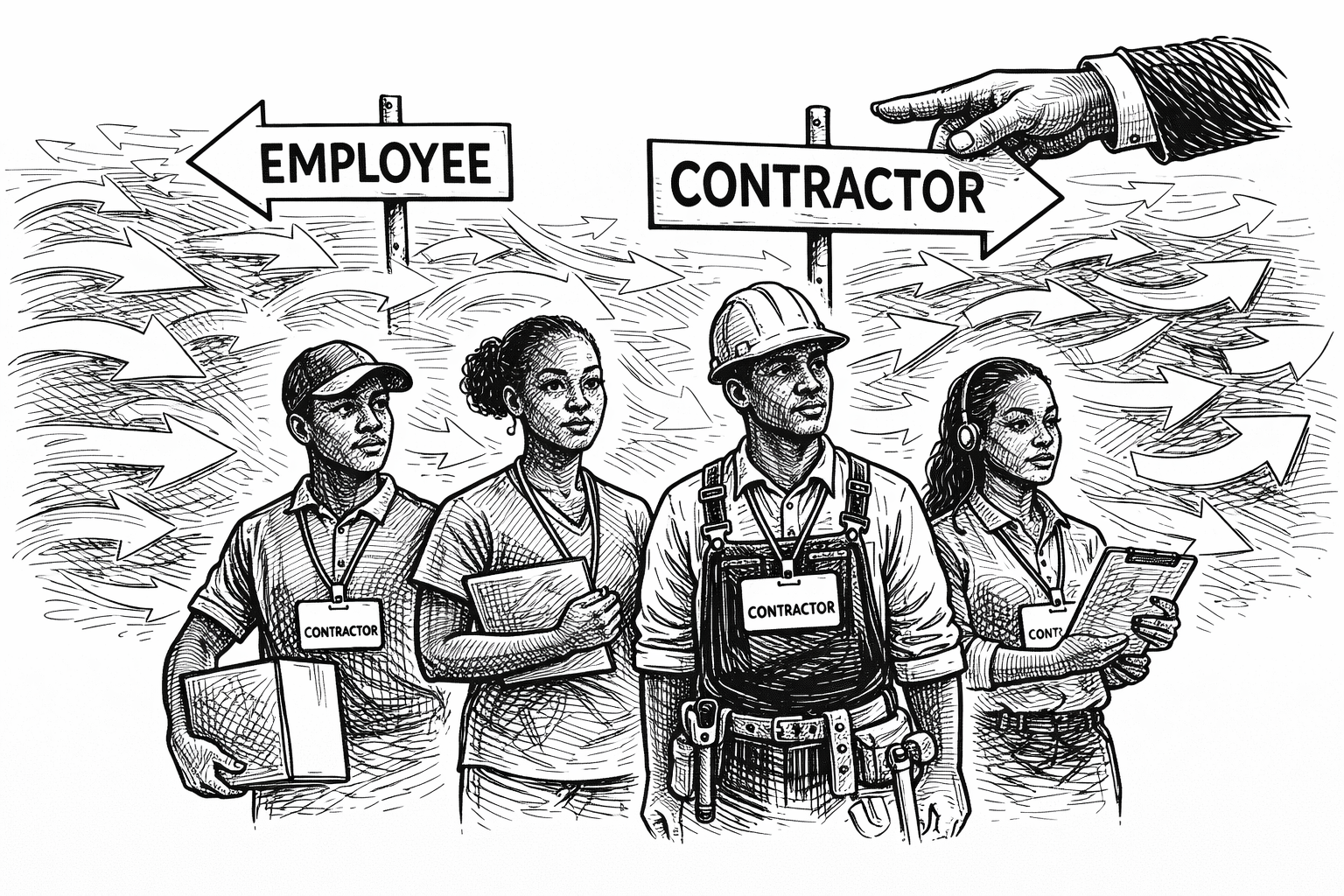
The Trump administration is moving to formalize what the gig economy has been doing informally for years: making it easier for companies to call their workers contractors instead of employees.
The proposed Labor Department rule would loosen the classification standards that determine when a worker is entitled to benefits, overtime, and legal protections. The practical effect is straightforward — more workers pushed into gig status, fewer companies obligated to provide the floor that employment once guaranteed.
Nearly half of the U.S. workforce — 48.5% — is projected to be classified as freelance by the end of 2026. That number is not arriving naturally. It is being built through a series of regulatory decisions that shift risk from companies to individuals, one reclassification at a time.
Black workers are disproportionately concentrated in the sectors most exposed: delivery, rideshare, home care, and logistics. These are not entry points to something better. For many, they are the job. Stripping the protections that come with employment status doesn’t create flexibility. It creates precarity with a different name.
This is not a new story. As we’ve tracked in The $65 Line, when institutional systems fail to deliver — whether airport security or labor law — someone steps in to monetize the gap. The gig economy didn’t emerge because workers wanted it. It emerged because the infrastructure around stable work was allowed to erode. And as The Reference Letter Is Dead makes clear, the workers least able to absorb that erosion are the ones with the fewest institutional anchors to begin with.
The proposed rule is still working through the regulatory process. But the direction is not ambiguous. The floor is being lowered. The question is who falls through first.