
Part of Culture in Motion — examining who defines culture, how it moves, and what it reveals about the moment.
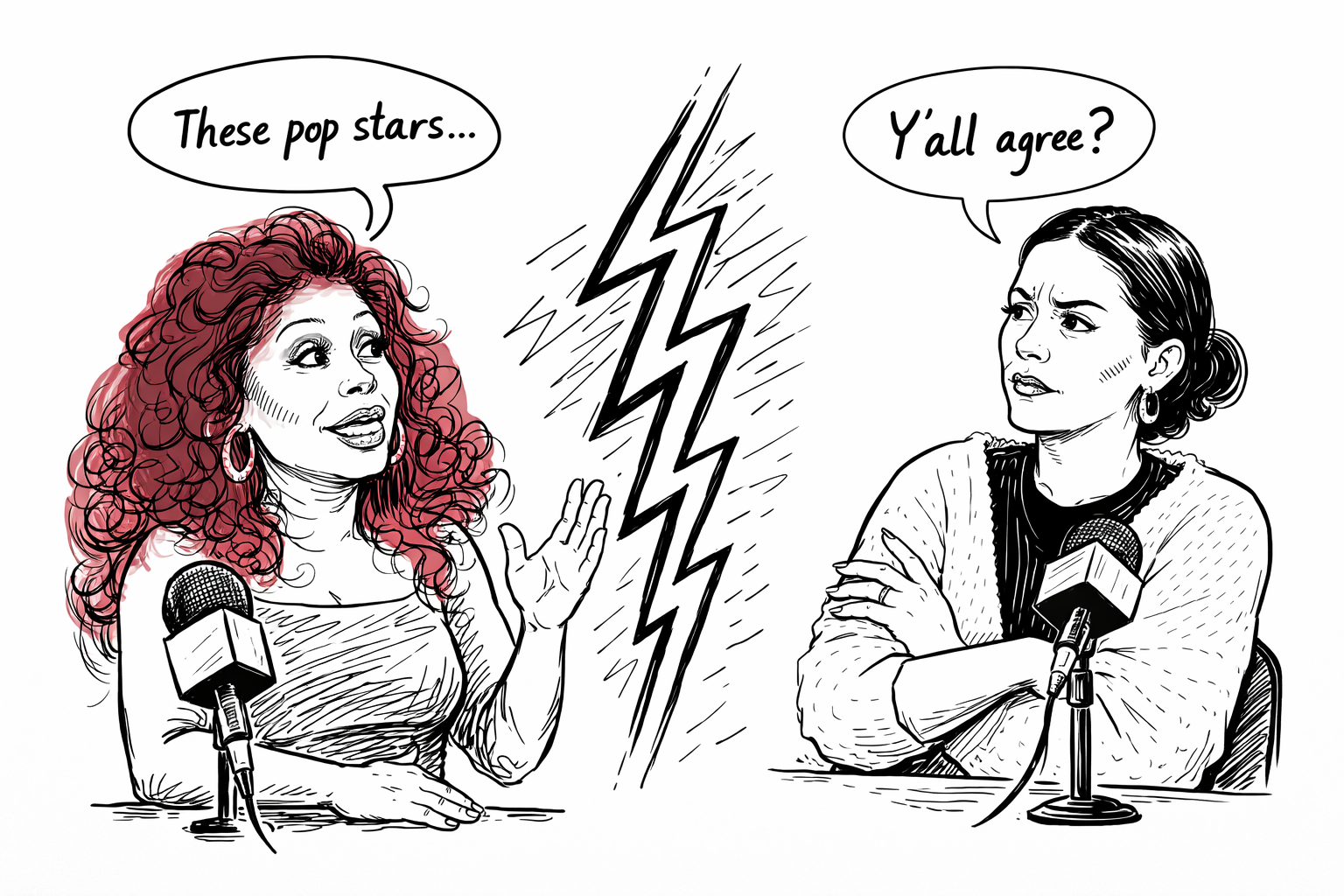
Chaka Khan didn’t stumble into controversy. She walked straight into it, said exactly what she meant, and kept moving. Appearing on Jessie Ware’s Table Manners podcast, the 73-year-old said plainly: “These women are doing any and every damn thing on stage, and trying to sing, too. The ones who are doing the most physicalities — with their butts and stuff, and their body parts — are the ones that usually are compensating for what they don’t have.” No names. No apology. The reaction wasn’t just about whether she was right. It was about who gets to say it — and what it exposes when they do.
Because underneath the headlines and the social media debate is a deeper tension the industry doesn’t like to sit with. Chaka Khan represents a generation where vocal ability was the product — not the enhancement, not one element of a larger package, but the thing itself. She received the Grammy Lifetime Achievement Award in January 2026, and is currently on tour with Patti LaBelle, Stephanie Mills, and Gladys Knight — four legends whose entire careers were built on the premise that the voice is enough. When she talks about performance today, she’s not just critiquing artists. She’s critiquing a shift in what the industry rewards — and by extension, what audiences have been trained to expect.
That shift didn’t happen overnight. It evolved alongside technology, platform economics, and the architecture of attention. The rise of social media didn’t just give artists more ways to connect with audiences — it reshaped what kind of content travels. A 15-second clip of choreography, a viral stage moment, a look — these are easier to circulate than a sustained vocal performance. What gets shared becomes what gets valued. What gets valued becomes what gets prioritized. Over time, the center of gravity moves, and the industry follows it without always announcing the move.
This is a conversation SSC has been tracking in What Happened to R&B Music? — the argument that the genre once defined by vocal power and emotional storytelling has been gradually reshaped by digital production, atmospheric texture, and a platform economy that rewards mood over mastery. The artists who built R&B — Whitney Houston, Anita Baker, Luther Vandross — came up in an environment where the voice carried the full weight of the record. Instrumentation existed to support the emotion, not to substitute for it. Chaka Khan is a product of that same standard, and what she’s naming is not just a stylistic preference. It’s a structural shift in what the industry decided to prioritize — and what it stopped holding artists accountable to.
So when Chaka Khan says these women are doing “any and every damn thing on stage,” she’s not only talking about them. She’s talking about the system they’re operating inside — an industry where visibility often outweighs vocal discipline, where performance has expanded but in some cases the core skill has become negotiable. That’s not a moral judgment. It’s a structural one. And it connects to what SSC has examined in When the Artist Isn’t Human — the question of what gets centered when the tools of performance multiply faster than the standards that govern them.
The reaction followed a familiar pattern. Some called it hate. Others called it truth. The divide says more about the audience than it does about her, because what you hear in her critique depends on what you believe music is supposed to be. If you see music as a full sensory experience — sound, movement, image — then today’s artists are evolving the form. If you see music as a vocal art first and everything else second, her critique lands differently. Both things can be true simultaneously. Performance has expanded and the definition of a complete artist has widened. But expansion doesn’t erase tradeoffs — it redistributes emphasis. And that redistribution is what her comments forced into the open.
There’s also something generational happening here that cuts deeper than taste. Artists like Chaka Khan didn’t come up in an era where the audience could watch them think in real time. Today’s artists perform not just on stage but across platforms, constantly — the pressure isn’t just to sing, it’s to be visible, engaging, viral, consistent. That kind of exposure changes how energy is allocated, what gets practiced, what gets prioritized. The standard didn’t only shift because artists changed. It shifted because the environment they’re operating in changed around them. Chaka Khan is critiquing the outcome without fully accounting for the conditions that produced it — which doesn’t make her wrong, but it makes the conversation more complicated than the quote alone suggests.
So the real question isn’t whether she’s right or wrong. It’s what her critique reveals about where the culture actually is. When a legend points out a shift this clearly, the reaction is rarely about correction. It’s about recognition — and recognition is uncomfortable, because if she’s even partially right, then the conversation isn’t just about artists. It’s about audiences. About what we reward. About what we share. About what we decide is worth our attention. The industry follows that signal more closely than it admits. Chaka Khan didn’t create the tension. She named it.
Why This Matters
Standards don’t disappear — they migrate. When an industry shifts what it rewards, the artists who follow that shift aren’t making a moral choice. They’re making a rational one. What Chaka Khan is really asking is whether the culture is conscious of that migration, or whether we’ve simply stopped noticing it happened. That question is worth sitting with longer than the controversy around the quote.