
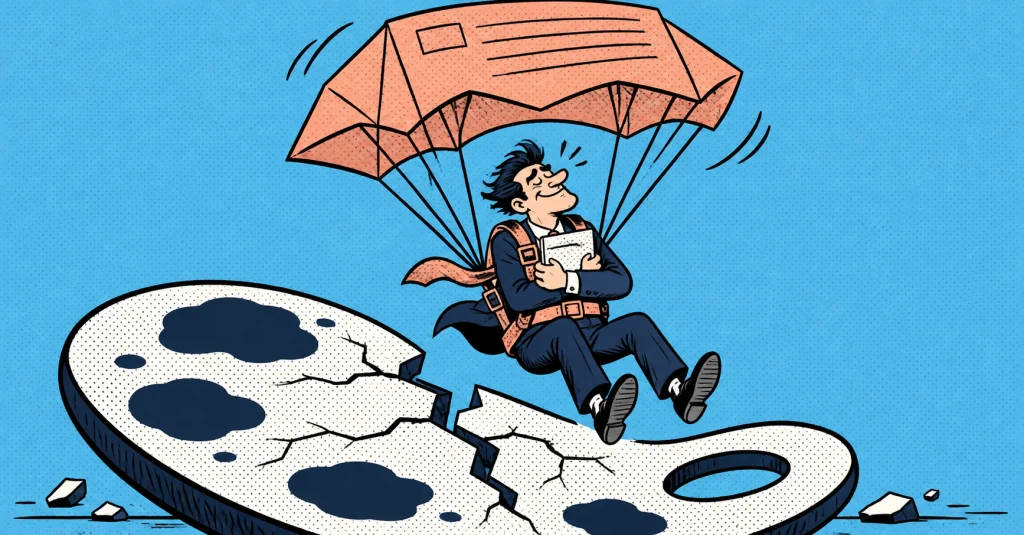
The design company is cutting about 22% of its staff with one of the most generous exit packages in tech. The harder story is why it had to.
Most layoff announcements land as bad news and stay that way. Canva’s went viral for the opposite reason.
The Sydney-based design company announced a restructuring this week that affects about 1,271 people, roughly 22% of its workforce. Some will lose their jobs. Others will switch roles or relocate. Canva hasn’t said how many fall into each group. But the part people are sharing isn’t the number. It’s what the people walking out the door get to take with them.
One post on X praising the package — “We need more founders like thissss” — pulled in more than 7 million views. That reaction is real, and it’s worth understanding. So is the thing it’s drowning out: a company once seen as untouchable is cutting a fifth of its staff because AI is eating into the business it built.
What Canva is offering
The package goes well past the usual two weeks and a handshake. According to Fast Company and HR Brew, departing employees get:
- At least six months’ salary, no matter what country they work in
- An extra year of healthcare in countries where Canva provides coverage
- Career support: one-on-one coaching, interview prep, résumé reviews and mock interviews run by Canva’s own recruiting team, plus a year of LinkedIn Premium
- Their work MacBooks, theirs to keep
- Their shares: Canva is dropping its one-year vesting cliff for people hired in the past 12 months, so recent hires don’t walk away with nothing
- $10,000 grants for anyone who wants to start a company or project
- An opt-in alumni talent directory, with CEO Melanie Perkins sharing her own email for leaders who have openings
How that compares
The reason this package stands out is that the bar is low, especially in tech.
According to HR Brew, Meta’s spring layoffs came with four months of severance plus two weeks for each additional year of service. Oracle’s September cuts offered four weeks plus a week per year. Challenger, Gray & Christmas data from 2024 put the average U.S. severance at 19 weeks — and the average in tech and communications at just 11.
Six months is roughly 26 weeks. For many Canva employees, that’s more than double what the industry typically pays.
That runway matters more right now than it might have a few years ago. As SSC has reported, layoffs are low, but finding the next job is taking longer. A severance check that lasts half a year buys time a two-week check never could.
The $10,000 startup grant also lands at an interesting moment. SSC has covered how AI has become the top reason for layoffs this year, and some workers are answering by starting their own businesses. Canva is essentially funding that move for the people it lets go.
Why it’s happening
Here’s the part the applause skips over.
“This has been our hardest year yet,” Perkins wrote to employees. Canva’s growth has slowed for the first time in a decade, according to TechCrunch, and the company cut its revenue growth forecast from 30% to 20%. A big driver is cost: running AI features is expensive, and those costs are climbing. Canva is now building its own AI models to bring that bill down and lean less on outside providers.
The competition has also changed shape. Canva’s pitch was always that anyone could make a decent poster, slide deck or social graphic without hiring a designer. Now general-purpose chatbots like ChatGPT and Gemini can generate those images from a sentence. The tool that made design easy is competing with tools that make it automatic.
Investors noticed. Early backers cut Canva’s valuation to about $35 billion in August, a hit the company didn’t need as it eyes a potential IPO.
The restructuring itself reflects that pressure. Canva is merging its product, growth and platform teams, cutting back on narrow specialist roles so more people cover broader ground, and asking employees to come into the office a few days a week.
The bigger picture
Canva isn’t alone. Tech layoffs had already passed last year’s total by mid-year, and Big Tech is spending $725 billion on AI in 2026, with layoffs part of how those companies are paying for it.
What makes Canva different is how it handled the exit, not whether it happened. And that may be the most honest takeaway. Not every company can afford this. Melissa Capicchiano, a regional manager at Deel, told HR Brew the package should be admired as “a hard choice made well” — but warned other companies not to follow suit simply because Canva did.
That’s fair. But it also raises a question SSC has asked before: companies want employee loyalty, while layoffs tell a different story. Canva just showed what it looks like when a company tries to earn some of that loyalty back on the way out.
It doesn’t make losing a job painless. Nearly 1,300 people’s working lives just changed. It does set a new reference point — and the next company that cuts 20% of its staff will be measured against it.