Baltimore recorded 83 homicides through September, compared with 98 at the same point last year, Mayor Brandon Scott’s office reported. Each of those numbers is a person killed and a family left grieving, and the 15 fewer deaths are a measurable improvement in a city whose public identity has so often been reduced to its worst days. The 15.3% drop came alongside a smaller 4.2% decline in nonfatal shootings, and it continues a trend SSC has followed in Baltimore’s falling homicide count.
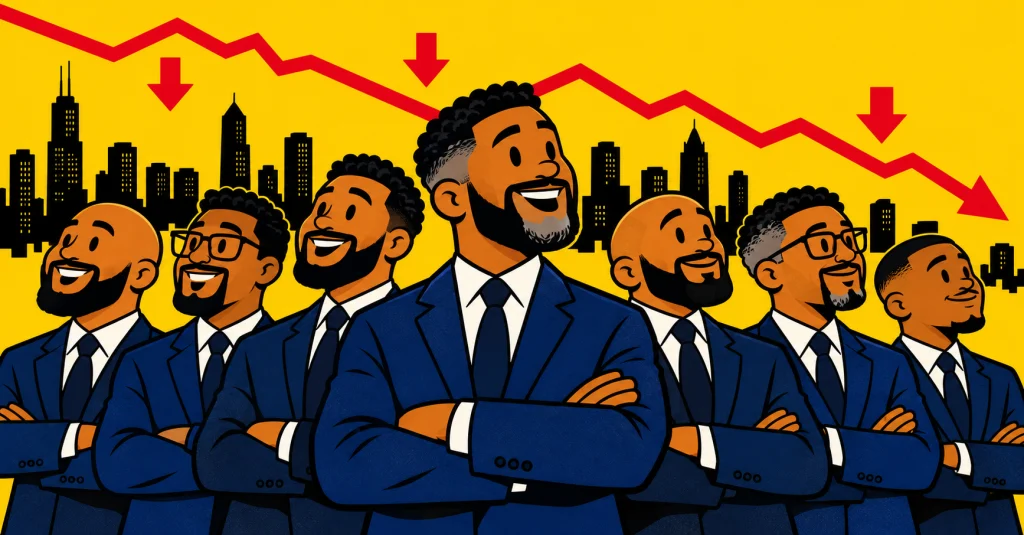
A social media graphic now circulating puts Scott beside six other Black male mayors and shows falling violence in Birmingham, Chicago, Newark, Memphis, Cleveland and Atlanta. Its core premise holds up: several cities led by Black men are posting real public safety gains. But the graphic mixes 2025 annual totals, first-half 2026 comparisons and more recent updates, so it cannot work as a ranking of who is doing best. Several of the improvements behind it are documented in city reports and independent research, and each one holds up best on its own terms.
What the Numbers Show
In Newark, led by Mayor Ras Baraka, homicides fell from 17 in the first half of 2025 to six in the first half of 2026, a 64.7% decline, according to preliminary figures that placed the city first among the 66 agencies in the Major Cities Chiefs Association’s midyear survey. The raw counts belong next to the percentage. A small change in numbers can produce a dramatic swing in percentage terms, and 11 fewer killings is still an enormous human gain.
In Cleveland, Mayor Justin Bibb’s administration reported in September that homicides fell 22.8% under its 2026 summer safety plan, with robberies down 33.9% and motor vehicle thefts down 34.9%, according to the city. Those figures compare this summer with the city’s 2024 Operation Heat Wave rather than with last year, a detail the graphic leaves out.
Memphis police reported that murders fell 60% in the second quarter of 2026 compared with the same quarter in 2025, while aggravated assaults dropped 30% and robberies 38%, according to the department. That is a three-month window, not a full year. Chicago, meanwhile, ended 2025 with its fewest homicides since the 1960s, according to police data, and the University of Chicago Crime Lab counted 168 fewer homicides through mid-December than a year earlier. Each measure tells a different part of the story, and readers need to know which one they are looking at to judge both the achievement and its limits.
The Work Behind the Decline
The strategies these cities describe go beyond arrests. Baltimore’s Group Violence Reduction Strategy brings police, prosecutors, community partners and social services together around people at the highest risk of shooting or being shot, and the city said Safe Streets workers had mediated more than 1,036 potentially violent conflicts through Sept. 29. Cleveland’s summer plan paired targeted enforcement with violence prevention money, youth programs and neighborhood cleanup across eight city departments.
Those accounts come from the administrations that run the programs, so they need independent scrutiny. They also hand reporters concrete questions: who receives help, how conflicts get interrupted and whether the gains reach the blocks where residents have faced the greatest danger. Baltimore’s progress has its own tension, as SSC reported when it found the city winning on crime while losing on displacement.
A National Decline Complicates the Credit
These cities are also part of a broader trend. The Council on Criminal Justice found that the average homicide rate across the 30 study cities reporting that crime fell 18% in the first half of 2026 compared with the same period a year earlier, its midyear report said, and researchers are still debating why. That wider movement keeps any mayor, president or party from credibly claiming sole ownership of the improvement, a fight SSC has covered as crime falls but consensus doesn’t.
A mayor’s race does not explain why violence fell, either. Leadership shapes budgets, staffing, partnerships and whether programs survive long enough to work, but tying specific decisions to specific results takes evidence beyond a photograph and a downward arrow. What the graphic gets right is that these records belong in the same conversation that once defined these cities by their worst years.
The Story Still to Be Told
Black mayors should have their governing records examined seriously, including documented progress on the issue most often used to judge their cities. That examination should reach the intervention workers, investigators, neighborhood groups and residents doing the daily work of preventing violence, and the people whose routines are starting to change: parents deciding whether their children can play outside, business owners rethinking closing hours, outreach workers trying to keep an argument from becoming a funeral. Falling homicide counts make that reporting urgent, and learning how communities hold on to these gains could help cities far beyond these seven.