Austin’s Housing Crash Isn’t a Crash. It’s a Bill Coming Due.
Every pandemic boomtown saw prices cool off. Only Austin built its way into a hangover this deep, this long.
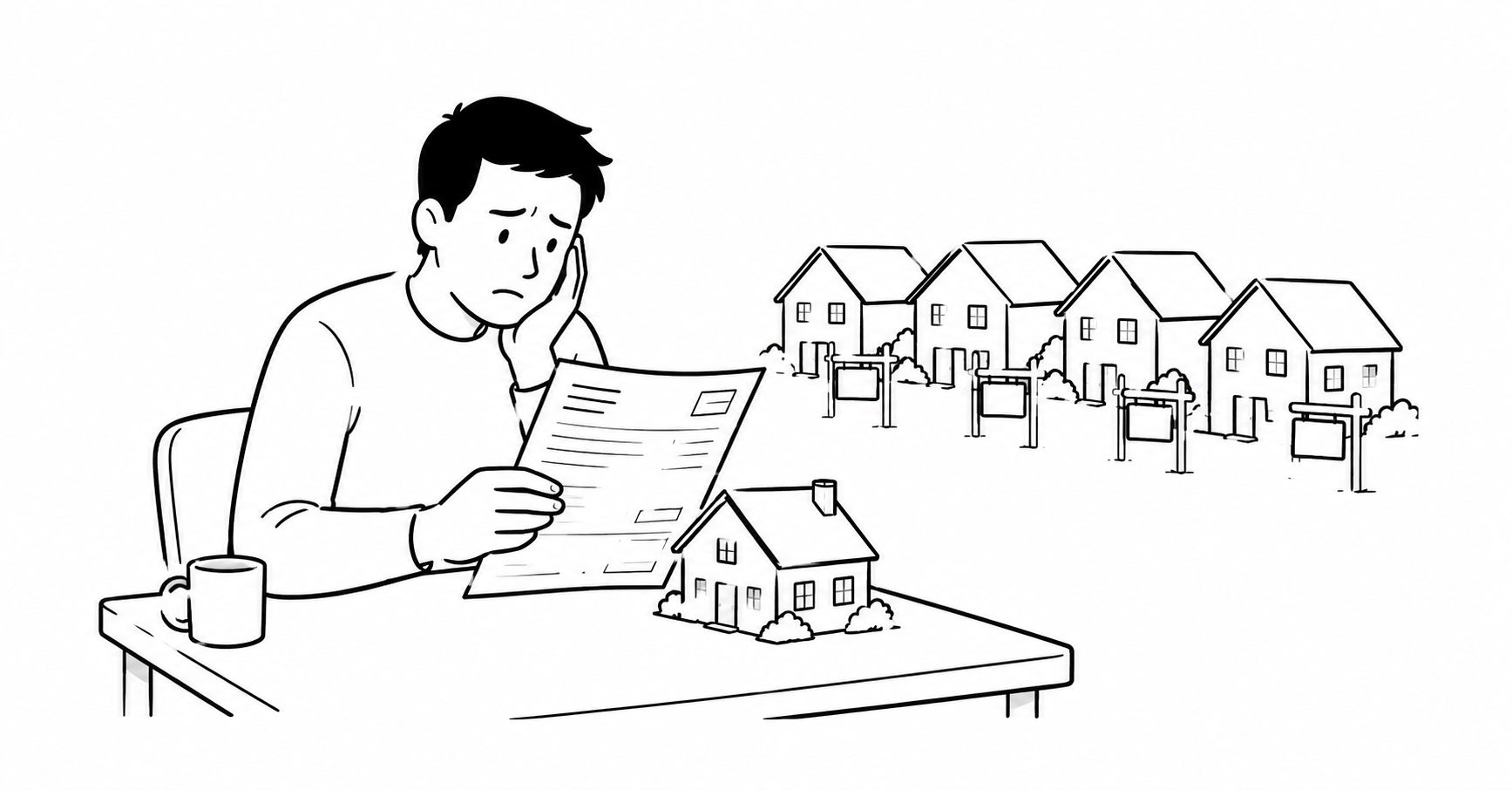
Austin’s home prices have fallen 14 to 24 percent from their May 2022 peak of roughly $552,000, depending on which dataset and geography you use, according to reporting by James Rodriguez for Business Insider. That range alone tells you something: Boise, Denver, and Phoenix all cooled from their own pandemic-era highs too, but none of them are still explaining themselves to homeowners this far past the peak. “The market got super out of whack, super quickly,” Realtor.com senior economist Joel Berner told Rodriguez. “We’re just still slowly recovering from that.”
The standard explanation for a housing slowdown is demand drying up. That’s not quite what happened in Austin. Demand didn’t vanish, it normalized, as remote-work-driven cross-country moves slowed and mortgage rates climbed high enough to price out marginal buyers. What actually broke Austin’s market was supply, and specifically how much of it arrived at once. Builders spent the boom years constructing at a pace matched to a demand curve that assumed the pandemic migration wave would keep compounding. It didn’t. The homes kept coming anyway, landing in a market that could no longer absorb them at the prices builders had underwritten.
That combination, cooling demand meeting a supply pipeline still running at boom-era capacity, is the actual mechanism behind why Austin’s correction has outlasted its pandemic-boomtown peers. Zonda executive Keith Hughes described the run-up itself in blunt terms to Rodriguez: “It was pretty dramatic. Things were just going gangbusters.” The unwind was always going to be proportional to how dramatic the run-up was, and Austin’s run-up was more dramatic, and more supply-fueled, than most of the other cities riding the same wave.
The current numbers bear that out. Central Texas Housing Report data shows the Austin-Round Rock-San Marcos metro’s median home price falling to around $415,300 to $426,220 in the first months of 2026, down roughly 3 to 3.4 percent year over year, with median prices sitting at their lowest levels since 2021. Inventory has climbed to around five months of supply, a level that market analysts consider balanced rather than a seller’s or buyer’s market outright, a sharp reversal from 2022’s sub-two-week bidding wars, when homes routinely sold above list price before the first weekend closed. Homes now sit on the market an average of 61 to 85 days, depending on the source and month measured, versus essentially no meaningful time on market at the 2022 peak.
What that data doesn’t capture is what it feels like to be on the wrong side of the timeline. Rodriguez’s reporting follows homeowners like Froniewski, who bought in 2022 near the top of the market and now says plainly: “If I had to sell the house today, I would be in shambles.” He’s also made peace with the decision on principle. “I’m a firm believer that you can’t time the market,” he told Rodriguez. “You never know when the peak is, and you never know when the bottom is.” That’s true as a general rule about markets. It’s also a specific kind of consolation available only to someone who isn’t actually forced to sell right now, which is the real dividing line running through Austin’s housing story: it’s a very different market depending on whether your ownership timeline is voluntary or forced.
That dividing line matters because Austin’s fundamentals underneath the price correction remain genuinely strong, which is what makes this specifically a hangover rather than a collapse. The metro continues to draw major employers and well-paid young workers; American Ventures’ 2025-2026 market report found the metro added roughly 58,000 residents between 2023 and 2024, a 2.3 percent gain, and multifamily absorption nearly matched new deliveries in the most recent measured quarter, evidence that demand is still functioning even while price growth stalls. Agents tell Rodriguez that listings in desirable neighborhoods still draw multiple bidders. The correction isn’t evidence Austin stopped being a place people want to live. It’s evidence that the supply built to meet an unsustainable migration rate is still working its way through a market that returned to a sustainable one.
The unresolved question is what happens to price appreciation once that oversupply finally clears. Most current forecasts for 2026 through 2027 cluster around low-single-digit annual appreciation, in the 2 to 6 percent range, contingent heavily on where mortgage rates land. If rates fall meaningfully below 6 percent, the pent-up demand from buyers who’ve been sitting out the correction could reaccelerate price growth faster than current forecasts assume. If rates hold above 6.5 percent, the plateau likely extends further, which is the more probable near-term path given where rates have actually sat through 2026. Either way, the timeline that matters isn’t the market’s, it’s each individual owner’s. Austin’s fundamentals suggest the hangover eventually clears. Whether any specific homeowner is still holding the asset when it does is a matter of circumstance, not conviction.