
New data from Appfigures suggests the app economy isn’t shrinking in the age of AI, it’s accelerating. Global app releases jumped 60 percent year over year in Q1 2026, with iOS launches alone up 80 percent. April is tracking even higher, with total releases more than doubling compared to the same period last year. As Greg Joswiak put it, predictions of the App Store’s decline “may have been greatly exaggerated.”
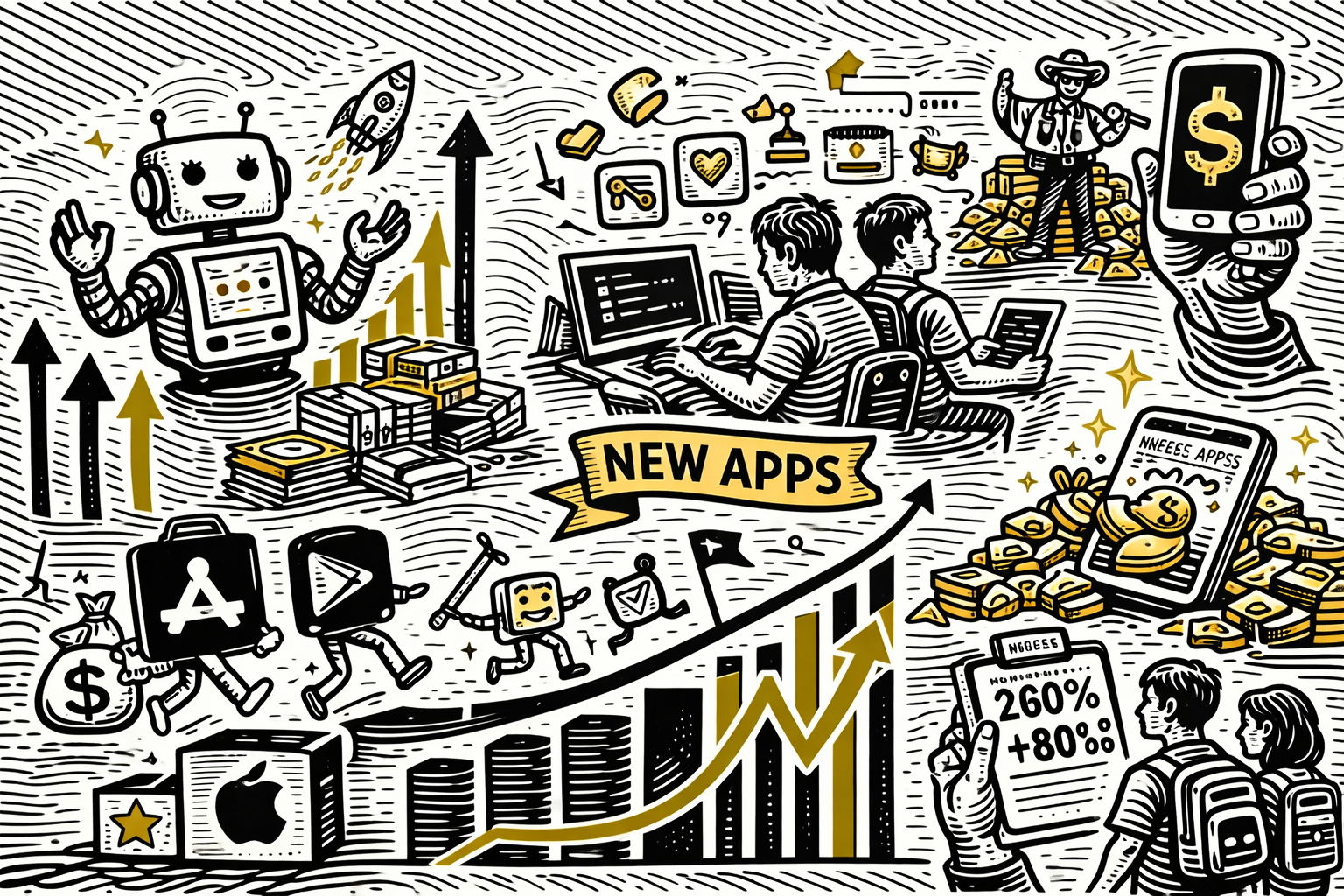
The surge complicates a dominant narrative pushed by companies like Carl Pei and echoed in reporting from The New York Times, which suggested AI agents, chatbots, and new hardware could replace traditional apps altogether. Instead, AI may be expanding who gets to build software in the first place. Tools like Replit and Claude are lowering technical barriers, turning non-engineers into first-time developers and fueling a new wave of “vibe-coded” apps.
The composition of new apps reflects that shift. While mobile games still dominate, categories like utilities, lifestyle, productivity, and health and fitness are rising quickly, signaling that more creators are building tools for everyday life, not just entertainment. The app ecosystem is becoming less about scale-first startups and more about distributed, niche problem-solving.
But the boom is also exposing structural strain. Apple has recently faced scrutiny after allowing problematic apps to gain traction, including a crypto scam that reportedly drained $9.5 million and a rewards app that climbed the charts before being removed. The company has historically blocked hundreds of thousands of low-quality or fraudulent submissions, but the velocity of AI-assisted app creation is testing the limits of that gatekeeping model.
What’s emerging is not the end of apps, but a redefinition of them. AI is not replacing the App Store, it’s flooding it. The real question now is not whether apps survive, but who controls quality, trust, and visibility in a marketplace where anyone can build, publish, and scale overnight.