
Part of Culture in Motion — examining who defines culture, how it moves, and what it reveals about the moment.
Cardi B returned to Boston last night to a familiar scene: another sold-out show, part of a sustained run that has consistently drawn crowds in a city that has embraced her as its own. The moment, on its surface, was straightforward. A major artist, a packed venue, and a clear signal of connection between performer and place. But the conversation didn’t stay there.
As clips and reactions from the show circulated, a question began to take shape online: “Does Boston know five Bia songs?” What followed was not just disagreement, but something closer to collective rejection. Comment after comment pushed back with the same language and tone—“we don’t know her,” “we don’t claim her,” “she’s not from the city.” The responses were less about answering the question and more about drawing a line.
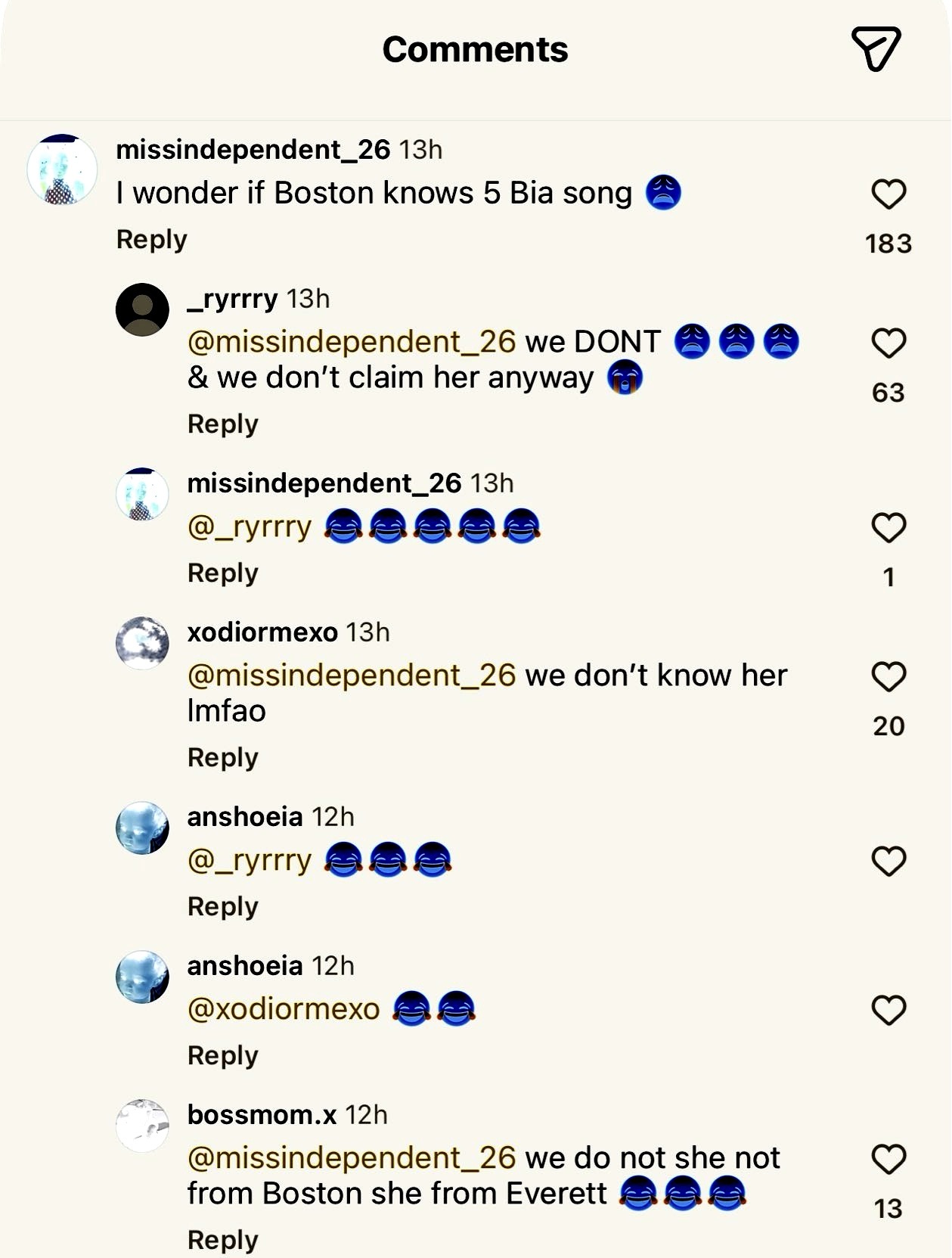
That reaction is where the story shifts. Bia is from the Boston area, a fact that would seem to establish a clear connection. But what the response makes visible is that geography alone does not secure cultural ownership. Being from a place is not the same as being recognized by it. That recognition is shaped by visibility, resonance, and whether an artist is perceived to reflect something back to the people claiming them.
Cardi B’s presence complicates that dynamic even further. She is not from Boston, but she has built a consistent relationship with the city—through repeated performances, a visible connection to the area, and even personal ties, including owning a home locally during her relationship with Stefon Diggs when he was with the New England Patriots. None of that makes her “from” Boston in the traditional sense, but it reinforces something just as important: proximity and engagement can build cultural acceptance in ways origin alone cannot.
What the comments ultimately reveal is not just opinion, but a process. The distinction being drawn between “the city” and “the state,” between proximity and belonging, functions as a way of setting boundaries around cultural identity. There is no formal authority behind it. No institution determining who represents Boston. Instead, that decision is made collectively, in real time, through repetition and agreement.
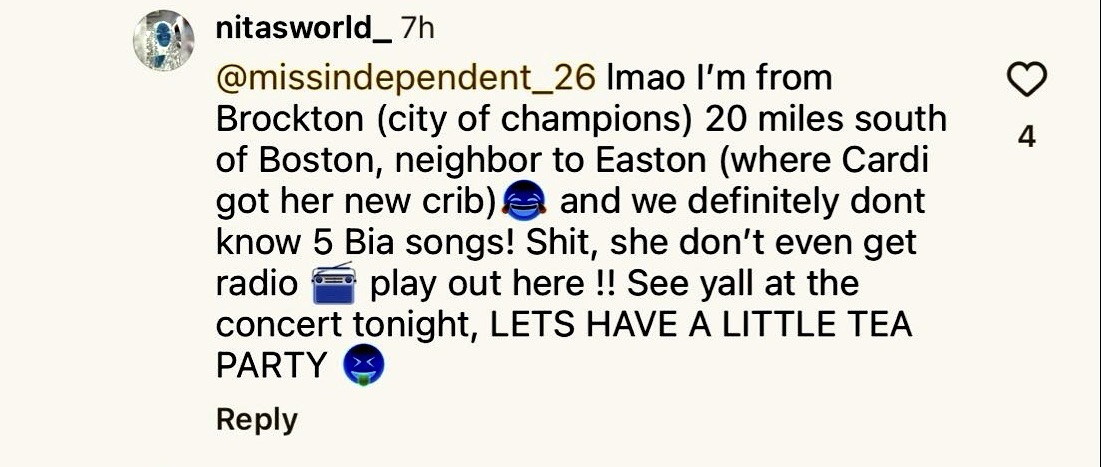
The question underneath it all is less about any one artist and more about the system itself: who gets claimed, who does not, and how those decisions are made. In culture, origin may open the door, but acceptance determines whether someone is allowed to stay.