
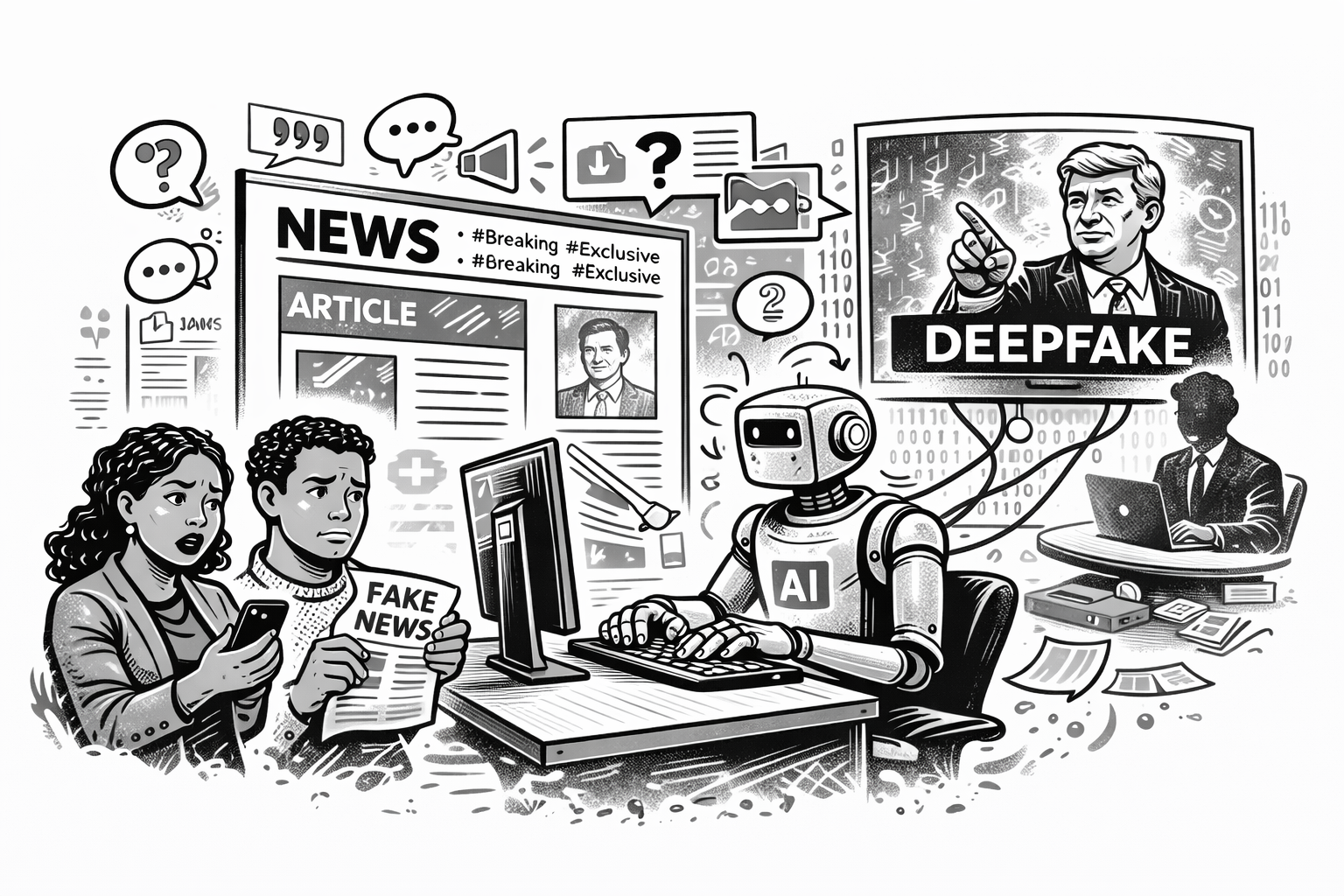
The line between real and fabricated is disappearing — faster than most people realize. A Reuters Institute survey found that 58% of people globally are concerned about their ability to distinguish truth from falsehood in online news. That concern is well-founded. The World Economic Forum’s Global Risks Report 2026 ranked misinformation and disinformation among the top short-term risks globally — one of the few threats that worsens nearly every other risk on the list over both two and ten-year horizons.
What has changed is scale and sophistication. AI-generated video, audio, and text can now be produced at industrial speed and distributed globally before verification is possible. Russia’s Pravda network has published millions of AI-generated articles targeting more than 80 countries — content designed not for human readers, but to poison the training data that feeds future AI models. For communities of color — historically misrepresented and erased by mainstream media — the stakes of a synthetic information environment are particularly high. As Leena Alridge explored in The Trust Gap, trust is now the defining currency in a fragmented media landscape. And as Bryson Davis reported in Why It Feels Like Some Stories Are Missing, the absence isn’t always editorial — increasingly, it’s algorithmic. In that environment, community-rooted reporting isn’t just an editorial choice. It’s a structural advantage.