
NEWS DESK | SOCIAL STORYTELLERS COLLECTIVE
Germany, Canada, the United Kingdom, Spain, Denmark, Finland, and Mexico have all recently issued updated travel guidance urging their citizens to exercise caution when entering the United States. While the language varies, many of the advisories encourage travelers to remain aware of immigration enforcement practices, documentation requirements, and safety concerns that could arise during their visit. Travel advisories themselves are not unusual—governments routinely update them as conditions change. What makes this moment notable is that many of the countries issuing these notices are among America’s closest allies.
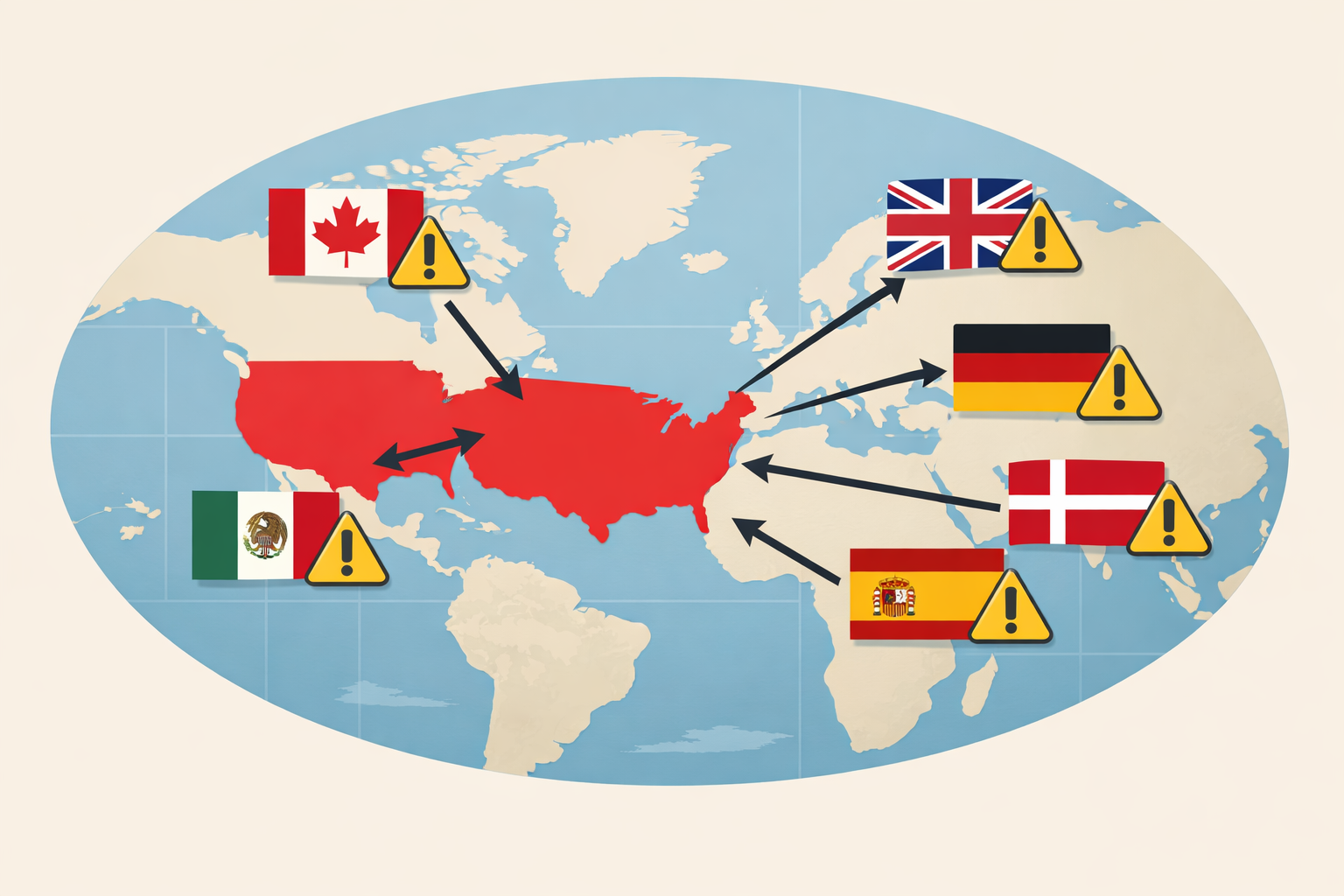
Several allied nations—including Germany, Canada, the United Kingdom, Spain, Denmark, Finland, and Mexico—have recently issued updated travel guidance for citizens visiting the United States.
International perceptions of the United States have increasingly been shaped by highly visible domestic debates over gun violence, policing, and immigration enforcement. In an era when news travels instantly across borders, events inside one country can quickly influence how other governments assess risks for their citizens traveling abroad. When incidents receive global attention, foreign ministries often respond by updating travel guidance to reflect what their travelers might encounter.
Tourism data highlights why these perceptions matter. According to the U.S. National Travel and Tourism Office, the United States welcomed more than 66 million international visitors in 2023, with Canada and Europe representing some of the largest sources of inbound travel. Even modest changes in traveler confidence can affect airlines, hotels, and tourism-dependent cities across the country.
To be clear, travel advisories do not necessarily indicate that a destination is unsafe. Governments often issue them as precautionary guidance intended to help travelers prepare for local conditions and avoid potential complications. Still, the optics of several allied nations cautioning their citizens about travel to the United States represent a subtle but noticeable shift in how global safety guidance has traditionally flowed.
For decades, the United States has been one of the world’s most frequent issuers of travel warnings about other countries. Seeing the direction of that guidance partially reverse invites a different perspective. In an interconnected world where perception travels as quickly as information, the question becomes difficult to ignore: what does it say about global confidence when some of America’s closest allies begin warning their citizens about visiting the United States?