
A new Pew survey finds mothers outrank every other influence on what it means to be a Black man or woman. Social media matters far more to Black women under 50 than to those who came before them.
Ask Black Americans where they learned what it means to be a Black man or a Black woman, and most point home first. In a Pew Research Center survey conducted in June 2025, 65% of Black men and 68% of Black women said their mother shaped those views a great deal or a fair amount. About half or more named a father, a spouse or partner, friends or other relatives.
Taken together, the people in their lives reach almost everyone. Seventy-nine percent of Black men and 83% of Black women said at least one personal relationship had influenced their views. Religious leaders and teachers ranked lower, and media ranked lower still: 43% of Black men and 46% of Black women said entertainment, social media or podcasts had shaped them in a meaningful way.
The home still sets the terms
The finding fits a longer pattern in Pew’s research. Black adults are more likely than other Americans to say they’re close to grandparents and cousins, and in an earlier survey, family and friends were the single biggest source of what Black Americans said they knew about Black history. Identity, in other words, is passed down through people as much as it is learned anywhere else.
When Pew asked respondents to describe the most important lesson they’d learned, the answers ranged from responsibility and faith to pride, resilience and the extra effort many said racism demands of them. One woman in her early 60s wrote that she’d learned she could be “soft and fierce, tired and powerful.” Others described learning to stay composed because they knew they’d be judged as a group rather than as individuals.
The generational split
The media numbers look modest overall, but they change sharply with age, especially for Black women. Forty-one percent of Black women under 50 said platforms like Instagram, TikTok and YouTube had influenced what being a Black woman means to them, compared with 16% of those 50 and older. Among Black men, the gap was smaller, 29% versus 17%.
Income tells a similar story among women. Forty-six percent of lower-income Black women said entertainment media had shaped their views, compared with 25% of upper-income Black women. That matters because the images on those screens aren’t neutral. Coverage of Black women in sports, for instance, has drawn criticism as “open season” from people inside the industry.
What it means for the people doing the shaping
For Black men, the survey points back to relationships that are already under strain. SSC has reported on the loneliness intervention gap leaving Black men behind and on the cost of performing strength. If mothers, fathers and friends remain the main teachers, then the health of those relationships is part of the story, too.
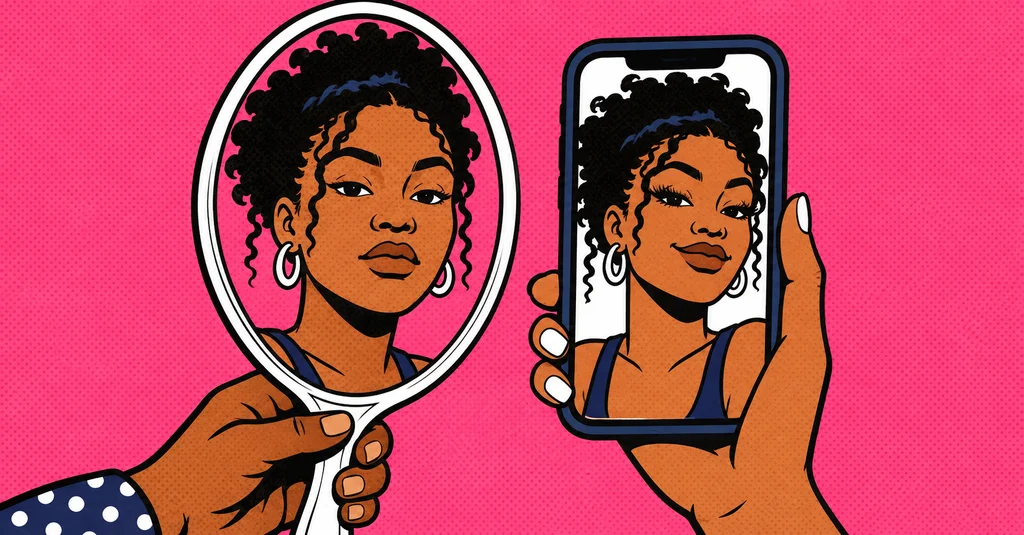
For younger Black women, the lesson is that identity is now being shaped in two places at once. The home still leads, but the feed is close behind, and it’s run by companies whose priorities are engagement, not a young woman’s sense of who she is. The question this survey raises is less about whether media matters than about who gets to shape the version of Black identity that a scrolling generation absorbs.