
The World Health Organization’s June 2025 report from the Commission on Social Connection confirmed what the U.S. Surgeon General named in 2023 — loneliness is a global public health crisis, linked to an estimated 100 deaths every hour worldwide. The institutional response is now scaling. Governments are funding community connection programs. Employers are adding social wellness benefits. Mental health platforms are expanding their reach. The infrastructure of intervention is being built out at a pace the crisis arguably requires. The question that is not being asked loudly enough is whether the solutions being built were designed for the population carrying the most acute version of the problem — and the structural dimensions of Black male loneliness make that question more urgent, not less.
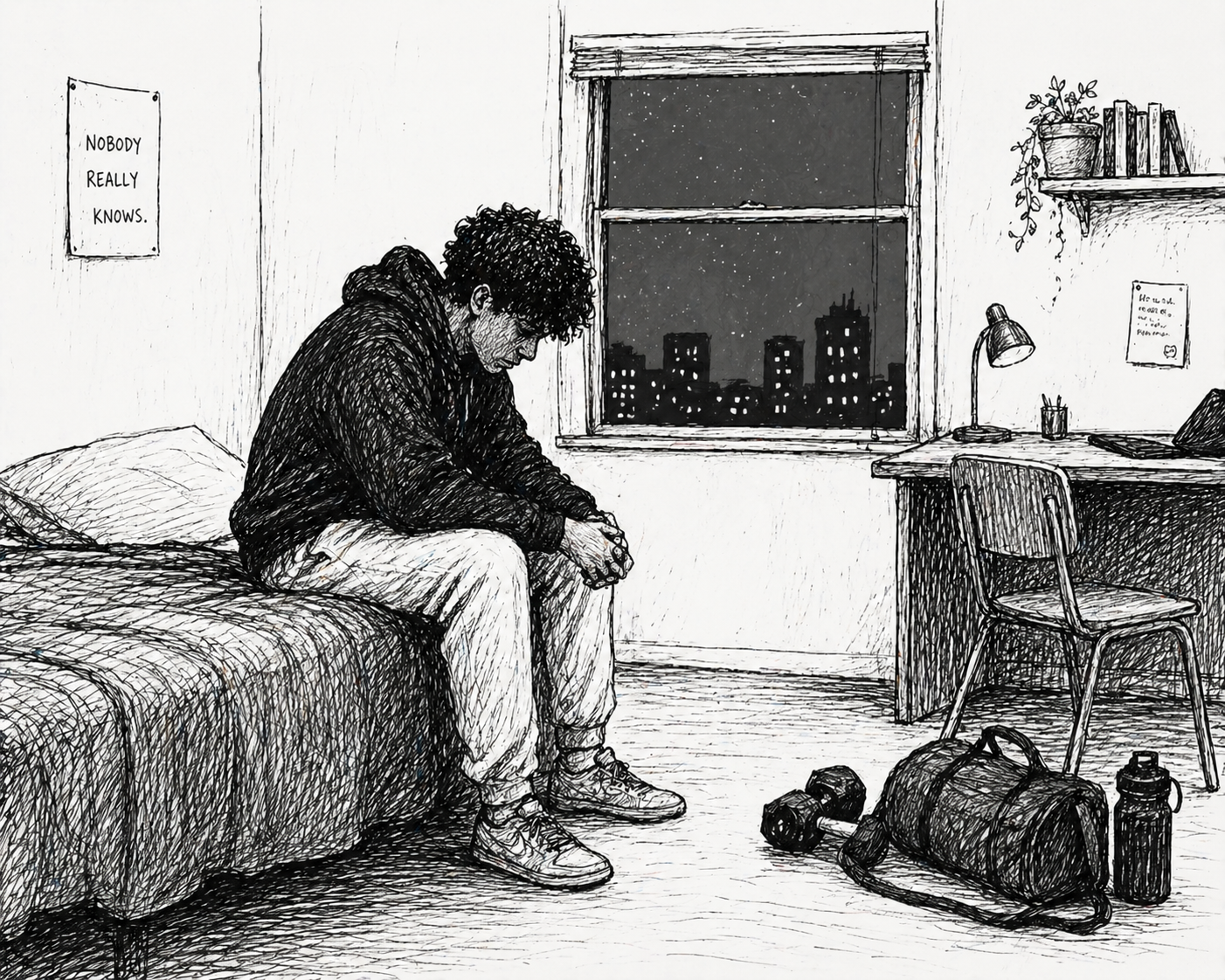
The general loneliness intervention model assumes a set of conditions that do not hold evenly across communities. It assumes willingness to name emotional need using clinical language. It assumes access to therapy, community programming, and digital wellness tools. It assumes the kind of social flexibility — time, mobility, financial cushion — required to participate in structured connection programs. And it assumes that the people most in need of intervention are the ones most likely to seek it. For Black men specifically, none of those assumptions hold consistently. Men report feelings of disconnection and irrelevance at higher rates than women even when overall loneliness scores appear similar — meaning the standard measurement tools are undercounting the problem in the population where it is most acute and least treated.
The intervention gap is not primarily a stigma story, though stigma is real. It is a design story. The mental health system, the community wellness infrastructure, and the social connection programs being scaled in response to the loneliness crisis were not built around Black men’s specific experience of isolation — the structural stressors, the narrowed social world, the support network gaps that are downstream effects of displacement, economic pressure, and community disruption. WHO’s 2025 roadmap emphasizes community-based strategies as the most effective interventions, with evidence showing grassroots efforts sustain connection better than top-down models. The community-based spaces that actually reach Black men — the barbershop, the recreational league, the faith community, the gym — are generating connection as a byproduct of shared activity rather than as an explicit therapeutic goal. They are working. They are also chronically underfunded relative to the clinical infrastructure that is less effective for this population.
The loneliness epidemic is estimated to cost the U.S. economy over $406 billion annually in lost productivity, increased healthcare utilization, and reduced workforce participation. That figure makes the case for investment in language that institutional funders understand. What it does not automatically produce is investment directed at the communities where the health consequences are most severe and the existing infrastructure is most inadequate. The intervention gap is a resource allocation story as much as it is a design story — and closing it requires naming specifically who is being underserved by the solutions currently being scaled, rather than assuming that a universal loneliness response will reach the people carrying the most acute version of a crisis that was never evenly distributed to begin with.