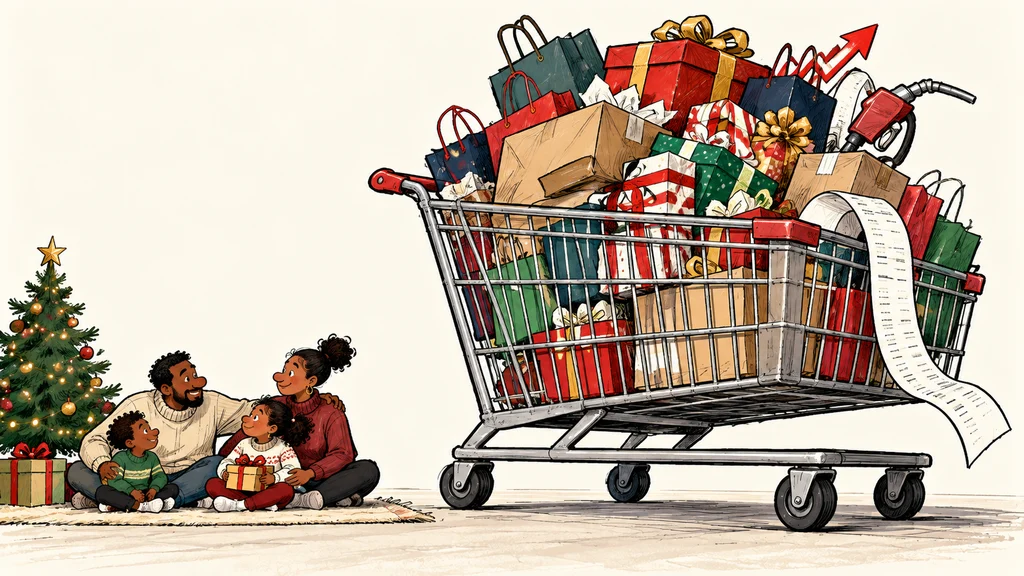
I recently read an article about rising diesel prices and how retailers are scrambling to protect their profit margins ahead of the holiday shopping season. It was full of talk about transportation costs, shipping efficiencies, warehouse operations and whether companies could keep shielding customers from higher prices. What struck me was how familiar it sounded. Whenever the cost of doing business goes up, the expectation eventually seems to be that consumers will make up the difference.
It happens with groceries, utilities, insurance, transportation and nearly every other expense households cannot easily avoid. Companies explain that their costs have risen, and those increases find their way into the prices we pay, while families are expected to adjust their budgets, lower their expectations or find a way to manage. At some point we have to ask why the job of protecting corporate profits so often lands on the people with the least room in their budgets.
When Corporate Costs Become Household Problems
An Oct. 13 report by Retail Brew looked at how retailers are responding to diesel prices that have risen nearly 90% since the start of the year. Companies are hunting for savings in transportation and warehousing, changing how often and how fast they ship and using artificial intelligence to decide where inventory should sit. Some are pulling back on free shipping as fuel costs keep climbing, the same pressure SSC traced in how the price of diesel travels through the economy.
Those are legitimate business challenges. Retailers employ people, run complex supply chains and need to stay financially healthy, and I don’t expect them to ignore their operating costs or pretend fuel prices have no consequences. But I also don’t accept that protecting a particular profit margin should automatically come before the financial well-being of the customers who keep those businesses alive.
A company struggling to survive is not the same as a profitable corporation deciding how much of its rising expenses it can pass on without hurting sales. We rarely get enough transparency to know where one ends and the other begins. Instead, customers hear familiar explanations about inflation, transportation costs and supply chains, followed by higher prices or fewer services.
The result is an economy where households are constantly told to sacrifice while corporate financial performance remains the main measure of success. Families are expected to cut back, postpone purchases and rethink necessities. I would like to hear more about what companies themselves are willing to give up before they ask customers to contribute more.
A Trillion-Dollar Holiday Season Doesn’t Mean Families Are Thriving
The holiday forecasts make this conversation more urgent. On Oct. 15, the National Retail Federation projected that Americans will spend about $1.013 trillion in November and December, up 4.2% from last year. Retailers read that forecast as proof of strong demand and a promising season.
Spending more money does not mean people are doing better. The NRF and other forecasters expect higher prices to account for about half of this year’s growth, The Associated Press reported, which means much of that increase is families paying more for the same things. A trillion dollars looks impressive in an industry report, but it says little about how a household feels when it opens its bank app in January, especially after a fall when a lot of Americans’ extra spending went straight into the gas tank.
A separate Deloitte holiday survey projects average household holiday spending of $1,654, up 4% from last year, and 79% of shoppers it surveyed expect prices to be higher. Thirty-eight percent qualify as what Deloitte calls “holiday value seekers,” people using five or more money-saving tactics such as chasing promotions, cashing in rewards and trading down to cheaper brands.
Think about what that means. Consumers are preparing to spend more while searching for every possible way to spend less, trying to keep traditions alive while doing hard math about what they can afford. Yet the retail industry still measures the season mostly through sales growth and transaction volume. I am uneasy celebrating consumers’ “resilience” when so much of it means stretching money that is already spoken for by rent, groceries and gas.
Marketing Has Turned the Holidays Into a Spending Obligation
The holiday shopping season no longer waits for Thanksgiving. Retailers start promoting seasonal merchandise months ahead, followed by early-access deals, limited-time discounts, loyalty perks and more personalized advertising, including new paid memberships like Walmart’s $120 plan. By the time November arrives, we have spent weeks being nudged toward purchases we may not have planned to make.
The messaging works because it appeals to something real. We want our families to feel appreciated, our children to feel excitement and the people who supported us this year to know it. Retailers understand those feelings, and holiday marketing has become extremely good at tying them to buying.
Somewhere along the way, generosity became tied to how much we spend. A thoughtful holiday started to look like a shopping list, and family traditions became another reason to buy. Even experiences, which should be an alternative to piling up more things, now come packaged as products: Deloitte found that half of shoppers plan to give experiences this year, but 79% of them also plan to pair the experience with something physical.
I am not against shopping, exchanging gifts or supporting businesses during the holidays, and I enjoy giving people things they will love. What concerns me is the quiet pressure to believe that spending is the main way to show love, gratitude or success.
This Year, My Family Is Looking Inward
As my family thinks about the holidays, we are choosing to be more intentional about what the season means. Instead of letting ads, promotions and sales forecasts set our priorities, we are looking inward at what we already appreciate: the people who are still in our lives, the experiences that shaped us and the things we overlook while managing everyday demands. Being together, having real conversations and valuing what we have can mean more than another item in a shopping cart.
That also means being comfortable with a holiday that may look different this year. We do not have to compete with past years, match anyone else’s spending or prove our love through expensive purchases, because a simpler celebration is not a lesser one.
This is not about turning the holidays into an exercise in going without. It is about refusing to let an expensive economy decide how we experience moments that should rest on something deeper. There is freedom in deciding that a company’s marketing calendar does not have to become your family’s financial obligation.
Consumers Have More Power Than We Think
Retailers are not powerless against rising costs, and neither are consumers. Companies can renegotiate contracts, improve distribution, adjust operations and rethink how much profit they expect to protect in hard times. Consumers can decide where to shop, which purchases are necessary and whether a holiday promotion is worth their attention at all.
Those choices will not end inflation or erase the pressure on American households, and opting out is not equally possible for families whose basics already eat most of their income. But we can start challenging the idea that every holiday season has to produce another record sales figure to count as a success.
I would rather see more families start January without new debt than read another celebratory headline about holiday spending. I would rather see companies compete by offering real value than by convincing people they need more. And I would rather measure my own holiday by the relationships we strengthen and the memories we make than by the number of packages on my porch.
The retail industry is preparing for another trillion-dollar season, and executives will study their margins and calculate how much consumers are willing to spend. My family will be thinking about something else: how fortunate we are for what we already have, and how to make the season meaningful without letting an expensive economy take even more from us.
Corporate profits may depend on another strong shopping season. Our appreciation for one another does not.