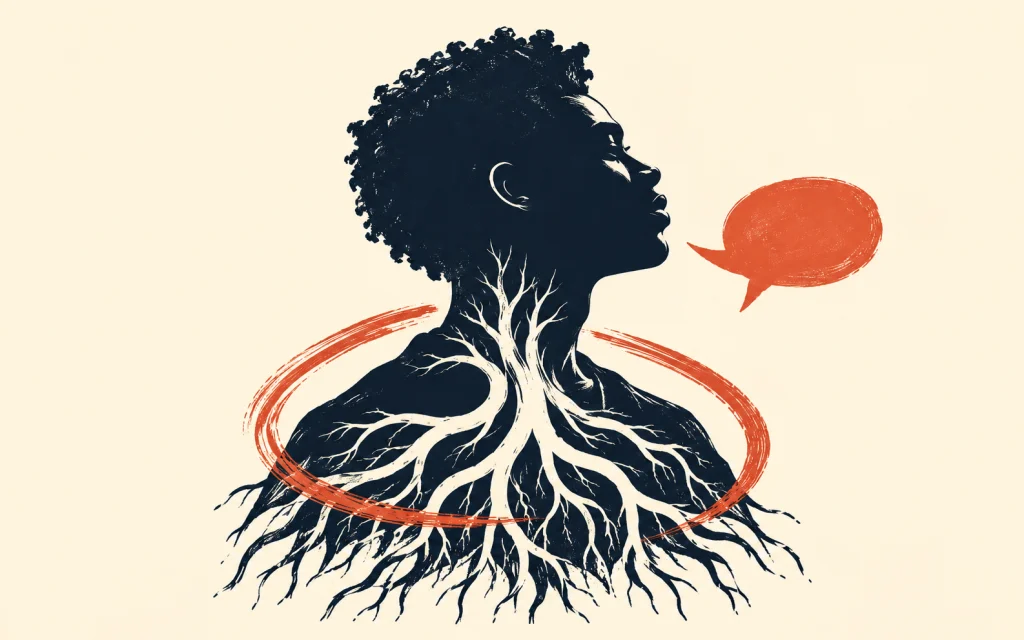
SSC has tracked the Da’Vinchi backlash through audience consequence and diaspora conflict. The latest reaction shows the argument moving into a deeper question about Black American lineage, cultural specificity and who gets to define the history being discussed.
Da’Vinchi’s appearance on Cam Newton’s Funky Friday has now traveled well beyond the original podcast. What began as a conversation about why Black actors from Britain, Africa and the Caribbean sometimes land Black American roles has become a much larger argument about Black American identity itself. Joy Reid devoted a live discussion to the controversy, while D.L. Hughley’s show challenged the actor’s comments about American work ethic and slavery. Across social media, the discussion has increasingly shifted from whether Da’Vinchi chose the wrong words to a more consequential question: Who gets to describe Black American history, culture and present-day conditions—and from what position?
SSC has already followed that shift twice this week. On October 5, we reported in “Da’Vinchi Lost Followers After the Backlash. The Audience Is Becoming Part of the Consequence” that reports showed the actor losing roughly 200,000 Instagram followers as audiences began imposing their own consequence for the remarks. The following day, “The Diaspora Wars Are Getting Louder Online. The Fight Over Who Gets to Define Blackness Is Already Moving Offline” widened the frame, examining how disputes among Black Americans and members of the broader diaspora can reach representation, employment, cultural ownership and belonging. The latest reaction adds another layer: the argument is becoming increasingly specific about lineage.
Da’Vinchi, who was born in Brooklyn to Haitian parents, told Newton that Americans had become less self-sufficient and suggested overseas performers may sometimes approach acting with greater focus. When Newton raised the perception that some members of the African and Caribbean diaspora consider themselves superior to Black Americans, Da’Vinchi acknowledged that the sentiment exists before saying he did not believe it was right. The conversation became even more combustible when he argued that Black Americans needed to move forward from slavery and referenced other historical systems of enslavement.
The sustained response shows why the original dispute has been difficult to contain. Black Americans are increasingly asserting that racial classification alone does not fully describe an ethnic group formed through U.S. slavery, Reconstruction, Jim Crow, migration within the United States, redlining and the civil-rights struggle. Terms including Black American, Freedmen, ADOS and Foundational Black American emerge from different movements and should not be treated as interchangeable, but each reflects some version of the same demand: recognition that Black American lineage carries a history that cannot simply be folded into a generic diaspora category.
That argument intersects directly with another SSC story scheduled for this weekend, “Black Americans Are Drawing a Line Around Lineage. The Debate Is About More Than a Name.” The Da’Vinchi backlash gives that broader identity debate a visible cultural case study. A disagreement that began over actors and work ethic is now illustrating why some Black Americans are pushing for more precise language around ancestry, historical claims and cultural ownership.
Hollywood makes the debate more than semantic. The original conversation concerned actors from outside the United States portraying Black American characters. Casting determines who receives jobs, who interprets a community’s history and whose performance ultimately becomes the public representation of that history. A British, Nigerian, Jamaican or Haitian actor may be capable of portraying a Black American character with extraordinary skill. The criticism emerging from this debate is not simply about nationality. It is about whether an industry can profit from Black American stories while treating Black American cultural specificity as optional.
There is also a risk in where the argument goes next. A demand for Black American specificity can slide into hostility toward immigrants. A defense of diaspora solidarity can become pressure on Black Americans to minimize their own historical claims for the sake of racial unity. Neither requires the other. Black Americans can insist that U.S. slavery and its aftermath created a distinct ethnic history without denying Haitian, Jamaican, Nigerian, Ghanaian or other Black communities their own histories of colonialism, migration and displacement.
Da’Vinchi may eventually stop being the central figure in the discussion he helped ignite. The questions will remain. Reparations programs will have to determine eligibility. Cultural institutions will have to decide whose histories they are documenting. Hollywood will continue deciding who receives the opportunity to portray Black American life. Political organizations will continue confronting whether “Black” alone is precise enough to describe constituencies with different histories and policy claims. SSC’s coverage this week began with backlash, moved to diaspora conflict and has now reached the underlying issue the controversy exposed: whether solidarity requires sameness, or whether Black communities can share political space while still naming exactly who they are.