The housing recovery narrative is real in a narrow technical sense and misleading in every practical one. Wages are projected to grow 3.4 percent in 2026, outpacing home price increases by 1.2 percentage points — the most favorable gap in years. That’s the headline. The context is what the headline is designed to obscure.
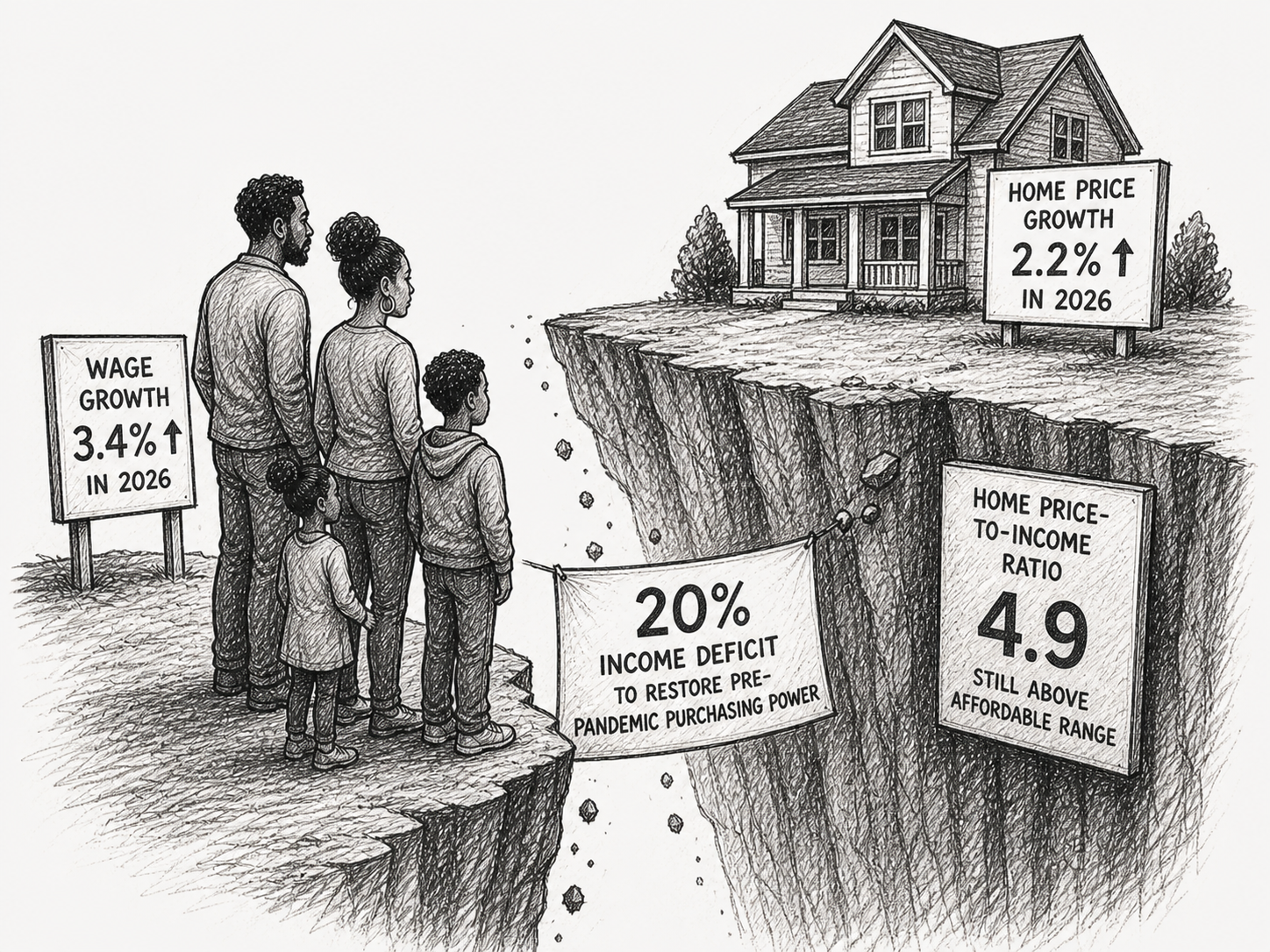
Incomes would need to rise 20 percent to restore pre-pandemic purchasing power. The home price-to-income ratio currently sits around 4.9, down from a peak of 5.2 in 2022 but still historically elevated and well above the range where first-time buyers can reasonably enter the market. A 1.2 percentage point wage advantage against that backdrop isn’t recovery. It’s a smaller deficit being marketed as progress. As SSC has documented, the housing market isn’t healing — it’s hardening — a self-reinforcing system of elevated rates, suppressed inventory, and pricing that no single policy lever resolves in isolation.
The populations this framing most directly misleads are the ones for whom the deficit was largest to begin with. For Black and Latino households, the racial wealth gap means the 20 percent income shortfall lands on a narrower asset base — less accumulated equity, less family wealth to supplement a down payment, less access to the social capital networks that connect buyers to below-market opportunities. Wage growth that doesn’t address structural wealth disparities doesn’t produce equitable access to homeownership. It just means the gap closes at a slightly less punishing rate. That gap, as SSC has reported, is now wider than it was the day the Fair Housing Act was signed — 28.4 percentage points between Black and white homeownership in 2026, compared to 27 points in 1968. The law moved it less than two points in nearly sixty years.
At the lower end of the market, the shortage is structural rather than cyclical. Low-cost inventory hasn’t tightened — it has largely ceased to exist as a functioning market category. The system is producing housing. It is producing it at price points and in locations that systematically exclude the households that need it most. Builders have pulled back on new construction starts, with 2026 projected to be the slowest year for single-family starts since 2019, which means the supply-side pressure isn’t going to resolve on its own timeline.
The recovery is real for buyers who were already close to the threshold. For everyone else, the headline is doing work the data doesn’t support.