
In 1996, every major label passed on Shawn Carter. The conventional industry wisdom was that a rapper from Marcy Houses in Brooklyn with no cosign, no radio infrastructure, and no label machine behind him was not a viable commercial bet. Carter’s response was to build the machine himself. He co-founded Roc-A-Fella Records, pressed Reasonable Doubt independently, and distributed it through Priority Records — not because independence was the romantic choice, but because the institution had already made its decision. The album sold modestly by major label standards. It changed everything anyway.
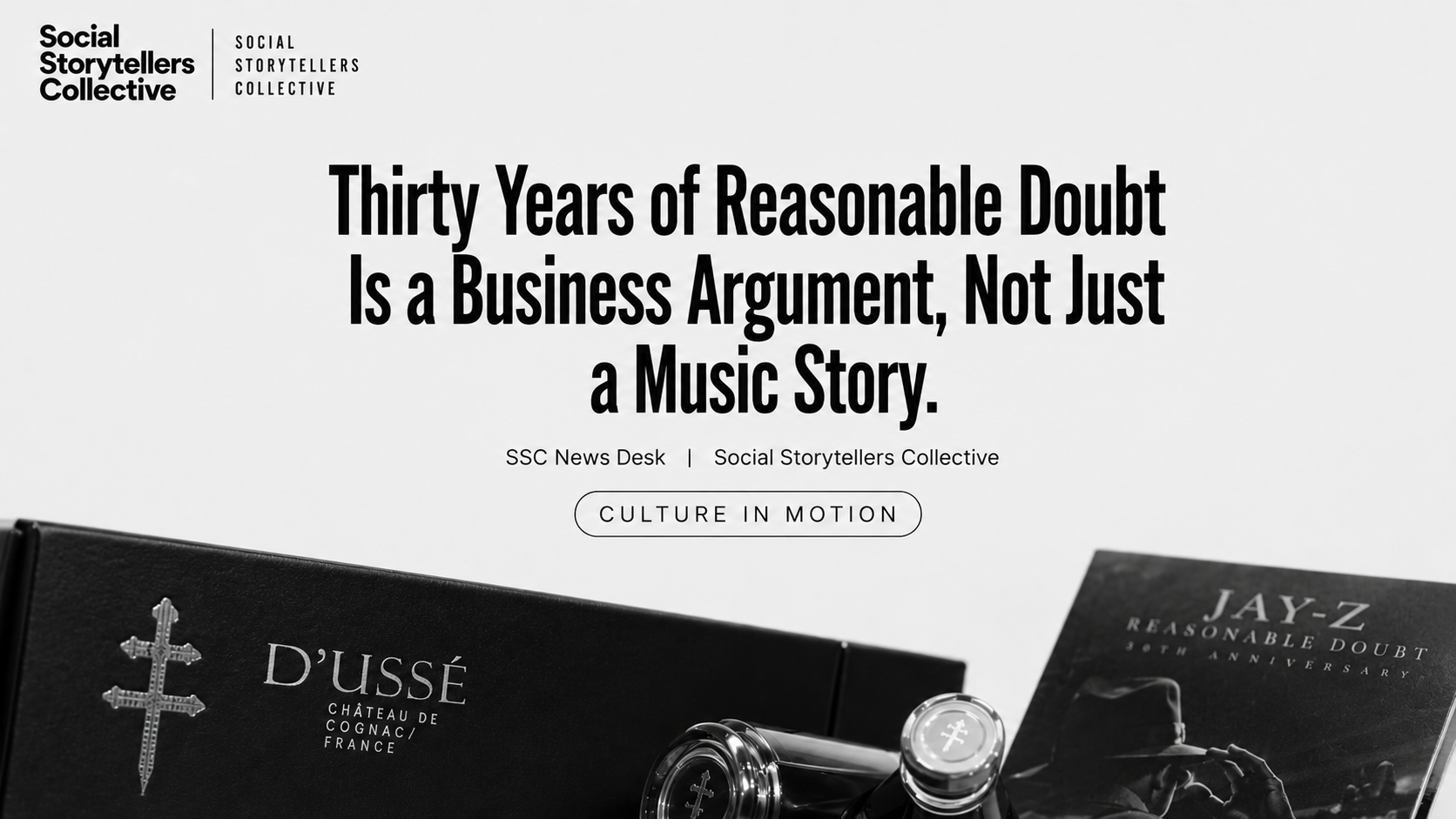
Thirty years later, D’USSÉ Cognac — the luxury spirits brand JAY-Z co-founded with Bacardi — is launching a nationwide campaign to mark the anniversary. As Black Enterprise reported, the campaign includes a limited-edition JAY-Z 30 VSOP collector’s box set, a signature cocktail called CODE30, and live activations in Atlanta, Houston, Chicago, Washington, New York, and Philadelphia. The campaign connects to JAY-Z‘s upcoming Yankee Stadiumresidency in July — his first solo stadium shows in nearly a decade — where D’USSÉ bars, specialty cocktails, and branded experiences will anchor the fan environment around the performances.
The product launch is real and the cultural moment is genuine. What the press release framing doesn’t fully surface is why D’USSÉ exists in the first place — and why its existence is inseparable from the argument Reasonable Doubt was already making in 1996.
Black artists have built the global spirits industry’s most profitable cultural associations for decades. Cognac’s dominance in hip-hop culture — Hennessy, Rémy Martin, Courvoisier — was not the result of spirits companies understanding Black culture. It was the result of Black artists making those brands aspirational through music, videos, and live performance, generating brand equity they did not own and returns they did not receive. The pattern repeated across every sector the culture touched. The artists created the value. The institutions captured it.
D’USSÉ is a structural answer to that pattern. JAY-Z did not endorse an existing cognac brand. He co-founded one — building ownership into the asset at the point of creation rather than arriving after the value had already been extracted. The same logic produced Armand de Brignac, the champagne brand he acquired outright. The same logic produced Tidal, the streaming platform built as a direct counter to the economics of Spotify and Apple Music for the artists generating the catalog. The same logic produced Roc Nation, which operates as a management company, sports agency, record label, and entertainment conglomerate simultaneously — compressing the distance between the artist and the revenue the artist generates.
SSC covered the Death Row Records Cannabis launch in Las Vegas earlier this week — Snoop Dogg entering the highest-volume cannabis retail market in the country with a brand built on cultural IP he owns. The ownership argument is the same one. The sector is different. The structural logic is identical: Black cultural production has historically generated wealth for everyone except the people producing it. The artists who figured that out earliest built the companies rather than feeding them.
Reasonable Doubt was not just the debut of a rapper. It was the opening statement of a business philosophy. The album’s title was not accidental — it named the condition that shaped the entire strategy. The doubt was institutional. The response was vertical integration. Thirty years later the D’USSÉ campaign is not nostalgia. It is a proof of concept arriving on schedule.