
NPR has received two major charitable gifts totaling $113 million as the public media system attempts to stabilize itself after Congress eliminated all federal funding for public broadcasting. According to NPR, the money will primarily support digital infrastructure, technology modernization, audience development, and stronger collaboration between NPR and local stations nationwide.
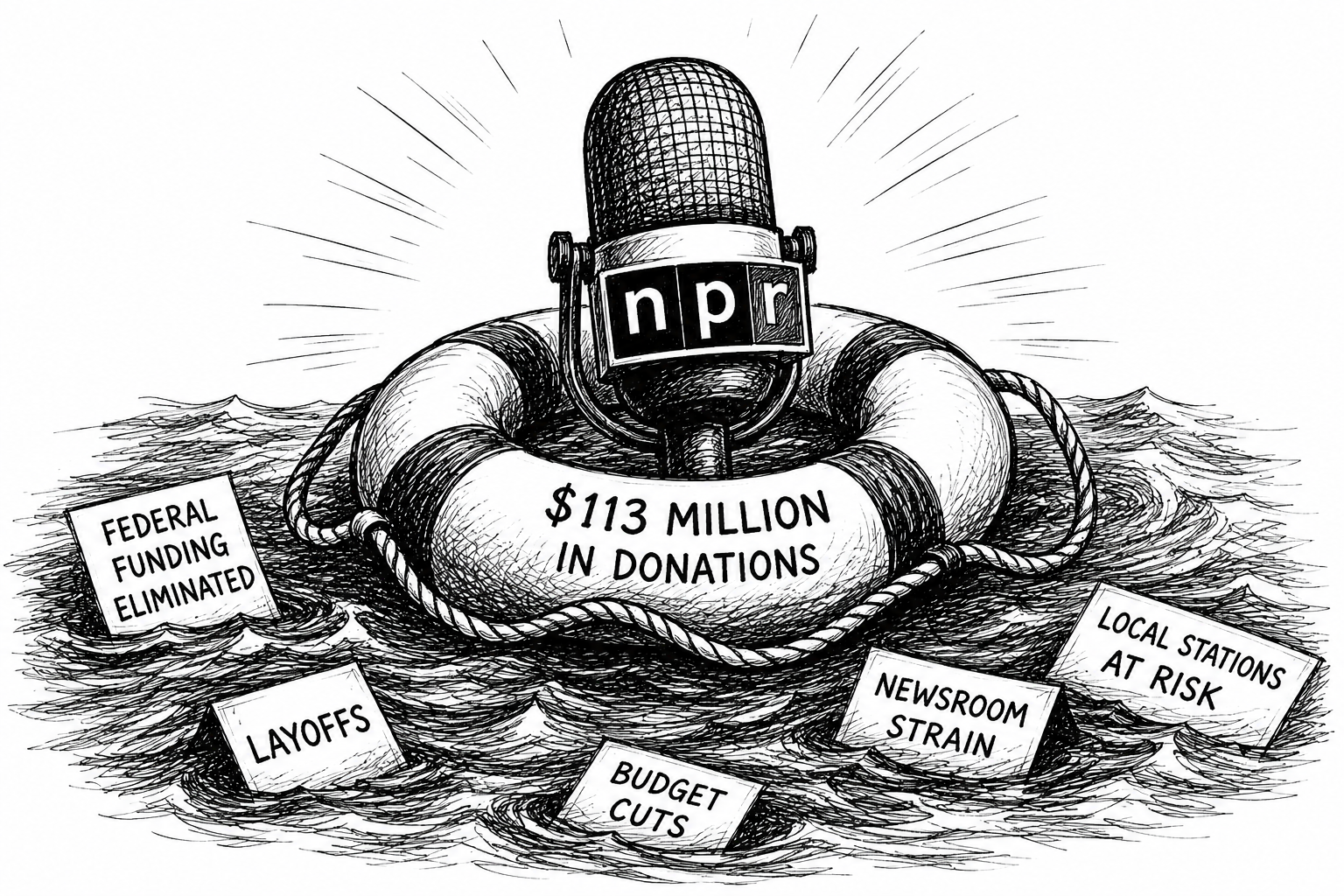
The size of the donations matters. But what matters more is what they reveal about the new reality public media is entering. Public radio is no longer simply defending itself against political attacks. It is now being forced to redesign its entire operating model in real time.
For decades, public media relied on a hybrid structure: federal support, listener donations, institutional underwriting, and station partnerships. That balance is breaking apart. The loss of federal funding has already triggered layoffs, budget contractions, and newsroom strain across the country — especially at local stations that serve as critical information infrastructure in communities often overlooked by commercial media.
NPR CEO Katherine Maher framed the donations as “catalytic investments” designed to help public media adapt to how audiences now consume information across platforms, devices, and formats. That framing is important because the future battle for public radio may not simply be about preserving radio. It may be about preserving trusted journalism ecosystems in a fragmented digital environment increasingly dominated by algorithms, entertainment product, and platform dependency.
The tension inside the announcement is impossible to ignore. Even with $113 million in donations, NPR leadership reportedly still has not ruled out future layoffs. That reveals the scale of the structural challenge facing public media. Philanthropy can provide stabilization and innovation funding, but it does not fully replace the predictability of public investment. The result is a media environment where long-term journalistic infrastructure increasingly depends on whether wealthy donors view it as worthy of preservation.
And that makes this story bigger than NPR itself. Public radio has historically functioned as civic infrastructure — especially in rural communities, underserved regions, and places where local journalism has already been hollowed out. What happens to NPR and its station network is ultimately tied to a larger national question: who will fund public-interest journalism when market incentives no longer reliably sustain it?