
A viral incident involving influencer Tatiana Elizabeth has forced a sharper question into public view: what does authorship mean when the image is intact but the identity is replaced? The original photo, taken at the U.S. Open, showed Tatiana courtside in a carefully styled look that aligned with both the setting and her personal brand. It was not just a photo. It was access, placement, timing, and presence — captured in a single frame.
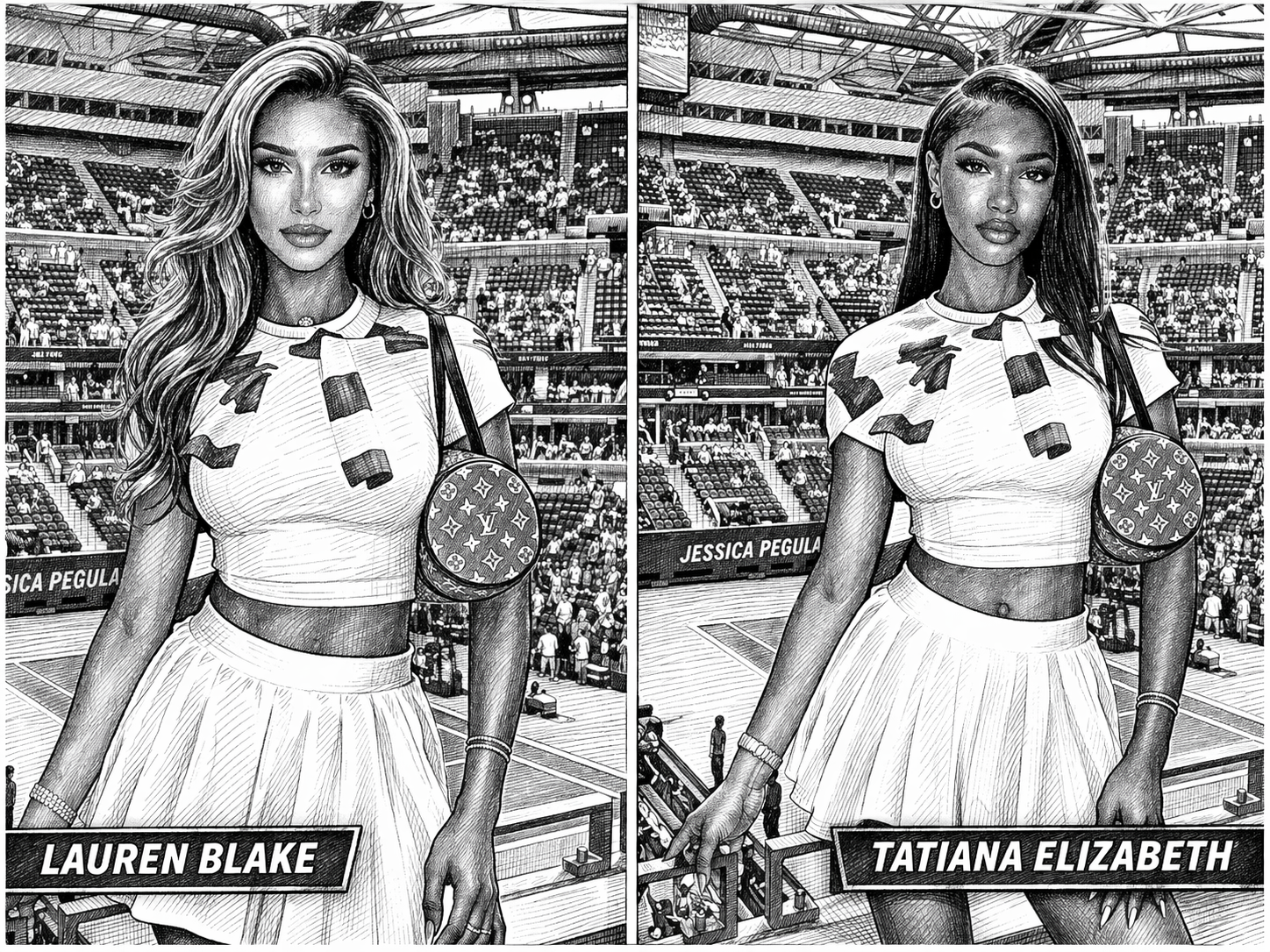
That same frame reappeared on another influencer’s page, nearly identical in every visible way. The outfit, the posture, the background, even the lighting conditions remained unchanged. Only the face was different. Where Tatiana stood in the original, another creator had inserted herself using what appears to be AI-assisted face-swapping technology. The post was presented as original content, not a reinterpretation or collaboration. The image remained hers. The identity attached to it did not.
The distinction is where the story moves past imitation into something structural. Social platforms have always rewarded replication — trends move because people borrow, restage, and reinterpret. But this moment operates outside that logic. There is no reinterpretation here. There is substitution. The labor of being present, of gaining access to that environment, of constructing a look that resonates in that context, remains with one creator. The visibility generated from that labor is reassigned to another. That is not a trend cycle. That is extraction.
The speed of the reaction revealed how legible that distinction has become. Side-by-side comparisons circulated almost immediately, and the sameness of the images made the alteration undeniable. Tatiana publicly called it out, reframing the conversation away from aesthetics and toward ownership. Her response did not hinge on whether the edit was technically impressive. It focused on the fact that the moment itself — the conditions that made the image possible — had been taken without permission and redistributed with a different identity attached.
The explanation offered in response, that the image came from an AI content process, does not resolve the issue. It sharpens it. If the barrier to this kind of substitution is now this low, the question is no longer about one post. It is about what happens when presence itself becomes editable — when being somewhere, doing something, and documenting it can be replicated without the person who actually did it. At that point, the definition of influence does not just shift. It becomes unstable.
Black creators have long produced the aesthetics, language, and frameworks that circulate widely, often without proportional credit or compensation. That pattern is not new. What changes here is the mechanism and its reach. The extraction is no longer limited to style or idea. It extends to the image itself — not just what was created, but who is seen creating it, can now be reassigned. The cultural dispossession that once required time, distance, and plausible deniability can now happen in a single edited frame.
At the level of technology, the incident reflects a broader transition already underway. AI tools are collapsing the distance between inspiration and duplication. What once required effort, coordination, or physical presence can now be generated, modified, and redistributed with minimal friction. Platforms built to reward engagement over verification are not structured to distinguish between documented reality and convincingly altered versions of it — and there is no indication that structural incentive is changing.
What emerges is a new kind of authorship crisis. Not plagiarism in the traditional sense, but identity displacement. The original creator is still visible, but only if you know where to look. Otherwise the replicated version circulates on its own terms, detached from the conditions that produced it, generating value for someone who was never there. The question is not whether this will happen again. It already will. The more relevant question is how audiences, platforms, and creators decide to interpret what they are seeing — because the image, on its own, is no longer reliable evidence of who was actually there.