
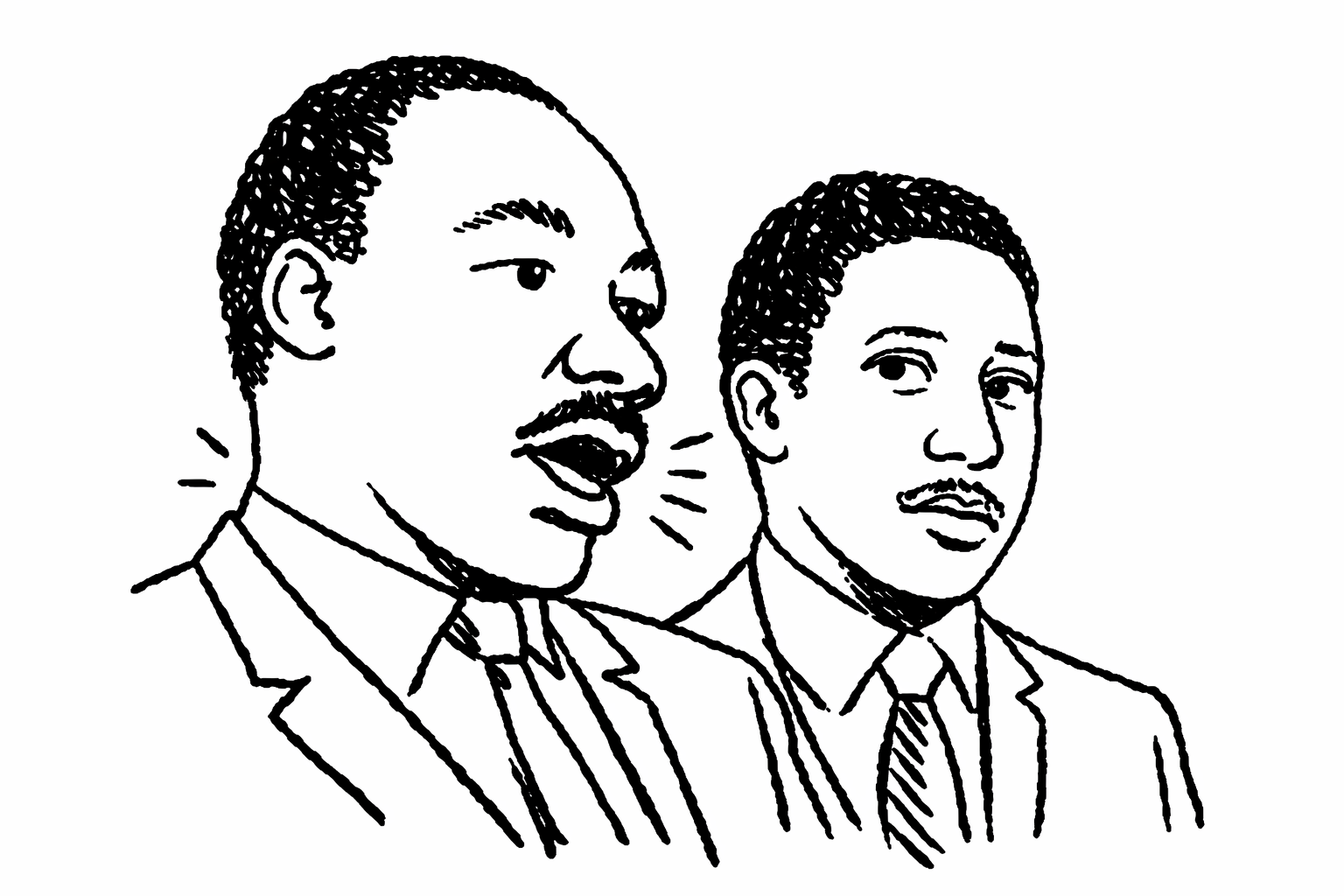
Bernard Lafayette Jr., right, is pictured with Martin Luther King Jr.
Bernard Lafayette, a pivotal but often understated figure in the Civil Rights Movement, has died at the age of 85. A Freedom Rider, co-founder of the Student Nonviolent Coordinating Committee (SNCC), and a lead organizer in Selma, Lafayette helped lay the groundwork for the voter registration efforts that ultimately led to the Voting Rights Act of 1965.
Long before the events of “Bloody Sunday” captured national attention, Lafayette was building the local organizing infrastructure that made the Selma movement possible. He directed voter registration campaigns in Alabama, endured arrests and violence during the Freedom Rides, and later worked alongside Martin Luther King Jr. in the Southern Christian Leadership Conference, helping to advance the Poor People’s Campaign.
Lafayette’s legacy extended beyond protest. He became one of the foremost teachers of nonviolence, dedicating decades to training leaders in the philosophy and strategy of peaceful resistance across the United States and globally.
His life reflects a broader truth about how progress happens. The Civil Rights Movement is often remembered through its most visible leaders and defining moments, but its success depended on people like Lafayette—organizers who built the structure beneath the spotlight. He represents a generation of Black Americans whose work was foundational, not just to a movement, but to the rights and access that many experience today.
The ability to vote more freely, to organize openly, and to challenge systems through coordinated nonviolent action did not emerge on its own. It was constructed—deliberately, strategically, and often at great personal risk. Lafayette’s work helped make those outcomes possible, even as his name remained less widely recognized.
Why This Matters
Bernard Lafayette’s life is a reminder that movements are not sustained by moments alone. They are built through systems—training, strategy, discipline, and collective effort. The rights often treated as given today are the result of that work. And understanding that foundation is essential to understanding what it takes to protect and extend it.