
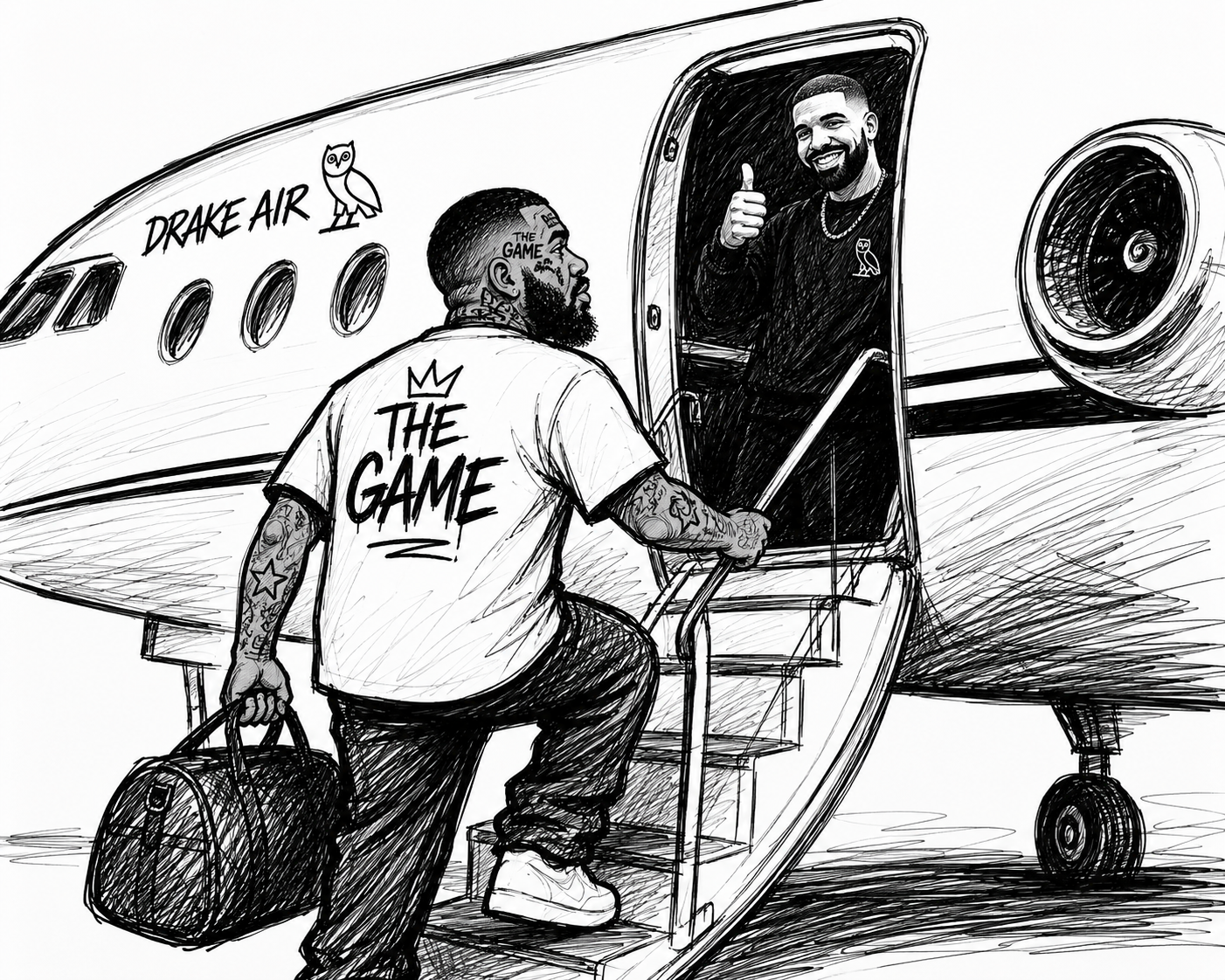
The moment was probably meant to land as a flex. The Game shared that Drake allegedly let him borrow a private jet, and by any traditional measure of hip-hop status signaling, the detail checked the right boxes — elite access, celebrity adjacency, scale. What happened next was not admiration. The internet reconstructed the entire meaning of the gesture within hours, and what emerged from that reconstruction was not a story about luxury. It was a story about dependence.
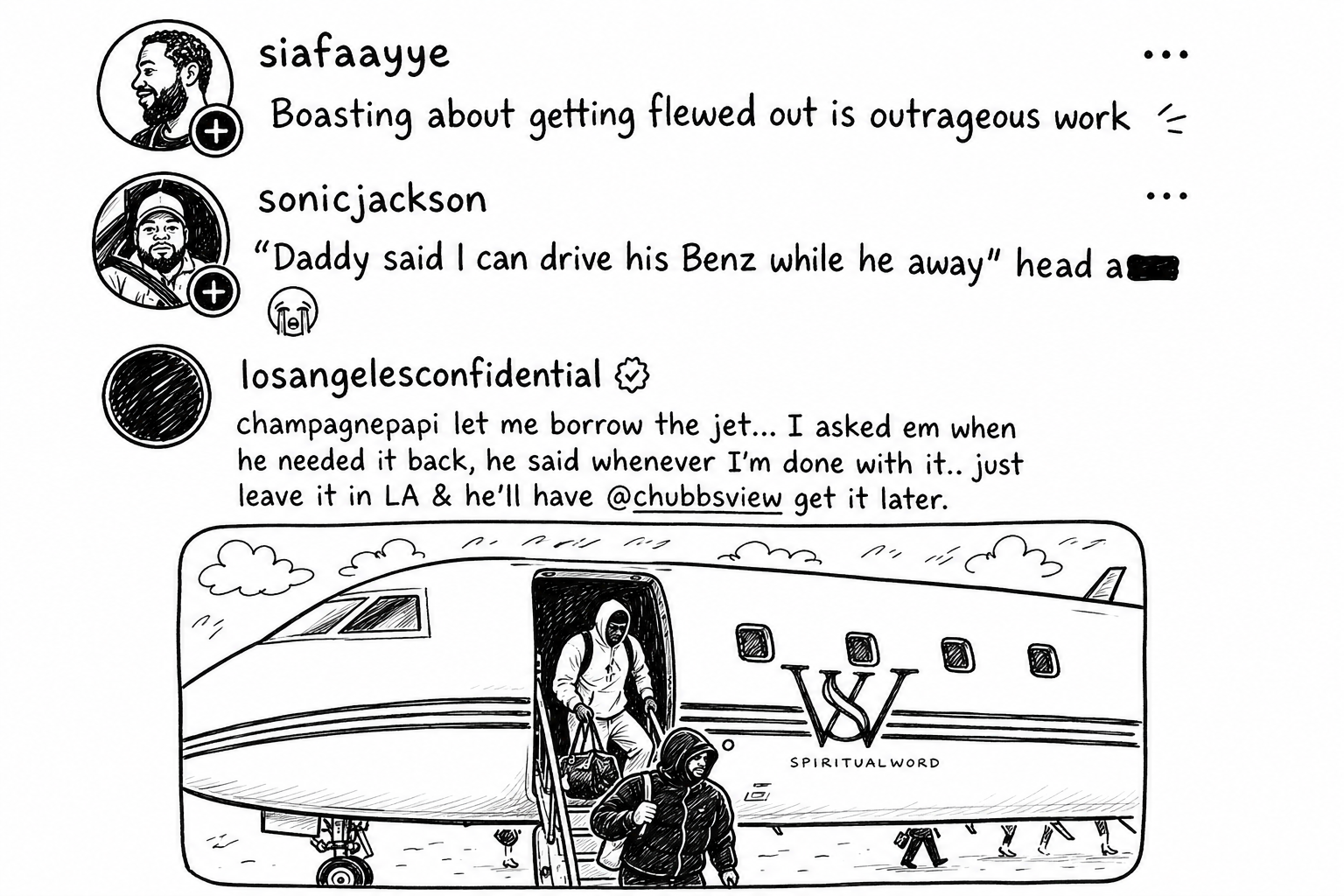
The comments were immediate and pointed. Audiences reframed the moment as submission rather than status — drawing comparisons to getting flewed out, borrowing someone’s car, or seeking validation from a figure with more institutional leverage. The ridicule was not really about the jet. It was about what the relationship surrounding the jet appeared to communicate.
That inversion is worth examining carefully because it reflects something that has shifted structurally in how online audiences read celebrity power. In earlier phases of hip-hop culture, proximity to elite access elevated perception almost automatically. Being close to power was understood as a form of power itself. Association with wealth, infrastructure, and high-profile figures carried its own currency regardless of the terms of that association. That framework no longer holds in the same way. Online audiences have become increasingly attuned to the difference between access and autonomy — and when those two things appear to be in tension, autonomy wins the interpretation every time. A private jet does not read as aspirational if the framing makes the person borrowing it look like they needed to ask.
The Drake context makes this dynamic even more layered. Since the public feud between Drake and Kendrick Lamar, every interaction involving Drake has been filtered through a specific and well-documented set of cultural lenses — hierarchy, masculinity, allegiance, validation, and the ongoing negotiation of who holds credibility inside the culture. Audiences are no longer processing Drake-adjacent moments as isolated celebrity anecdotes. They are reading them as data points in a larger ongoing argument about dominance and positioning. The Game sharing that story was not simply sharing that story. It became evidence in a case the internet was already building.
That is the deeper structural shift the moment reveals. Social media no longer simply reacts to celebrity narratives — it actively rewrites them in real time, and the person posting has increasingly limited control over what the image ultimately means once it enters circulation. The original post attempted to communicate access, friendship, and scale. The audience reconstructed it into dependency and embarrassment within hours. Perception is no longer owned by the person generating the content. It is assigned by the crowd receiving it, shaped by whatever cultural conversation is already running loudest in the background.
What the internet’s reaction to this moment ultimately demonstrates is that the symbols of status in hip-hop culture are not fixed. They are contingent — on framing, on relationship dynamics, on the political and cultural atmosphere surrounding the figures involved, and on whatever narrative the audience has already decided it is telling. Wealth and access remain legible as power only when the autonomy of the person holding them is not in question. The moment that autonomy appears compromised, the symbol flips. The jet becomes evidence of the opposite of what it was meant to prove.
Online culture did not just react to The Game’s post. It issued a verdict on what proximity to Drake’s infrastructure communicates right now — and the verdict was not flattering to either party.