
Structural Reality is a series examining how systems produce unequal outcomes across work, income, and opportunity.
Transit Is an Equity Issue Part of The Access Shift — an ongoing series examining how access is being quietly reshaped across American life.
Public transit has always been an equity issue. The routes, the frequency, the reach — none of it was designed neutrally. And now, as major transit systems face funding cliffs and federal infrastructure dollars thin out, the communities that depend most on those systems are being squeezed hardest.
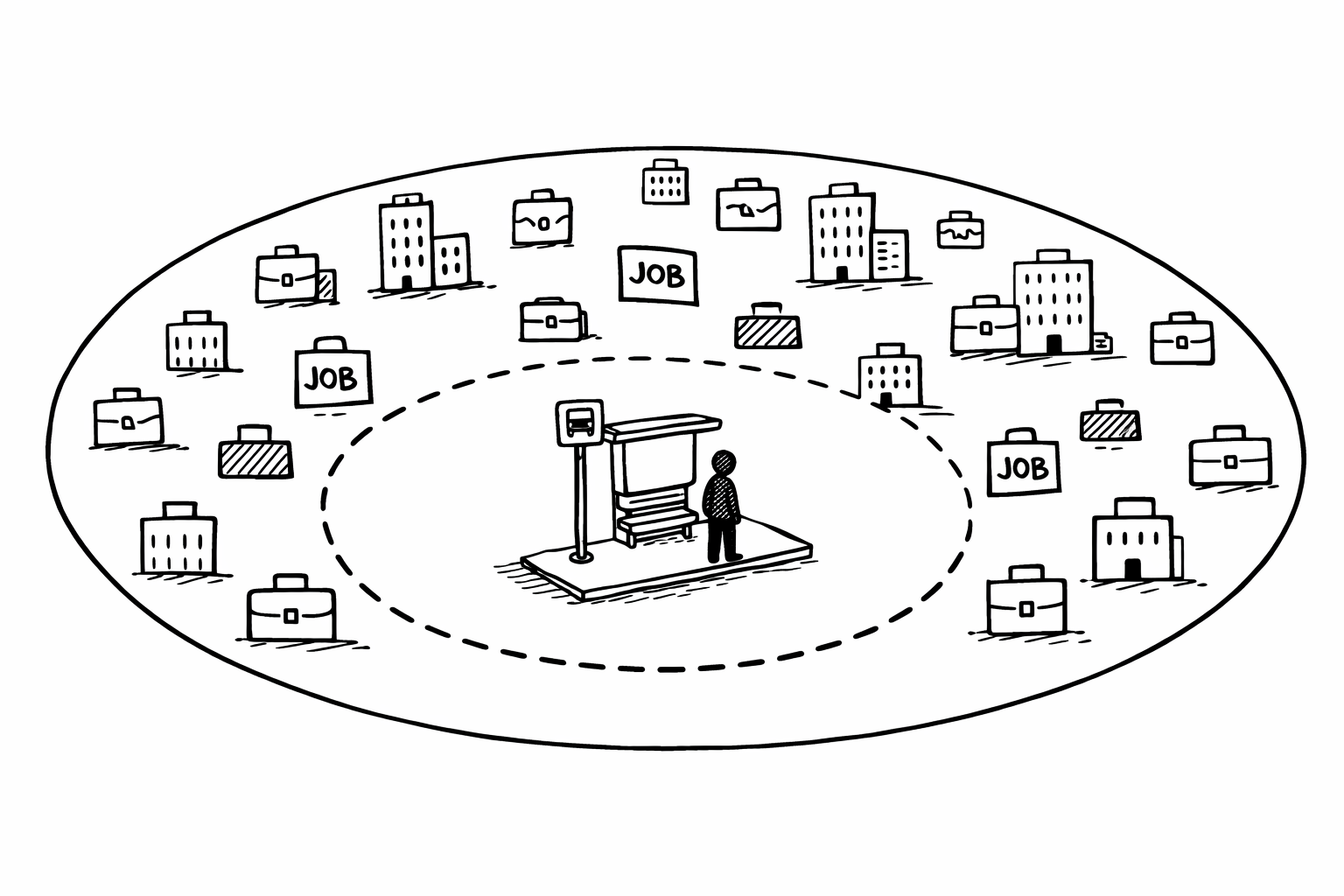
The gap is measurable. The average Black resident can access 236,641 potential jobs within a 45-minute transit commute — compared to 344,182 for white residents. That’s not a minor disparity. It’s a structural ceiling on economic mobility built directly into how cities move people. Service cuts don’t just inconvenience riders — they narrow the radius of opportunity for workers who have no alternative.
What makes this moment distinct is the convergence of pressure: federal funding uncertainty, post-pandemic ridership recovery that never fully closed the gap, and cities making triage decisions about which lines to cut and which to protect. We’ve already seen what happens when transportation systems absorb the cost of political stalemate — as we reported in Airport Lines Stretch Beyond Travel Delays, the burden falls first and hardest on the workers and communities with the least margin for error.
What rarely gets named in these conversations is who makes the decisions about which routes survive. Transit boards, city councils, and federal agencies are not equally representative of the riders who depend on the system most. The people with the most at stake in these cuts are often the least present in the rooms where they are made. That is not incidental — it is the same pattern that runs through every access story we cover. Systems narrow quietly, decisions get made at a distance, and the people absorbing the consequences are the last to be consulted. As When the Economy Slows, Some Communities Feel It First documented, the communities with the least structural cushion absorb the earliest effects of any system under pressure. Transit is infrastructure. And like most infrastructure in this country, the cost of its failure lands on the people who can least afford it — and who had the least say in letting it get here.
The gradual redefinition of who systems are designed to serve.
Across sectors—from public infrastructure to healthcare to everyday spaces—access is no longer assumed. As costs rise and systems face increasing pressure, services once built for broad reach are becoming more selective, more conditional, and less universal. The Access Shift explores how these changes are unfolding in real time—and what they reveal about who is included, who is left out, and how the structure of everyday life is quietly being reshaped.