
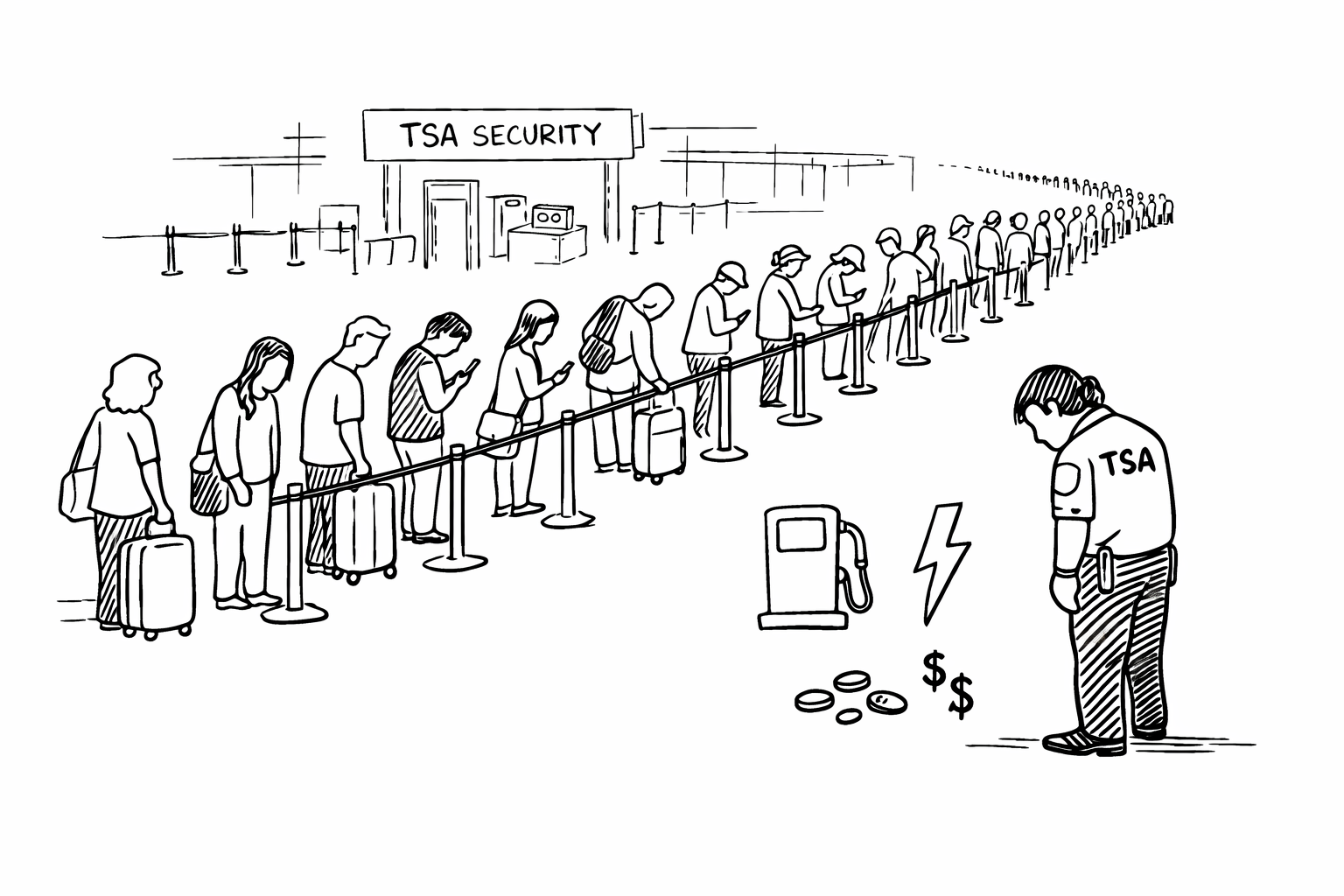
On Day 36 of the federal government shutdown, the effects are becoming increasingly visible in everyday life. At George Bush Intercontinental Airport, travelers reported wait times exceeding three hours. At LaGuardia, security lines extended outside terminals and into parking areas. What was once an inconvenience is now becoming a disruption to basic mobility.
Behind those delays are workers navigating their own financial strain. TSA employees, many working without pay during the shutdown, are facing difficult trade-offs. One TSA worker described the reality plainly: it has become a choice between putting gas in the car or paying an electricity bill. For some, the calculation is even more severe — deciding whether to afford food for their children or cover the cost of getting to work.
The political impasse continues. A vote to end the shutdown failed for the fifth time in the U.S. Senate on Friday, with Democrats maintaining demands for immigration enforcement reforms — including requirements for federal agents to remove masks and wear body cameras. As negotiations stall, the consequences are no longer abstract. They are operational, visible, and escalating.
Transportation Secretary Sean Duffy has warned that conditions could deteriorate further if TSA workers miss another paycheck. The risk extends beyond longer lines — reduced staffing, slower processing, and growing strain on a workforce already stretched thin. What is happening in airports is an early indicator of broader system stress.
Airports are often one of the first places where economic and policy disruptions become tangible. When workers cannot afford to sustain their own livelihoods, the systems they support begin to slow. The ripple effects extend beyond travel, impacting business operations, supply chains, and regional economies that depend on consistent movement.
As the shutdown enters its sixth week with no resolution in sight, how much longer can essential workers be expected to absorb the cost of a political stalemate?
Why It Matters
This moment reflects more than a government funding dispute. It highlights how quickly institutional strain translates into personal hardship. When essential workers are forced into financial instability, the burden shifts to both the workforce and the public. The longer the shutdown continues, the more these pressures compound—turning delays into disruptions, and disruptions into broader economic consequences.