
LABOR | TECHNOLOGY
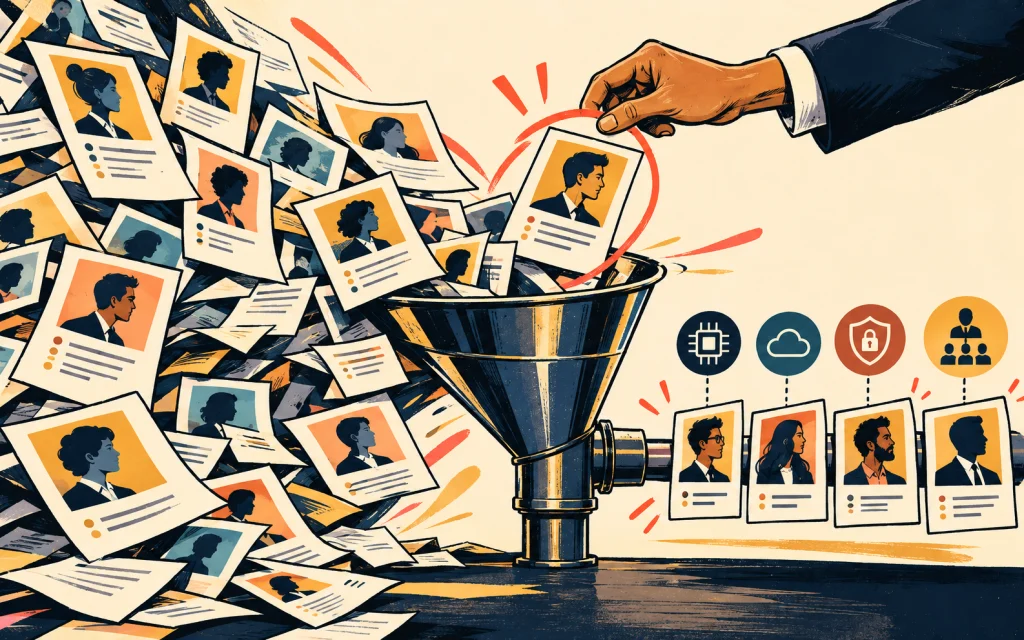
Hundreds of applications can arrive for one opening while AI, cybersecurity and leadership roles remain difficult to fill. The labor shortage is increasingly a qualification mismatch.
BY SOCIAL STORYTELLERS COLLECTIVE NEWS DESK
OCTOBER 11, 2026
The United Arab Emirates has no shortage of people looking for work. Some companies are receiving hundreds of applications for individual openings and still spending weeks trying to make a hire. Recruitment specialists interviewed by Gulf News say positions in artificial intelligence, cybersecurity, cloud technology, specialist engineering and senior leadership are among the hardest to fill because employers want a combination of technical expertise, commercial judgment and previous experience that relatively few candidates possess.
The hiring timelines show where the mismatch is appearing. Standard professional positions can take three to four weeks to fill, while niche technical and senior positions often remain open for six to eight weeks, according to recruiters cited by Gulf News. Some employers are looking overseas for specialized AI talent even while local job advertisements generate substantial applicant volume. The labor-market problem is therefore not simply that workers are unavailable. Employers increasingly define employability through narrower combinations of experience and capability.
Artificial intelligence is contributing to both sides of that problem. Applicants can now use AI to tailor résumés quickly, increasing the volume of submissions that appear relevant on paper. Recruiters told Gulf News that the real separation often occurs later, when interviews reveal differences in commercial understanding, motivation, salary expectations and actual technical experience. The technology that makes applying easier is simultaneously making the résumé itself a less reliable screening device.
Employers are also asking for workers who can arrive productive rather than be developed into the position. Mollie Powell of Pink Camel Recruitment told Gulf News that companies are becoming less willing to hire solely on credentials and train workers from scratch. That preference transfers part of the cost of workforce development away from the employer and toward the individual worker, who increasingly has to arrive with both technical fluency and evidence that the skill has already produced measurable business results.
The mismatch extends beyond technology. Recruiters also report shortages of workers with strong sales, relationship-building and face-to-face communication skills. That combination is notable because it suggests the AI labor market is not simply rewarding more technical specialization. As routine communication and application tasks become automated, human skills that connect technical work to customers, revenue and organizational decisions may become more valuable rather than less.
This is one of the more revealing labor-market shifts of the AI era. The number of jobs and the number of applicants can both be high while access to employment gets narrower. The threshold has moved from “qualified” toward “immediately deployable,” and that leaves workers facing a new question: not simply whether they possess the skills a job requires, but whether they can prove they have already used them under conditions increasingly similar to the job they are trying to get.