
The third year of a corporate partnership puts money behind a question confronting workers across the economy: how people actually get access to better jobs.
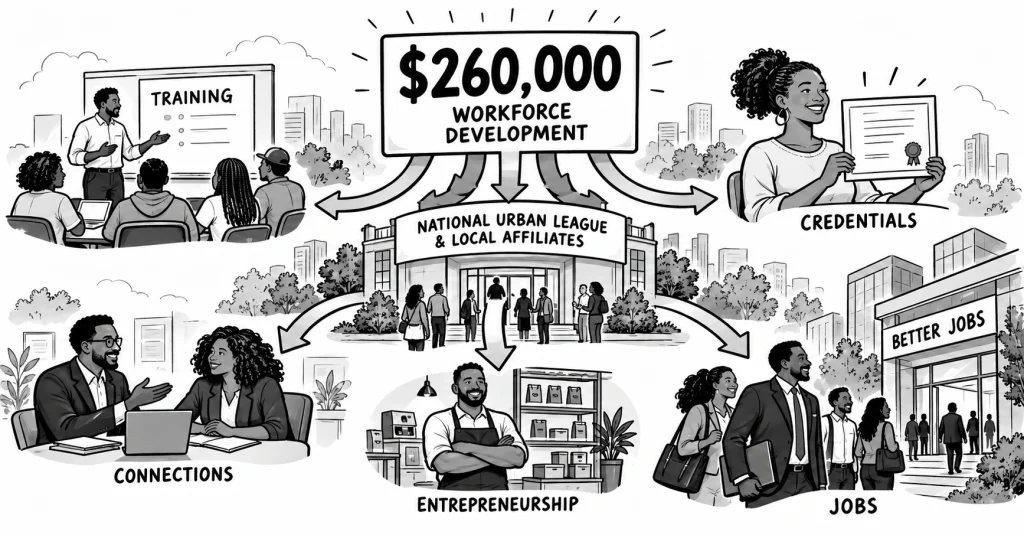
The American Water Charitable Foundation is awarding $260,000 to the National Urban League and its affiliate network for workforce-development programs, extending the partnership for a third consecutive year. The funding announced Monday is intended to support skills development, education and employment opportunities in communities served by American Water.
The Money Moves Through Local Networks
The structure is important because the National Urban League operates through affiliates embedded in individual labor markets. Rather than treating workforce development as a single national program, those organizations can connect training and employment services to the conditions workers encounter locally.
The relationship also has history. American Water’s foundation provided another $260,000 grant in 2024, supporting the national organization and affiliates in communities including Chicago, Sacramento, Chattanooga, Pittsburgh, Lexington, St. Louis, northwest Indiana and Union County, New Jersey.
That earlier investment included direct support for programs aimed at African Americans and other historically underserved groups. In northwest Indiana, for example, Urban League officials said their portion would support small-business and entrepreneurship initiatives. The Pittsburgh and Chattanooga affiliates similarly received funding for local workforce-development programs.
Workforce Access Is More Than Job Creation
The announcement lands in a labor market where the availability of jobs and the ability to reach them are increasingly separate issues. Employers can have openings while workers lack the credentials, training, professional networks or geographic access needed to compete for them. Workforce organizations operate in that space between an available position and a worker actually being positioned to get it.
A $260,000 national grant is modest compared with government workforce programs or corporate hiring budgets. Its significance is in the infrastructure it supports: organizations already working inside communities where the path from training to employment is often less direct.
For companies, workforce investment can be philanthropy. For workers navigating changing labor markets, the more consequential test is whether those dollars produce credentials, connections and jobs that continue after the grant cycle ends.