
Part of Culture in Motion — examining who defines culture, how it moves, and what it reveals about the moment.
The Met Gala will take place on May 4, 2026. The theme has already been announced. The invitations have been curated by Anna Wintour, as they are every year. By the end of the night, a hierarchy will have been quietly established — who led, who followed, who was photographed in a way that will still be circulating a week later, and who barely registered in the archive that the red carpet creates.
That hierarchy is the point. The Met Gala presents itself as fashion’s biggest night. In practice, it functions as a controlled environment where cultural relevance is assigned, displayed, and recorded. Every element of it — the guest list, the partnerships with designers, the staircase, the camera positions — is calibrated to produce a document of who is in position. It is one of the few events left in American culture that functions explicitly as a hierarchy-making machine, and it does so with the cooperation of everyone who attends.
That cooperation is usually distributed fairly evenly across the top tier of attendees. And then Beyoncé enters the picture.
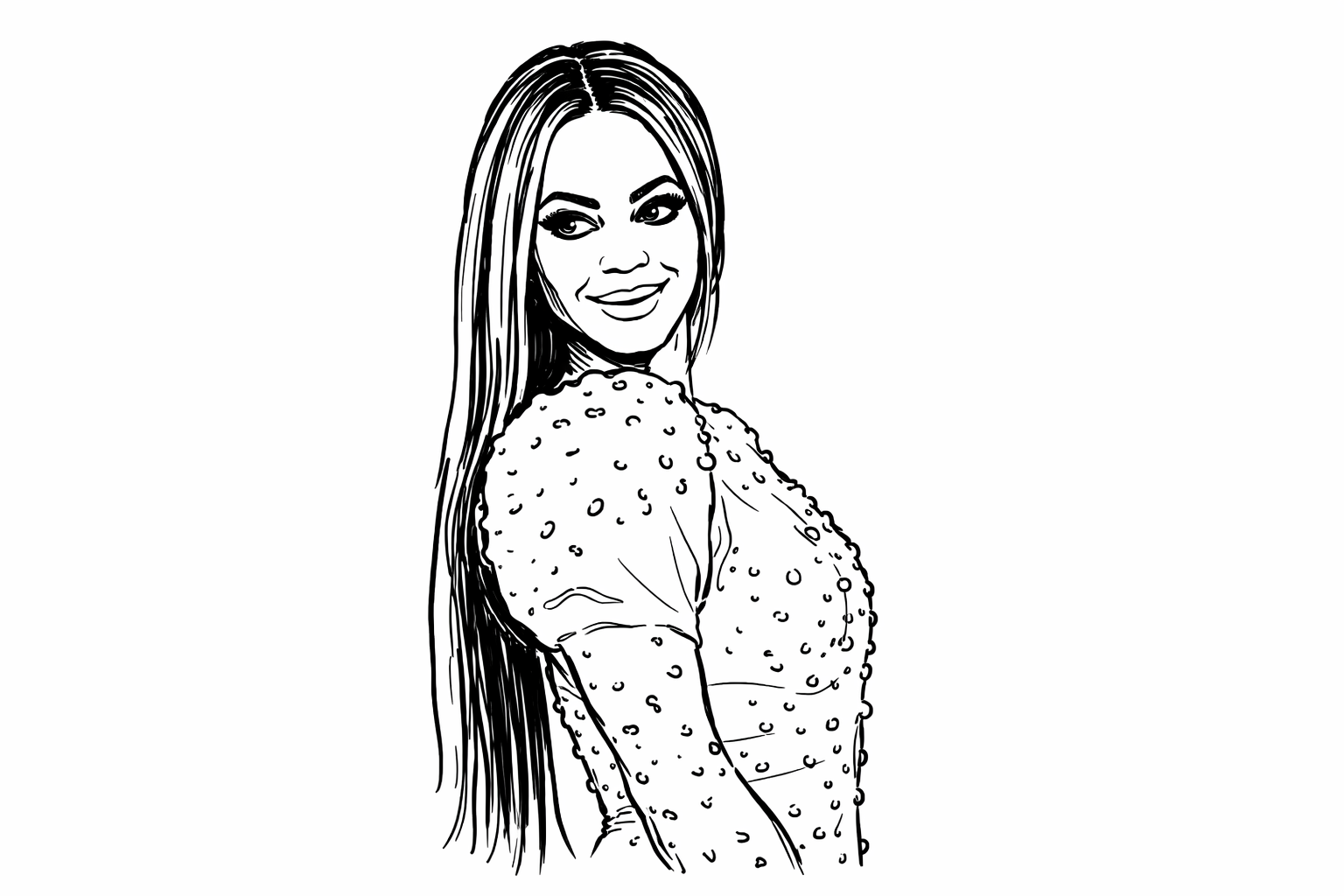
When she attended in 2015 in a sheer Givenchy gown, the image didn’t circulate — it dominated coverage for days. Her 2016 latex Givenchy look became the defining visual of the night before most attendees had completed their walk. When she did not attend in subsequent years, the event remained large, but the gravitational center was less clear. The room was designed to distribute attention. She collapses that distribution. This is not about popularity — other celebrities generate enormous attention. What Beyoncé produces is concentration. Every other image of the night gets organized in relation to hers.
That concentration is the result of a model of visibility that runs contrary to how influence is typically managed in the social media era. She does not maintain relevance through constant presence. She withdraws from it — no daily commentary, no reactive posting, no need to attach herself to ongoing discourse. Her appearances are infrequent and controlled, and because of that, each one carries disproportionate weight. As SSC examined in When Influence Becomes a Liability, the dominant celebrity strategy in the current moment is strategic silence — selective engagement designed to preserve optionality. Beyoncé is doing something different. Her silence is not protective. It is generative. It builds pressure. And when it releases — on a red carpet, in a stadium, in an album that arrives without announcement — the release is felt as an event rather than a content drop.
The Met Gala amplifies that effect because it is already a controlled system. It decides who gets seen and how. Beyoncé doesn’t participate in that system. She overrides it. And the override matters more than it might appear, because the Met Gala is not a neutral institution. It is an institution with a specific history — one that has centered European fashion houses, that has been slow to include Black designers at the level their work deserves, that has used the presence of Black celebrities as cultural credibility while the underlying infrastructure of taste-making has remained largely unchanged. Beyoncé walking into that institution and leaving with its gravitational center is not just a celebrity flex. It is a structural disruption of a system that was not designed to organize itself around a Black woman from Houston.
That is the dimension of this story that most coverage misses — because most coverage of the Met Gala is about the clothes, the drama, and the metrics. The structural question is different: who gets to occupy the center of a system built to assign cultural value, and what does it mean when that center is held by someone the system was not built to center? As SSC covered in Who Owns the Trend , the pattern of Black cultural figures operating inside institutions that were not designed for them — and reordering those institutions through presence rather than permission — is one of the defining dynamics of contemporary culture. The Met Gala is an unusually legible example of that dynamic because the hierarchy it produces is so explicit and so public.
The 2026 Gala will produce its own archive. Who leads the coverage, whose look becomes the reference point for the night, whose image travels furthest and lands hardest — these are not just fashion questions. They are questions about whose cultural authority the institution is prepared to recognize, and whose it is forced to acknowledge even when it wasn’t part of the plan.
Why This Matters
Cultural power is often framed as something that has to be performed — earned through constant output, maintained through constant visibility, demonstrated through constant engagement. The Met Gala is built on that assumption. Beyoncé exposes a different reality: the highest level of influence does not perform. It holds — and when it appears, everything else adjusts around it. That adjustment is not just about celebrity. It is about whose authority gets centered in a room that was not built with that centering in mind — and what it means that the adjustment happens anyway, every time, without negotiation.