
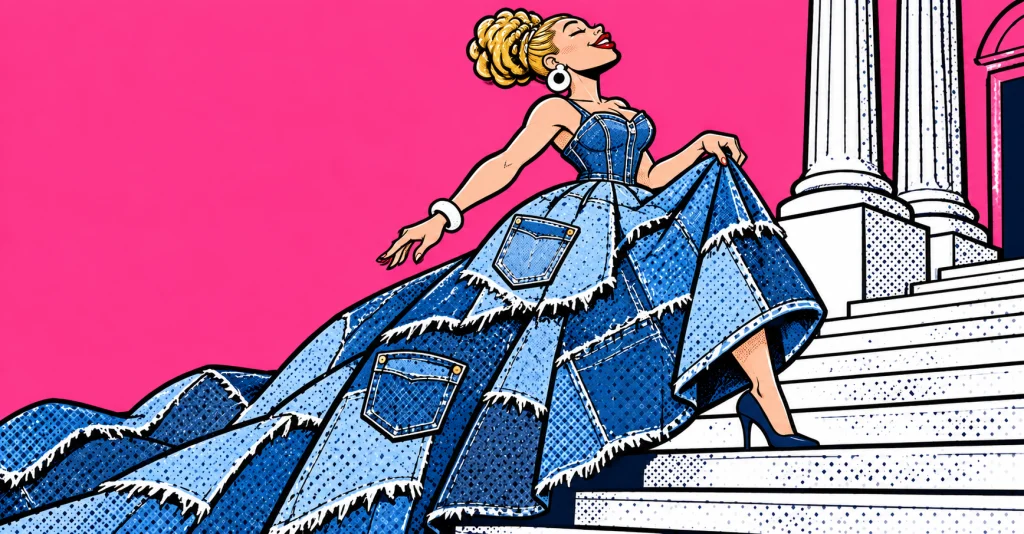
After the Galliano exhibition collapsed, the Met chose a theme that honors no single designer and a wardrobe everyone already owns.
The Metropolitan Museum of Art announced Thursday that its spring 2027 Costume Institute exhibition will be “extraORDINARY: Fashion and the Poetics of the Everyday,” a look at how designers turn wardrobe staples like jeans, T-shirts and puffer coats, along with materials like paper, plastic and metal, into high fashion, Yahoo’s Kerry Justichreported. The show will include 200 to 230 pieces, among them Charles James’s couture take on a puffer coat from the 1930s, Marc Jacobs’s 1990s grunge collection for Perry Ellis and the Calvin Klein jeans Brooke Shields made famous, according to The New York Times. It replaces “John Galliano: Horizons,” which the museum canceled on Aug. 31 after backlash over the designer’s past antisemitic and racist remarks. “I didn’t have a plan B,” curator Andrew Bolton told Vogue.
Why it matters: The Met Gala’s theme decides which fashion history gets put in a museum and which brands get the year’s biggest red carpet. Switching from one man’s career to “the everyday” changes both.
- No single honoree, no single risk. The Galliano show fell apart after Jewish community members, donors and public officials objected, and the 2027 gala falls on Israel’s Holocaust Remembrance Day. A theme built around a wardrobe instead of a person gives critics no one to target.
- Donors now have a veto. The Met said it would address Galliano’s conduct inside the exhibition, and that wasn’t enough. The museum learned that the people who fund the gala decide who gets honored.
- “Everyday” is a luxury business. High-fashion houses already sell basics for designer prices, from $1,000 jeans to logo T-shirts, and the cheapest item on the shelf often does the most work, as Lululemon’s business shows. A museum show celebrating elevated staples works as a showcase for that exact product category.
- The dress code isn’t announced. Nobody expects celebrities to show up in actual jeans. Expect couture versions of denim and puffers, which keeps the gala’s spectacle while adopting the vocabulary of the street.
The culture question the Met has to answer: Jeans, T-shirts and puffer coats didn’t become iconic only because designers reimagined them. They became iconic because people wore them, from workers to grunge kids to the hip-hop generation that made the puffer coat a New York uniform in the 1990s. Luxury has spent years borrowing that street credibility, and now it’s repositioning without the culture it took from. A museum exhibition is the final step, because streetwear didn’t die, it became an archive. A show about “the everyday” that credits Charles James and Calvin Klein but skips the streets and the culture that gave those clothes their meaning would repeat fashion’s oldest habit. Black and working-class style creates the meaning, and luxury collects the credit and the price tag.
What’s next: Expect brands to start positioning their “elevated basics” collections around the theme long before May, because that’s where the commercial opportunity is. The everyday clothes on display are still made by workers fighting over wages, like the nearly 700 Bangladesh garment factories that stopped work, and that story won’t be on the Met’s walls. Expect the red carpet to become a test of how far couture can stretch denim and cotton. Watch whether any star wears Galliano anyway. He has dressed Met guests from Princess Diana in 1996 to Kim Kardashian in 2024, and a single look on the steps could restart the debate the Met just tried to end.