
A decade after the Brexit vote, 53 percent of Britons now support rejoining the European Union, according to polling reported by The Guardian, with support exceeding 80 percent among Labour, Liberal Democrat, and Green voters. The shift marks a clear reversal from 2016, when leaving the EU was framed as a reclaiming of national identity and sovereignty. What has changed is not simply opinion, but the framework through which Brexit is being evaluated. The question has moved from symbolism to lived experience.
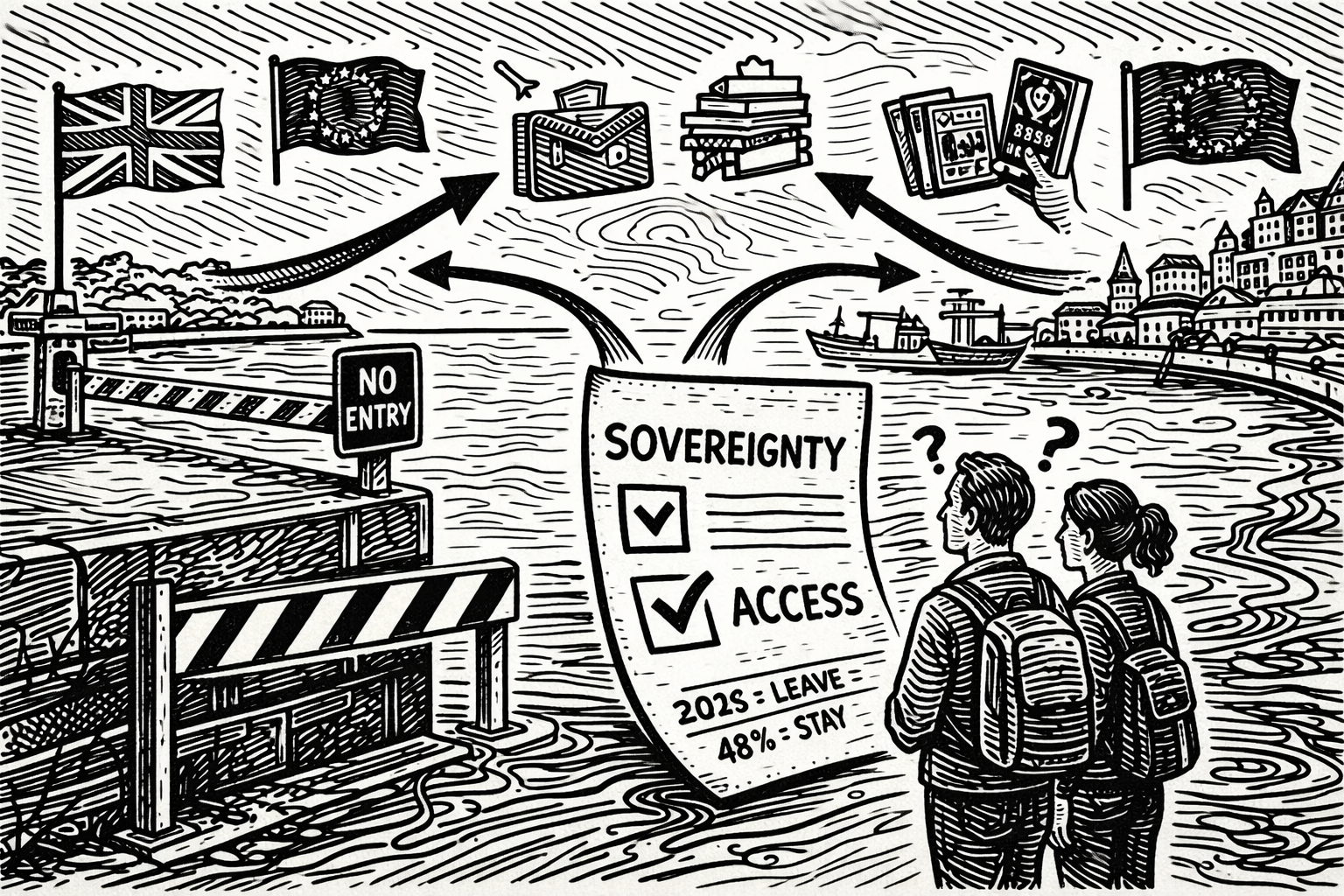
Brexit is now being judged less on identity and more on access. Trade friction, customs barriers, and regulatory complexity have made the movement of goods more difficult, particularly for small and mid-sized businesses. At the same time, labor shortages in sectors like agriculture and healthcare have exposed how dependent the UK was on EU mobility. What was once abstract has become practical. Independence is being weighed against constraints that show up in daily economic life.
The generational impact sharpens that shift. Younger Britons are entering a labor market where cross-border movement is no longer a baseline expectation. The ability to study, work, and live across EU countries has shifted from assumed to restricted, experienced less as policy and more as lost opportunity. That loss does not require political analysis to understand. It is felt in the friction of trying to do what was once simple.
Rejoining the EU remains unlikely in the near term given the political and procedural barriers. But the significance of the polling is not immediate policy change. It is the direction of public sentiment. Brexit is no longer a closed chapter. It is an ongoing reassessment, where the identity argument that drove the vote is being overtaken by a more concrete question: what has been gained, and what has been lost.