
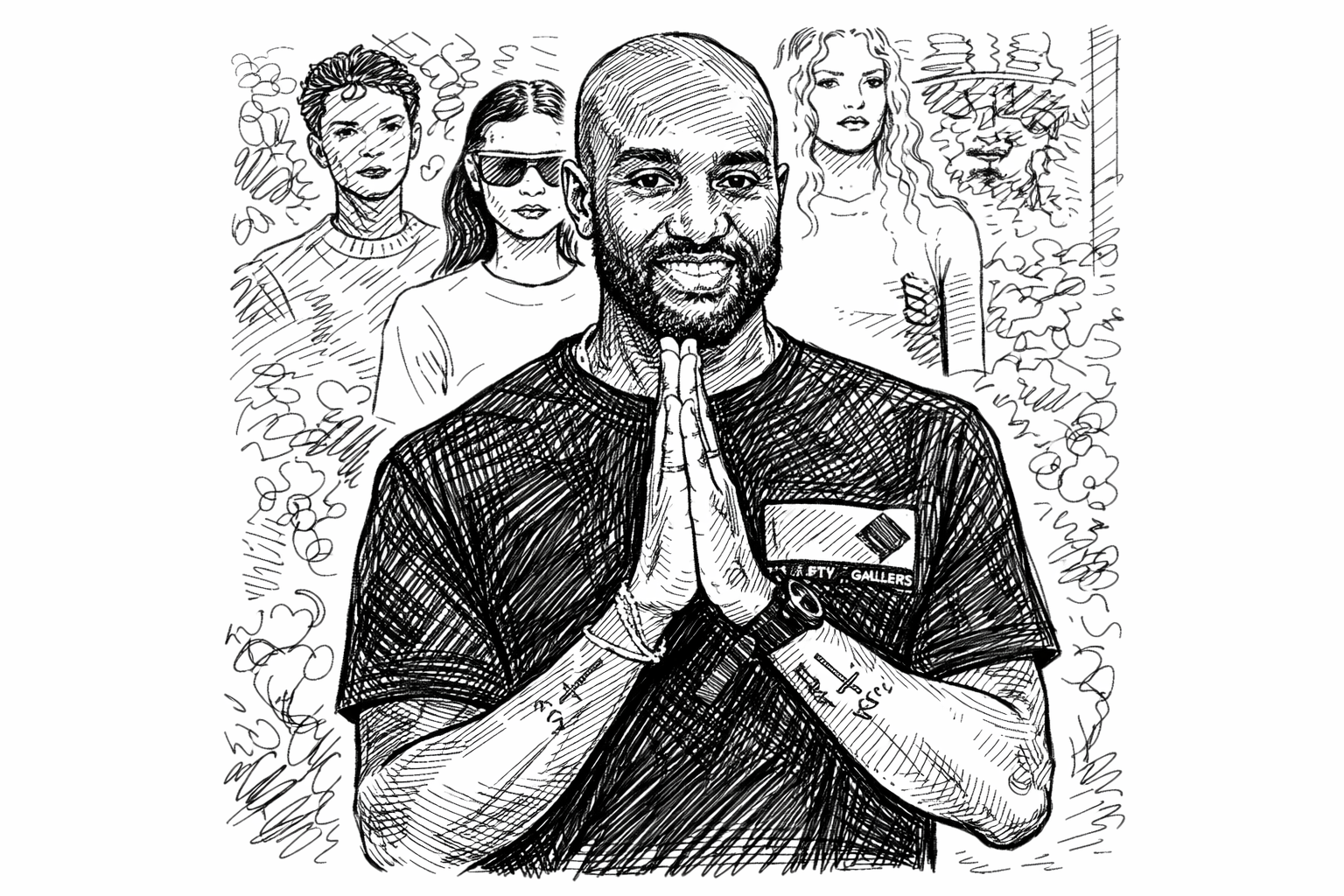
Luxury fashion is repositioning. After a decade of collaborations, oversized silhouettes, sneaker drops, and logo saturation, the major houses are pulling back toward craftsmanship, tailoring, and heritage. The aesthetic vocabulary is quieter. The references are internal. Searches for the preppy aesthetic surged more than 200 percent since the start of 2025, according to Lyst and across the industry there is a discernible movement away from the streetwear-inflected maximalism that defined the previous decade toward something described as restraint, refinement, and return. The industry calls this evolution. It is worth being more precise about what it actually is.
Streetwear was not a trend that luxury borrowed from. It was a cultural infrastructure built over decades by Black and Brown youth — in the Bronx, in Harlem, in South Central — that luxury entered because it was losing relevance and needed what that infrastructure had: credibility, energy, and access to consumers it could not reach through its existing codes. Dapper Dan was doing logomania in Harlem in the 1980s before the luxury houses he reworked recognized what he was building. Supreme was sold for $1.5 billion in 2024, down from its $2.1 billion acquisition in 2020 — a valuation arc that tracks almost exactly with how useful streetwear’s cultural energy was to the mainstream market, and what happened to that valuation once luxury had absorbed what it needed. The collaboration era was not a partnership between equals. It was an extraction with branding attached.
The retreat toward heritage is happening against a backdrop of luxury’s broader commercial difficulties. The global luxury industry is forecast to grow just 1 to 3 percent between 2024 and 2027, according to Business of Fashion and McKinsey, with executives citing the need to reconvince consumers of the value proposition after years of price increases. Heritage and restraint are not just aesthetic choices — they are market repositioning strategies for a sector that expanded too fast and is now recalibrating its image. The question is what gets left behind in that recalibration. Virgil Abloh, the first Black artistic director at Louis Vuitton, died in 2021. His successor returned the house toward a more conventional luxury register. The cultural conversation about who gets credited for reshaping luxury has largely not followed the industry’s pivot back toward heritage. We examined the broader mechanics of this extraction in Why Even Ordinary Moments Now Invite Extraordinary Analysis. Luxury’s current repositioning is not neutral evolution. It is a decision about which version of the culture gets carried forward — and which one gets left at the door on the way back in.