When every restaurant, shop and sidewalk can become somebody’s content studio, some businesses are discovering the appeal of saying no.
BY SOCIAL STORYTELLERS COLLECTIVE NEWS DESK
OCTOBER 12, 2026
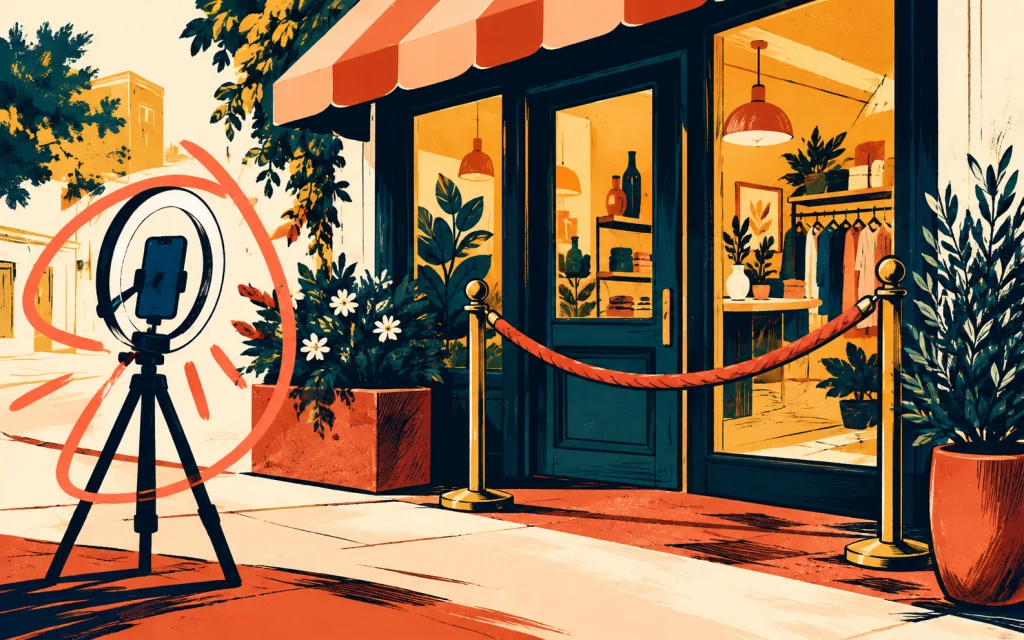
A sign outside a Nantucket shop did something that expensive marketing campaigns often fail to accomplish: it made people argue about the business. Four Winds Craft Guild displayed a “No influencers” message this summer, and the dispute spread far beyond the Massachusetts island. Nearby entrepreneur and creator Paige Lorenze pushed back, arguing that dismissing influencers can also dismiss work through which women have built businesses. The shop’s owners described the sign as a response to filming behavior and an attempt at humor. What started as a disagreement about a storefront became a revealing fight over who controls the experience of being in a place. Inc documented the exchange and the business response.
When attention becomes a cost
The dispute points to a contradiction in the creator economy. Businesses benefit when customers photograph products, recommend destinations and introduce them to audiences they could not otherwise afford to reach. But visibility also carries costs: interruptions, requests for special treatment, people filmed without permission and an atmosphere in which an ordinary purchase becomes raw material for somebody else’s commercial project. Those concerns are not proof that creators are uniquely disruptive. They are evidence that the rules governing commercial content in shared spaces remain unsettled, even after years of influencer marketing becoming a routine business expense.
The criticism is also complicated by who has been able to earn money through the industry. Lorenze, whose Dairy Boy brand has a Nantucket presence, argued that the backlash can overlook women who have turned online audiences into independent businesses. People reported the responses from creators and the shop owner. There is a meaningful difference between opposing intrusive filming and suggesting that content creation is not legitimate work. Treating those as identical turns a practical question about boundaries into an argument about status.
A new kind of brand positioning
For a small business, rejecting influencer culture can itself become a market signal. It communicates that the shop prioritizes an experience over an algorithm, that customers are visitors rather than potential distribution channels, and that the owner is willing to sacrifice some exposure for control. The irony is obvious: a business can go viral by announcing that it does not want to go viral. But that paradox does not erase the appeal. In a market saturated with invitations to post, the promise of being left alone can feel like a premium service.
The commercial calculation is not straightforward. A blanket rejection risks alienating customers who use social platforms to discover local businesses and creators whose audiences generate meaningful sales. An open invitation to record everything can alienate customers who expect privacy or staff who did not agree to perform for cameras. Businesses need clearer, behavior-based policies: ask before filming employees or other customers, obtain permission for commercial shoots and keep entrances and service areas accessible. Such rules address conduct rather than identity.
The broader cultural question is whether constant visibility has stopped feeling like an unqualified advantage. The Nantucket episode suggests that some consumers want businesses to make a choice about atmosphere, not merely aesthetics. A shop that sets boundaries is not necessarily rejecting modern marketing; it may be differentiating itself in a marketplace where nearly everyone else is chasing reach. The next phase of the creator economy may require something more durable than access to every room: permission, reciprocity and the ability to recognize when an experience should remain an experience.