
Part of Society & Economy / The Access Shift — an ongoing series examining how access is being quietly reshaped across American life
By Sunday afternoon, it was already everywhere. Posts claiming that the FDA had “approved” or “released” 14 previously restricted peptides spread across Instagram, X, and TikTok, often paired with lists of compounds like BPC-157, CJC-1295, Ipamorelin, and Melanotan II. The framing was definitive and celebratory, reinforcing a simple idea: something that had been off-limits was suddenly available again. The speed of the claim’s spread reflected more than curiosity—it revealed a market already primed to believe that access had finally arrived.
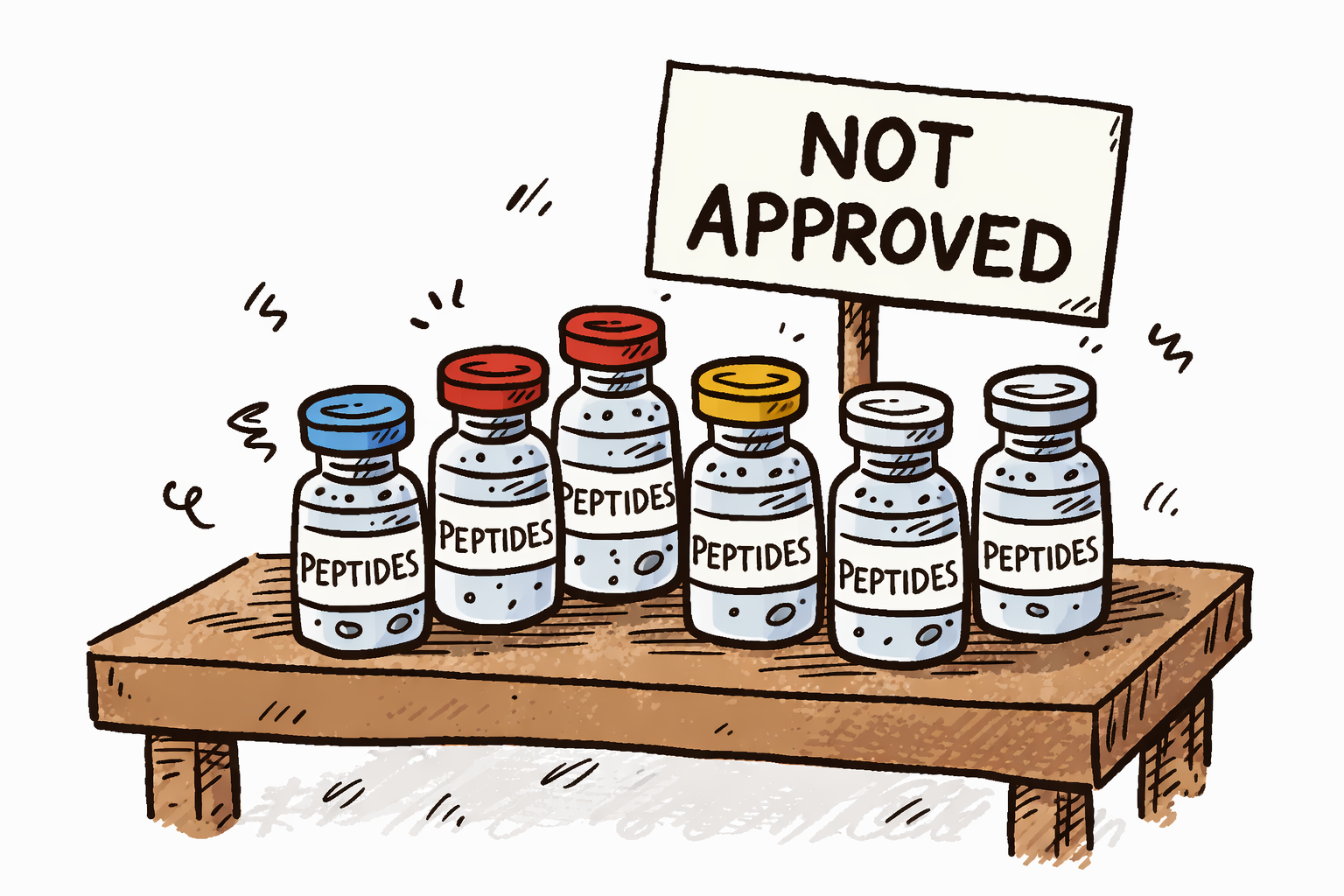
In reality, no such regulatory shift occurred. The FDA has not issued a new rule, made an announcement, or changed the classification of these peptides. What did happen is far more subtle. In a podcast appearance, Robert F. Kennedy Jr. said he intends to push for moving certain peptides off the FDA’s Category 2 list and into a classification that would allow limited medical use. That statement signals a policy direction, not a policy outcome, yet it was quickly translated online into something immediate and actionable: access.
That translation highlights the core dynamic driving this moment. The gap between intention and reality is being collapsed by demand. A potential future—one where compounding pharmacies might legally produce these peptides—is being treated as a present-day condition. In that shift, the traditional role of regulation as the gatekeeper weakens, replaced by a faster-moving system where belief, demand, and information flows set the pace.
Because access to these compounds never truly disappeared—it just moved. Peptides like BPC-157 and CJC-1295 have continued to circulate through online marketplaces, overseas suppliers, and loosely regulated domestic channels. They are widely discussed in fitness, longevity, and biohacking communities, where experimentation often outpaces clinical validation. Restrictions did not eliminate interest; they redirected it into alternative pathways where oversight is limited and visibility is fragmented.
At the same time, many of these compounds still lack large-scale, conclusive clinical trials, with incomplete safety data and unclear long-term effects. Yet demand continues to rise, fueled by a broader cultural shift toward optimization—the idea that the body can and should be enhanced. This is the same ecosystem driving the growth of GLP-1 drugs, hormone therapies, and personalized health tracking. It reflects an economy built not only on treatment, but on performance, where access is increasingly shaped by willingness rather than approval.
That creates a tension regulators are still trying to manage. The traditional sequence—research, approval, access—is being reversed, with access happening first and oversight struggling to catch up. If regulatory changes eventually come, they will not create a new market so much as formalize one that already exists, raising questions about quality, control, and equity. For now, the only thing that has shifted is perception, but that shift is enough to signal where things are headed: people are no longer waiting for approval—they are waiting for confirmation.