The Dominican Republic Added 147,456 Jobs. More Than Half of All Work Is Still Informal

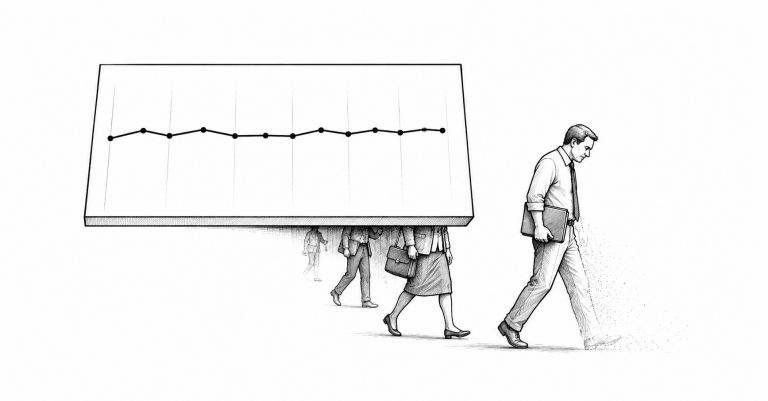
The Dominican Republic added 147,456 net jobs over the past year, pushing total employment to 5.27 million in the second quarter of 2026. The increase amounts to 2.9% growth compared with the same quarter of 2025, an impressive headline for one of the region’s steadier labor markets. But underneath the growth is a more persistent reality: more than half of all employed people still work in the informal segment of the economy, 53.8% in all. The country is creating jobs faster than it is changing the structure of work itself.
Growth Is Being Split Almost Evenly
The new employment was divided almost perfectly between the formal and informal economies. Of the net jobs created over the past 12 months, formal workers accounted for 74,794, or 50.7%, while informal workers made up the remaining 72,663, or 49.3%, according to the Central Bank’s National Continuous Labor Force Survey. The overall informality rate of 53.8% sits below the survey’s historical average of 56.7% dating to 2014, but it still covers a majority of the workforce.
That distinction matters because the number of people working is only one measure of labor-market strength. Formal employment generally provides a clearer path into payroll systems, social insurance and enforceable employment protections. Informal work can range from successful independent businesses to highly precarious jobs, so it cannot be treated as synonymous with poverty. But when more than half of workers remain outside the formal sector, economic expansion does not automatically translate into the same level of security for everyone participating in it.
Women accounted for an extraordinary share of the recent growth. Women took 127,742 of the new positions, or 86.6% of the net increase, while men added 19,714. Yet men still represent 57% of all employed people, compared with 43% for women, which makes the concentration of new employment among women particularly notable.
At the same time, unemployment edged upward rather than downward. The open unemployment rate rose to 5.3% from 5.0% a year earlier, and the broader underutilization measure reached 8.7%, also up 0.3 percentage points. That broader measure counts both job seekers and people who are available to work but not actively searching. Those movements are modest, and the open unemployment rate remained below the survey’s historical average of 6.0%, but they complicate any simple reading that job creation alone has relieved pressure in the labor market.
The Next Test Is What Kind of Jobs Grow
The Dominican labor market is therefore telling two stories at once. The employment rate stood at 63.2% and labor force participation at 66.8%, both near historic highs. Women are gaining work in substantial numbers, and formal jobs account for slightly more than half of new employment. Yet informality remains the condition under which a majority of workers earn their living. Even the Central Bank acknowledged that challenges tied to informality and underused labor persist.
That makes the next economic benchmark more demanding than another record employment total. The structural question is whether growth can steadily move workers from informal activity into jobs and businesses connected to the formal economy. The Dominican Republic has shown that it can create work. The longer-term test is whether the work it creates also expands economic security.
Source: Banco Central de la República Dominicana, Encuesta Nacional Continua de Fuerza de Trabajo (ENCFT), second quarter 2026 results, released September 20, 2026, as reported by Diario Libre, Infobae/EFE, El Nuevo Diario and Acento.