
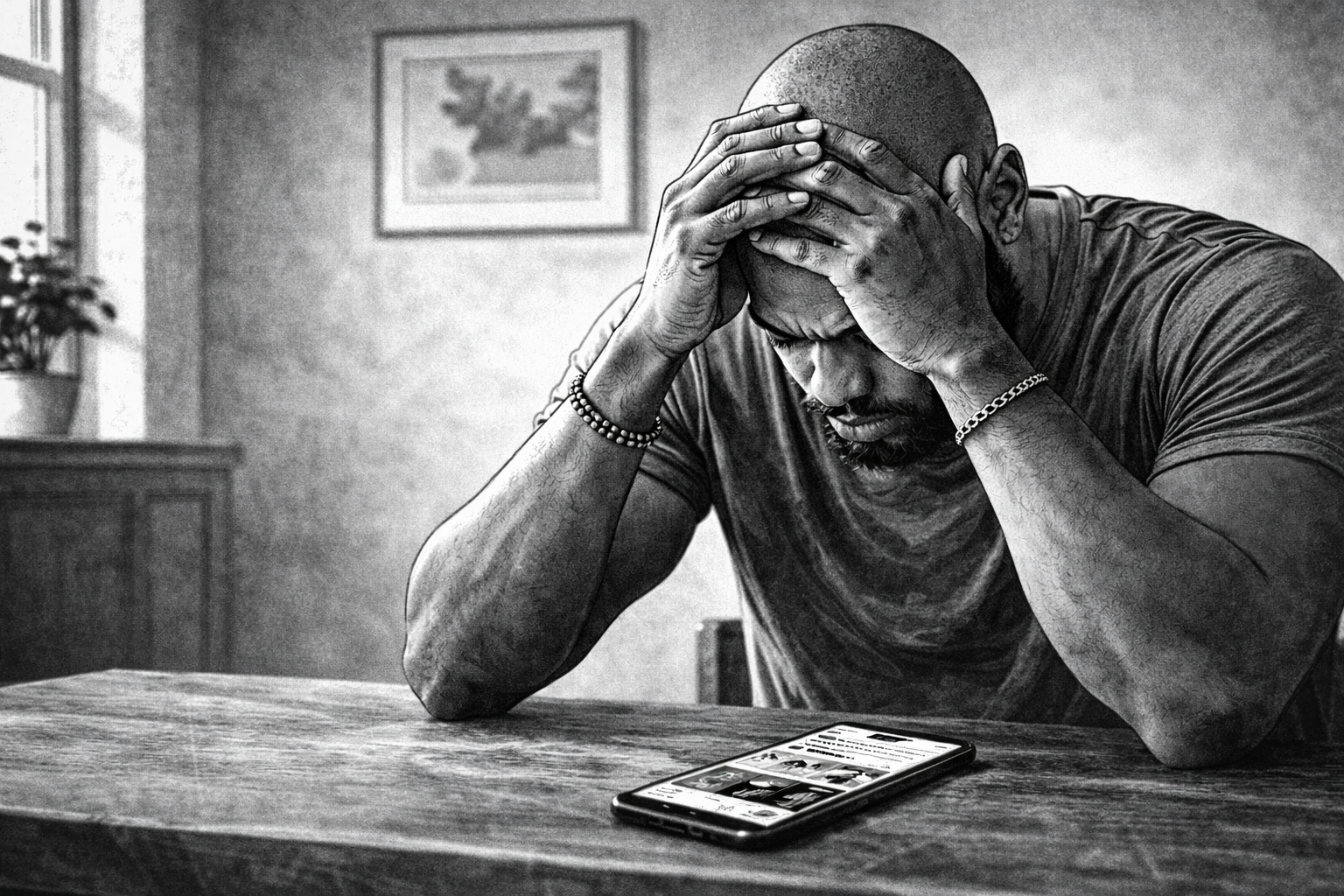
Something is shifting in how Black men talk about mental health. The conversation is more open, more visible, and increasingly embedded in the spaces — barbershops, community programs, social media — that meet people where they already are. The stigma hasn’t disappeared, but it’s loosening. The system, however, has not kept pace.
Only 26.4% of Black and Hispanic men aged 18–44 who experienced daily feelings of anxiety or depression used mental health services — compared to 45.4% of white men with the same symptoms. That gap isn’t explained by need or willingness alone. Only 2% of U.S. psychologists are Black — which means most Black men seeking care are navigating a system staffed predominantly by providers who don’t share their background, their cultural reference points, or their experience of race in America. The result is a care environment where misdiagnosis is more likely, trust is harder to build, and dropping out of treatment is more common.
That’s part of why community-rooted spaces have always carried so much weight. As Will Davison writes in Where Black Men Lay Their Armor Down, the barbershop has long served as something more than a place for a haircut — a space for reflection, confession, and real dialogue in a world that too often demands composure. It’s no accident that organizations like The Confess Project are training barbers as mental health advocates. The infrastructure for trust already exists. The formal healthcare system just hasn’t caught up to it.
Organizations like Black Men Heal and Therapy for Black Men are building alternatives from the ground up too. It’s essential work. But as we’ve reported in Aid Cuts Didn’t Collapse HIV Treatment, when community labor quietly fills the gaps left by a failing formal system, the outcome may look stable while the underlying model becomes harder to sustain. Community solutions shouldn’t be substitutes for a healthcare system that works — and as When Access Becomes Conditional makes clear, the cost of that gap falls hardest on the communities the system was never fully designed to serve.
The conversation around Black men and mental health is evolving. The infrastructure needs to evolve with it.