
Part of The Access Shift — an ongoing series examining how access is being quietly reshaped across American life.
NEWS DESK | SOCIAL STORYTELLERS COLLECTIVE
Airports used to be places you moved through. Right now, they are places you are evaluated — and the agency doing the evaluating depends on which day you fly.
Since DHS funding lapsed on February 14, the country’s air travel system has been in open crisis. TSA officers are required to work as essential employees during a shutdown — without pay — and the strain is showing. Wait times at major hubs in Houston and Atlanta reached two hours on a single Friday, while New Orleans advised passengers to arrive at least three hours early. Philadelphia closed three security checkpoints entirely because of short staffing. George Bush Intercontinental in Houston reported wait times exceeding four hours, operating at less than 50% of its TSA checkpoints during 100% spring break loads.
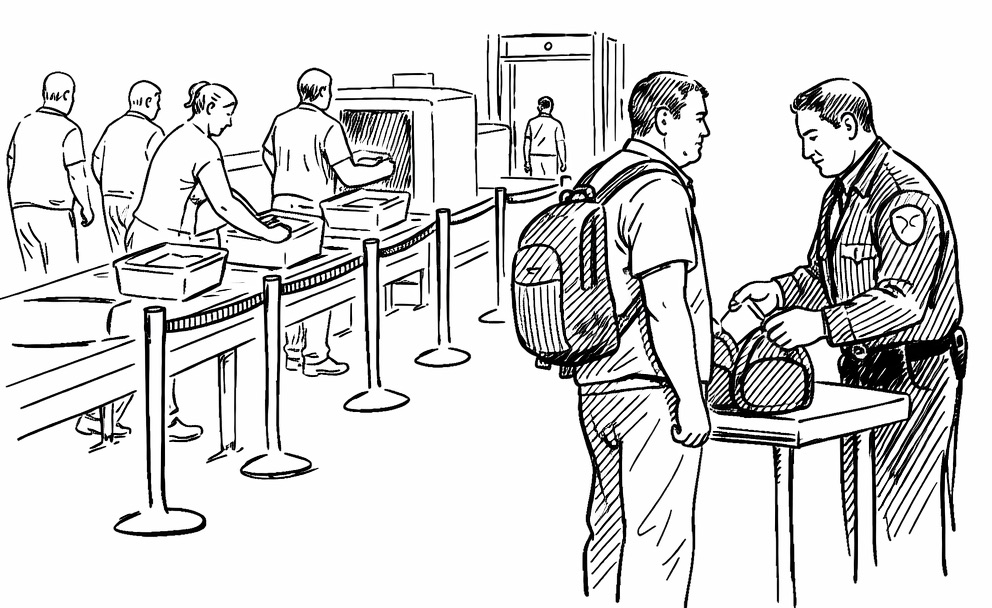
Into that gap, the Trump administration deployed ICE. Hundreds of agents were sent to 14 airports, stationed at security lines, verifying IDs, and guarding exits. The official framing was operational. The president offered a different one. “They love it because they’re able to now arrest illegals as they come into the country,” Trump said. “It’s very fertile territory.”
That framing is the honest one — and it reframes everything else.
Border czar Tom Homan confirmed on Fox News that enforcement was a core component of the deployment: “We’re going to arrest criminals going through the airport. We’re going to look for human trafficking, sex trafficking, money smuggling.” ICE agents retain full enforcement authority wherever they are deployed — including the power to stop, question, and make warrantless arrests based on reasonable suspicion. That authority does not pause because the stated mission is crowd control.
The data infrastructure behind this shift had been building for months. TSA has been sending ICE lists of people flying through U.S. airports several times each week — names, photos, and identifying details — meaning the enforcement capacity existed long before agents were physically visible at checkpoints. The deployment made visible what was already happening beneath the surface.
While tens of thousands of TSA employees worked without pay, ICE agents continued receiving paychecks through the $75 billion allocated by the One Big Beautiful Bill Act — a disparity TSA union leaders called “an insult to the employees.” The workers responsible for screening went unpaid. The workers responsible for enforcement stayed fully funded and were sent into the airports the unpaid workers could no longer staff.
For travelers with documentation concerns, mixed-status families, or pending immigration cases, the calculus of moving through an airport has fundamentally changed. Legal advocates are now advising people without secure status to avoid air travel entirely. The distinction between a domestic flight and an immigration encounter — once reliably separate — no longer holds. As SSC has tracked across The Access Shift series, friction in public infrastructure is never experienced evenly. It follows the fault lines of every other form of access inequality.
Why This Matters
The airport is one of the most concentrated points of public contact with federal authority in the country. When that space is converted — under the cover of an operational emergency — into an active immigration enforcement zone, it requires no new legislation, no public debate, no formal announcement. It requires a funding lapse, a deployment order, and a president willing to describe the result honestly. The lines are moving again. But the airport travelers return to is not the same one they left. And the people most affected by that difference are the ones least positioned to say so publicly.