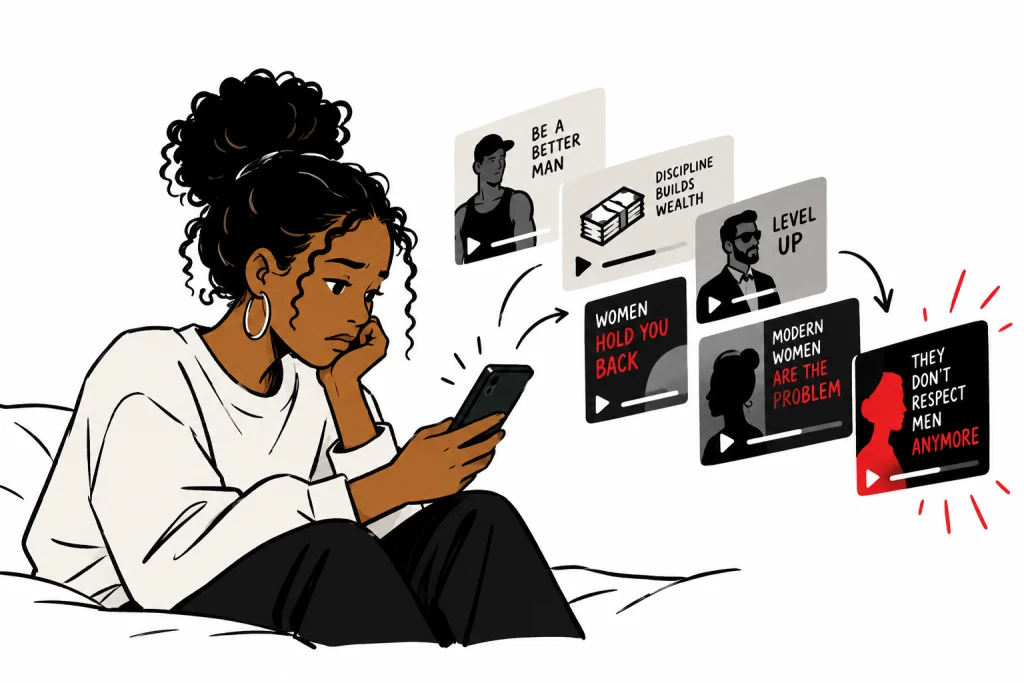
SSC’s earlier coverage examined how dating became a competition and masculinity became a content business. Research into young men’s feeds shows how those messages can reach boys looking for guidance.
In five days, misogynistic content rose from 13% to 56% of videos recommended to TikTok accounts created for a research experiment. The 2024 study led by University College London used profiles representing teenage boys potentially vulnerable to radicalization, including those interested in loneliness and masculinity. Initial recommendations reflected those interests before increasingly directing anger and blame toward women. The findings do not describe every boy’s feed, but they document how quickly recommendations can change. A September 30 opinion column by Ronna Erenstoft in The News Record, the University of Cincinnati’s student newspaper, raises the same concern: boys seeking direction can encounter messages that turn insecurity into resentment.
The Audience Is Looking for More Than an Argument
The appeal extends beyond openly hostile creators. Movember’s Young Men’s Health in a Digital World report surveyed more than 3,000 men ages 16–25 in the United States, United Kingdom and Australia. Sixty-three percent watched men and masculinity influencers, while 43% of viewers found them motivating. This broad category includes fitness, financial and relationship advice; it is not synonymous with misogyny. SSC’s Inside the Manosphere: When Masculinity Becomes Content explored why that guidance attracts an audience: young men may be seeking clarity, structure and belonging. Understanding those needs helps explain how a creator can establish credibility before introducing more rigid ideas about gender.
SSC’s The Red Pill Effect examined how online dating discourse increasingly frames relationships through status, leverage and optimization. That framework connects directly to the concern raised by the Cincinnati column. When dating becomes a competition, rejection can be interpreted as evidence of insufficient rank rather than an ordinary experience between people with different preferences. Some red pill messaging then supplies an explanation: feminism has disadvantaged men, and women’s choices are responsible for their frustration. The problem is the conversion of a personal disappointment into a sweeping grievance. Advice that promises control can leave less room for mutual respect, vulnerability or accepting another person’s autonomy.
Familiar Interests Can Carry Different Messages
Movember research released in May 2026 examined TikTok data donated by 142 young men and classified more than 2,000 videos. Researchers separated everyday cultural content from messages tying masculine status to dominance and from material depicting explicit harm. Ordinary subjects such as sports, fitness and gaming accounted for much of the masculinity-related material, with harmful messages appearing within the same feeds. This adds evidence to the content ecosystem examined in SSC’s documentary analysis: different styles of delivery can carry related ideas. A fitness video may encourage enjoyment and discipline, while another uses physical strength to promote superiority or control over others.
The student column also criticizes “looksmaxxing,” the pursuit of maximizing physical attractiveness. SSC’s earlier red pill analysis placed that trend within a dating culture that treats appearance and status as competitive advantages. Grooming and exercise are not inherently harmful; the concern is when appearance becomes a rigid measure of worth and improvement requires escalating risks. Movember’s survey found that masculinity-influencer viewers were more likely to report poorer mental health and behaviors such as steroid use or exercising while injured. Those associations do not prove that viewing caused the outcomes. They warrant scrutiny of advice that presents physical transformation as the answer to rejection or insecurity.
What Reaches the Feed Can Reach the Classroom
The UCL project included interviews and discussions with young people and school leaders who described misogynistic language moving into everyday interactions. Those accounts support concern about school culture without establishing a national rate of violence caused by social media. Researchers recommended involving boys in discussions, including through peer mentoring, alongside greater platform accountability. SSC’s previous coverage examined the beliefs and the business behind them; these findings bring the consequences into relationships and classrooms. Schools must address degrading behavior while creating room to discuss why the messages seem persuasive. Girls should not have to tolerate harassment for boys to receive support.
The response has to address both the guidance being offered and the need that makes it attractive. Adults can ask what a creator promises, what supports the advice and when encouragement becomes contempt for someone else. Platforms also deserve scrutiny over recommendations that intensify harmful themes. Young men need accessible mentors and peers who can discuss ambition, rejection and uncertainty without turning women into obstacles or prizes. SSC’s earlier stories traced how relationships became strategic and identity became marketable. The next test is whether schools, families and platforms can make healthier guidance as visible and accessible as the voices already competing for boys’ attention.