
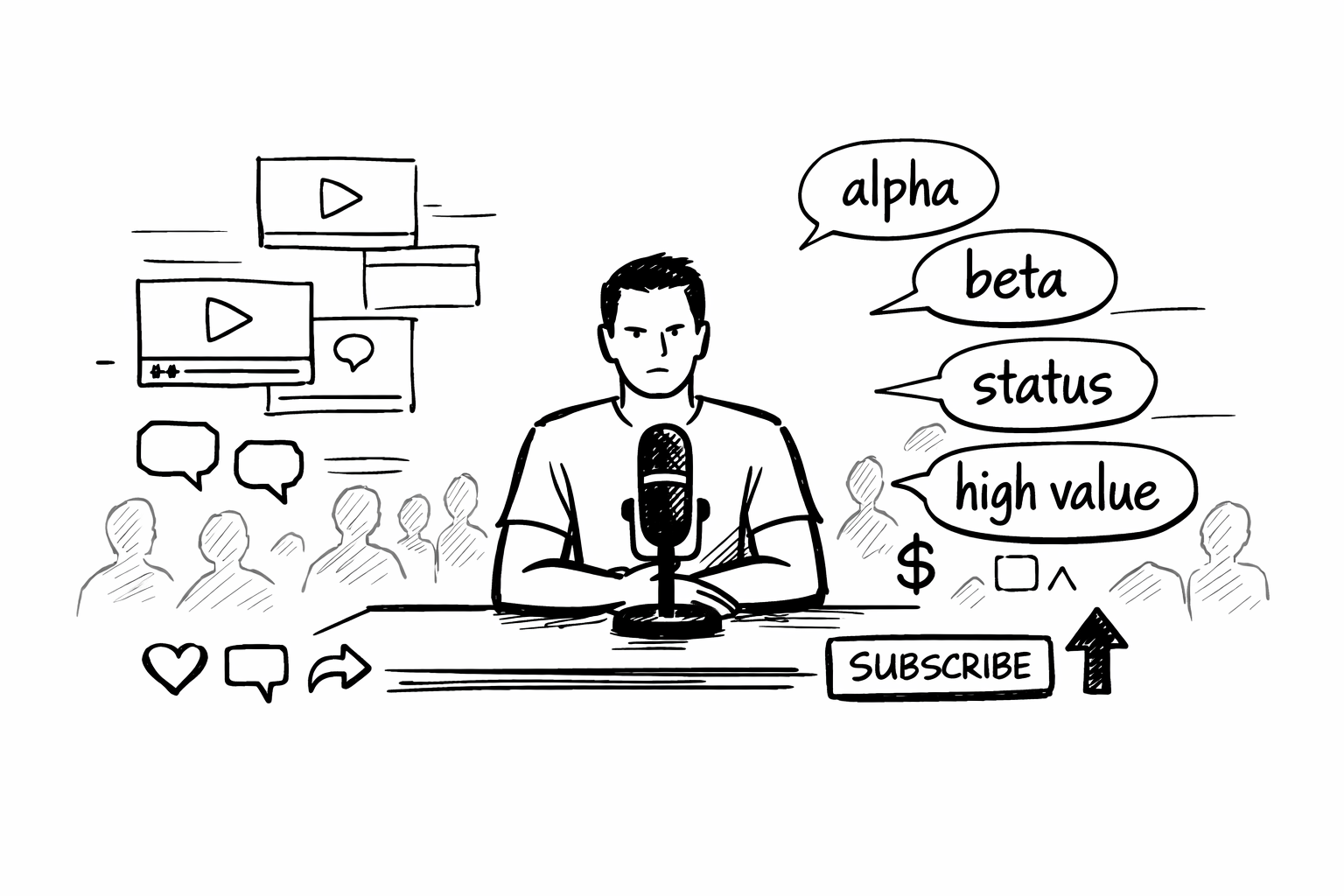
The release of Inside the Manosphere, now featured on Netflix, arrives at a moment when conversations about masculinity, dating, and identity are no longer confined to private spaces. They are public, algorithmic, and increasingly monetized. What the documentary makes clear is that the so-called “red pill” is not just a belief system — it is a content ecosystem.
Louis Theroux’s approach is familiar. He embeds himself within the world he is observing, allowing subjects to speak for themselves. In this case, that world is the manosphere — an online network of creators and influencers who promote hyper-masculine ideals, transactional views of relationships, and a growing skepticism toward modern gender dynamics. Figures within this space present themselves as guides, offering frameworks for success in dating, wealth, and self-improvement.
The documentary captures the range of personalities that exist within the space. Figures like Myron Gaines present a highly structured, almost instructional version of red pill ideology — framing relationships, gender dynamics, and success through rigid, often transactional rules. His content is polished, direct, and positioned as guidance, which helps explain its reach. In contrast, creators like HSTikkyTokky represent a different entry point into the same ecosystem — more chaotic, performative, and at times deliberately ambiguous, blurring the line between satire and sincerity. That ambiguity is part of the appeal. It lowers the barrier to entry, making the content more accessible and more shareable, especially among younger audiences.
Together, they illustrate something the documentary begins to surface: the manosphere is not a single voice but a spectrum of content styles built around the same underlying themes. Whether delivered as structured advice or viral performance, the messaging travels through the same channels — short-form video, podcasts, and clips optimized for engagement. The format may differ, but the outcome is consistent: attention, amplification, and influence. What becomes increasingly clear is that these frameworks are not just philosophical — they are profitable. Content is structured to provoke, to polarize, and to engage. The more extreme the take, the more visibility it generates. And visibility, in the current media environment, translates directly into revenue.
This is where the documentary intersects with a broader cultural shift. The same mechanics that drive lifestyle content — routine, repetition, aesthetic consistency — also power ideological content. The difference is the product being sold. In one space it may be supplements or fitness routines. In another, it is belief systems about relationships, power, and identity. What the film touches on but does not fully explore is the role of the audience. Many of the young men drawn into this content are not simply looking for dominance — they are looking for clarity, structure, and belonging. The manosphere provides that in a language that feels direct and actionable. But in doing so, it simplifies complex social dynamics into rigid, often transactional frameworks that leave little room for nuance.
As explored in our earlier analysis of the business of the manosphere, the same frameworks, language, and promises appear here at scale — reinforcing how digital culture has turned identity into both narrative and business model. Inside the Manosphere raises an important question without fully answering it: what happens when identity itself becomes content? When masculinity is no longer just lived but performed, optimized, and monetized for an audience, the line between guidance and influence begins to blur — and the impact extends far beyond the screen.