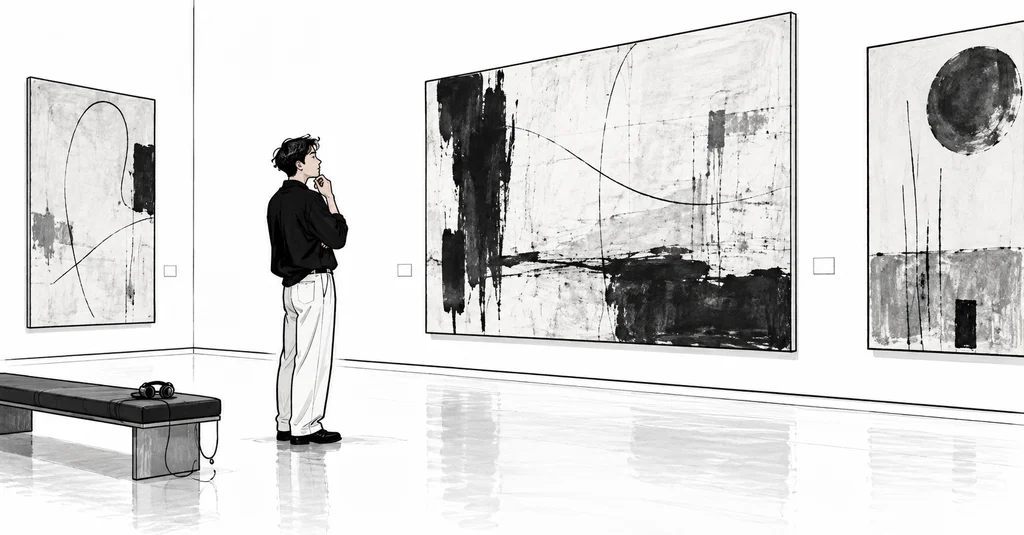
The BTS leader’s SFMOMA exhibition brings Korean art into a wider conversation—and reflects a curiosity that left an impression on me.
CULTURE | PERSONAL PERSPECTIVE
By Will Davison Jr.
With 139 works from his personal collection alongside 39 from the museum’s holdings, RM’s new exhibition at the San Francisco Museum of Modern Art gives audiences another way to understand the BTS leader. RM x SFMOMA: Between You and Me, which opened October 3 and runs through February 7, 2027, brings his interest in Korean art into conversation with works from an American institution. The numbers convey the exhibition’s scale. For me, the announcement also brings back a personal encounter with someone whose knowledge of art and its historical context made a lasting impression.
The Curiosity I Remember
I had the pleasure of hosting RM at the Rothko Chapel in Houston when I served as director of communications and visitor engagement. What struck me was his in-depth knowledge of Mark Rothko and the historical context surrounding his work. That knowledge has stayed with me as I have followed news of this exhibition. Hosting him gave me an opportunity to encounter an interest that audiences may know less about than his music. My perspective on the SFMOMA project begins there: with an appreciation for the seriousness he brought to understanding an artist and the history behind the work.
That experience shapes how I read the exhibition’s premise. Art offers an opportunity to follow someone’s attention: what they return to, what they study and what they choose to live alongside. A personal collection can make those interests visible, although the objects alone cannot tell the entire story. I am interested in the decisions that connect them and the questions that sustain a collector’s curiosity. In RM’s case, I have a small but meaningful point of reference. The depth I encountered in Houston gives me reason to approach this project with interest in his thinking as well as his selections.
Korean Art in a Wider Conversation
According to SFMOMA’s exhibition overview, RM has been collecting for almost a decade. He curated the exhibition with the museum’s América Castillo and Hyoeun Kim, placing works from his collection alongside pieces held by SFMOMA. The museum describes the result as one of the most expansive presentations of Korean modern art in the United States. That collaboration deserves attention because it creates an opportunity for visitors to follow relationships across artists and cultures. It also acknowledges the curatorial work required to turn a personal collection into a public experience.
The museum’s announcement identifies artists including Kim Whanki, Nam June Paik, Agnes Martin, Georgia O’Keeffe and Rothko among those represented through its holdings. For me, the promise of such a presentation lies in the opportunity to expand what viewers recognize and want to learn. Someone may arrive knowing one artist and leave curious about another. Korean art deserves sustained engagement on its own terms, including attention to individual makers and their histories. Bringing works into a shared exhibition can open that engagement, provided visitors retain room to explore the differences as well as the connections.
An Invitation to Keep Looking
SFMOMA says handwritten wall texts and an audio guide narrated by RM share his personal reflections on the art. I find that element compelling because it gives visitors access to how he describes his own relationship with the works. His voice can become an invitation to look more closely and develop an independent response. A familiar musician may provide the initial reason to enter a museum; what happens afterward depends on the encounter with the art. The opportunity is to carry that first interest into further reading, another gallery visit or a new appreciation for an artist previously unknown.
When I think back to hosting RM, I return to the knowledge of Rothko and historical context that struck me. Those qualities provide a personal reason to welcome this exhibition and the conversations it may generate. My hope is that visitors give themselves time to engage with the artists whose work he has brought into view, then continue exploring beyond the exhibition. The public already knows RM can command attention through music. At SFMOMA, he has an opportunity to direct some of that attention toward art—and help others discover a curiosity they will continue to pursue.