
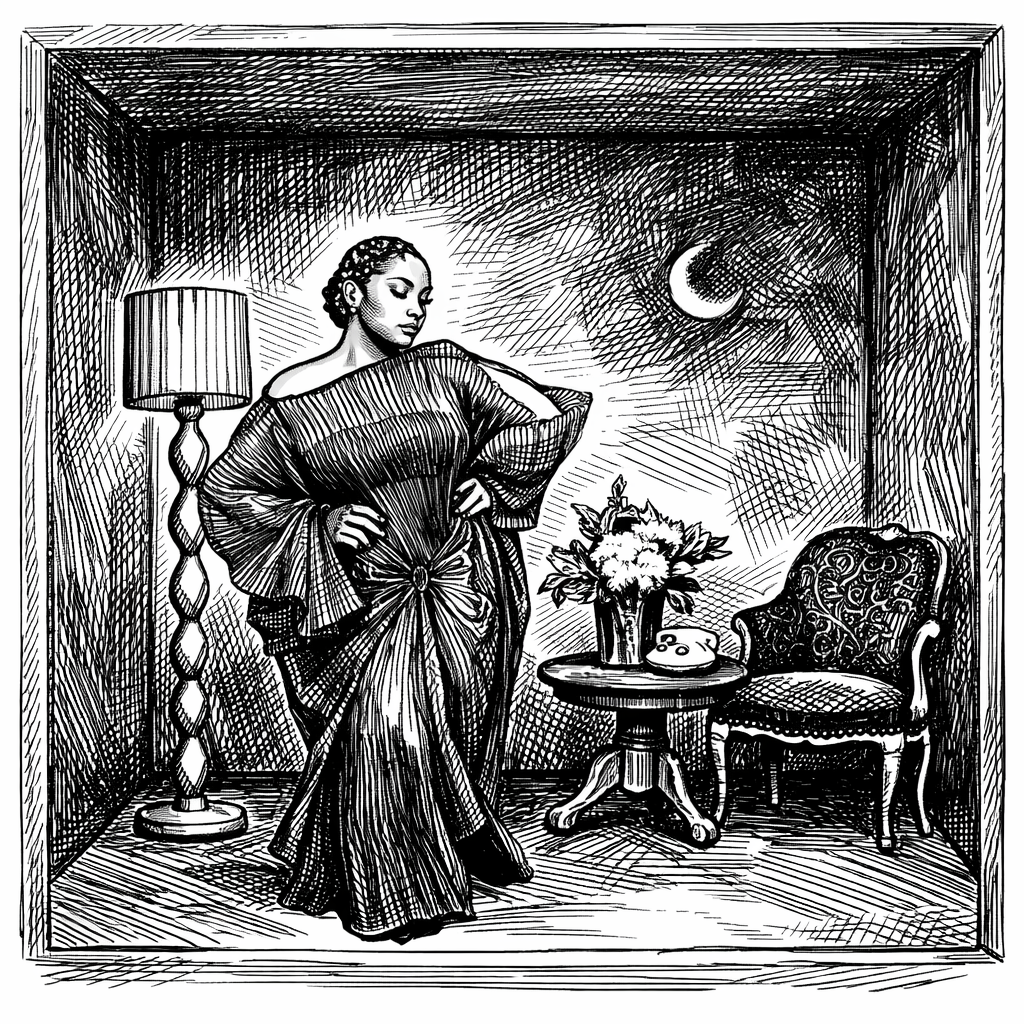
Alex Isley doesn’t announce herself. She arrives.
When The City Sleeps, released yesterday, is the latest chapter in a career built on discipline and restraint — two qualities that are easy to underestimate until you hear what they make possible. The daughter of Ernie Isley carries a lineage that is unmistakable, but her sound has always belonged entirely to her: intimate, measured, rooted in mood and emotional clarity over spectacle. This album is a continuation of that evolution, and in many ways its fullest expression.
The opening track, Holding On, establishes the terms immediately. Isley’s voice arrives breathy and controlled, moving through a soft falsetto that feels less performed than felt. It doesn’t project outward — it draws inward, wrapping around the listener rather than reaching toward them. The effect is immediate. You are inside the album before you’ve decided to enter it.
That quality of control holds throughout. Ms. Goody Two Shoes, the radio single, opens the sound just enough to feel expansive — warm, groovy, the kind of ease that belongs on a sunny drive with no particular destination. Moonlight on Vermont returns to the world the opener introduced: engulfing, attentive, fully present. Friday night energy. Candlelight. Red wine. Conversation moving without urgency. Mic On adds a sharper edge — playful and quietly confident, the lyric “Play if you want to / I’ma be on ‘cause I’m meant to” landing as a gentle assertion of presence without breaking the album’s overall restraint.
Westside feels written specifically for her voice. She leans into her natural register with ease, and the refrain — “Nowhere but the Westside / Only thing left that can go right” — lands as both a place and a feeling, grounded and reflective at once. Starry Eyes is a beautiful moment, effortless in the way that only intentional things can be. The title track, featuring James Fauntleroy, opens into something transportive — pulling the listener in rather than pushing toward them. PCH with Syd is one of the album’s genuine highlights: Syd’s voice moves through the track with an ease that blends with Isley’s less like a feature than a shared language. Fool’s Gold lands differently than the rest — personal in a way that is less about composition and more about timing, meeting you where you are without rushing to resolve anything.
If there is a limitation, it is Chamomile — built beautifully on ad-libs and tonal layering, creating a soft, hypnotic atmosphere that ends just as it begins to fully open. At just over two and a half minutes, it feels like the one moment the album doesn’t trust itself enough to linger. The album earns that trust everywhere else. Thank You for a Lovely Time and Maybe Again close the project with quiet coherence — nothing abrupt, nothing forced, and still somehow leaving you wanting more.
What defines When The City Sleeps is its discipline. There is no pivot toward spectacle. No moment engineered purely for impact. The production is minimal and deliberate, leaving space for Isley’s vocals to breathe — allowing silence, pacing, and subtle shifts in arrangement to carry as much weight as melody. In a genre that often rewards scale, this approach feels almost countercultural.
Softness, here, is not a limitation. It is the strategy — and it works.