
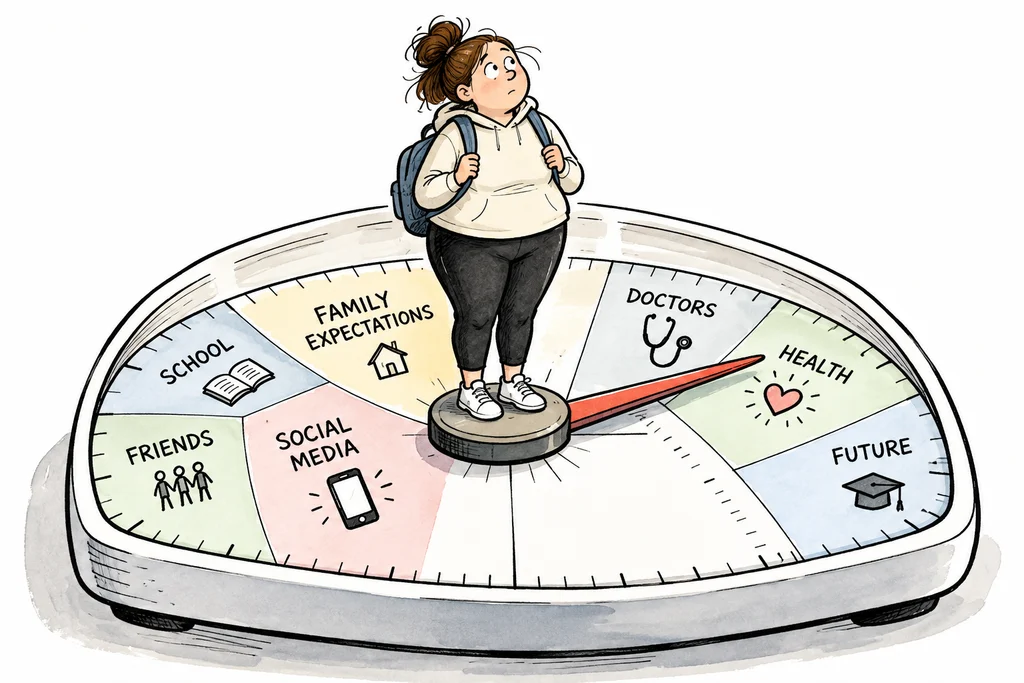
For a teenager living with obesity, an ordinary school day can carry pressures that have little to do with homework. There are gym classes, school photos, clothing sizes and social media feeds full of images of what young bodies are supposed to look like, and some teens are also managing high blood pressure, insulin resistance or other medical complications. More families are now weighing another question about their child’s health: whether a prescription weight-loss drug could change their future.
That conversation reaches a large share of young Americans. According to the Centers for Disease Control and Prevention, 22.9% of adolescents ages 12 to 19 had obesity in the August 2021 to August 2023 survey period. Drugs such as Wegovy, which contains semaglutide, now give those families a treatment option that barely existed for teenagers a few years ago, along with new decisions about how long to stay on it, what side effects to accept and what happens when a child becomes an adult.
A New Generation of Weight-Loss Patients
The Food and Drug Administration expanded Wegovy’s approval to adolescents 12 and older with obesity in December 2022. In the clinical trial published in The New England Journal of Medicine that supported that decision, teens who took semaglutide alongside lifestyle counseling saw their body mass index fall by an average of 16.1% over 68 weeks, while those on a placebo saw a 0.6% increase.
Prescriptions have grown since then, but they are still far from routine. A January 2026 study in JAMA Pediatrics examined records for more than 2 million adolescents ages 12 to 17 with obesity and found that the share with a GLP-1 prescription rose from 0.12% to 1.38% through July 2025. Nearly 90% of the teens who received one had severe obesity, which suggests doctors are reserving the drugs mostly for patients with the greatest medical need.
The Health Benefits Come With Open Questions
Obesity in adolescence raises the risk of metabolic problems and other chronic conditions, and treating it earlier may improve a young person’s health, especially when complications have already started. The effectiveness of GLP-1 drugs makes them a real addition to pediatric obesity care, not just another product in the commercial weight-loss industry.
Adolescents are not small adults, though. Their bodies are still developing, and any long-term medication has to account for growth, nutrition, emotional health and the chance that treatment will need to continue for years. In the semaglutide trial, 62% of teens on the drug had gastrointestinal side effects compared with 42% on placebo, and five participants on semaglutide developed gallstones. The trial found no meaningful differences in pubertal development, but 68 weeks cannot reveal every effect of years of use.
The bigger unknown is what happens when treatment stops. Obesity is often a chronic condition, and adult research on GLP-1 drugs has documented weight regain after people stop taking them. Whether a 13- or 14-year-old who starts medication will need it for years, or for life, is a question researchers have not answered, and one each family will have to work through with a doctor.
Access Depends on Insurance and Zip Code
The new drugs are also exposing familiar gaps in American health care. In the JAMA Pediatrics study, Black and Hispanic adolescents had lower odds of receiving a GLP-1 prescription than white adolescents after researchers adjusted for other factors, and teens in rural areas and socioeconomically disadvantaged neighborhoods were also less likely to get one. Adolescents on Medicaid had 43% lower odds of a prescription than those with commercial insurance.
The findings do not prove that cost explains every difference, but they show that approval of a treatment does not mean every family can get it. Two teenagers with the same medical needs could face different options because of where they live, what insurance they carry or what their parents can afford, the same question of who actually gets to take these drugs that has followed them in adult care. For a condition affecting millions of adolescents, access needs as much attention as the science.
When Medical Treatment Meets Teenage Body Image
Adolescence is when young people build a sense of identity while working through peer acceptance, appearance and independence, and weight stigma can shape all of it whether or not a teen is in treatment. A teenager may seek a GLP-1 drug for a serious medical condition while also hoping to escape bullying or feel more at ease around friends. Those motives can exist side by side, but they are not the same, and treatment decisions should not be driven by pressure to look a certain way.
Parents and doctors also have to talk about obesity without adding shame. A drug that improves metabolic health should not become proof that a teenager’s body was unacceptable before, a tension SSC has followed in adult conversations about “Ozempic face” and weight-loss drugs sold as a lifestyle. At the same time, worries about body image should not keep young people with serious medical needs from effective, evidence-based care.
Those conversations are reaching younger children, too. A September 2026 study in Pediatrics found that GLP-1 prescriptions for children ages 8 to 11 with obesity are rising quickly even though they remain rare, with nearly 94% of those prescribed having severe obesity, according to a summary from NYU Langone Health. None of these drugs is approved by the FDA for weight loss in children that young, which makes close medical oversight and more research necessary.
A Treatment Decision That May Follow Teens Into Adulthood
For many families, the first concerns are practical: whether the drug will improve their child’s health, whether insurance will pay for it and whether the side effects are manageable. The larger effects reach beyond any one prescription. A generation is growing up at a time when medication can produce weight changes that once seemed out of reach, which could ease the medical burden of obesity for some teens while also reshaping expectations about body size, especially if access stays uneven or treatment gets tangled up with pressure about appearance.
Families do not have to choose between treating adolescent obesity and protecting a young person’s emotional health, because both are part of the same care. As GLP-1 drugs settle into pediatric medicine, families will need reliable evidence, affordable access and doctors who treat teenagers as developing people rather than future adult patients. For the millions of American adolescents living with obesity, whether these drugs lead to a healthier experience of growing up will depend on far more than the number on a scale.